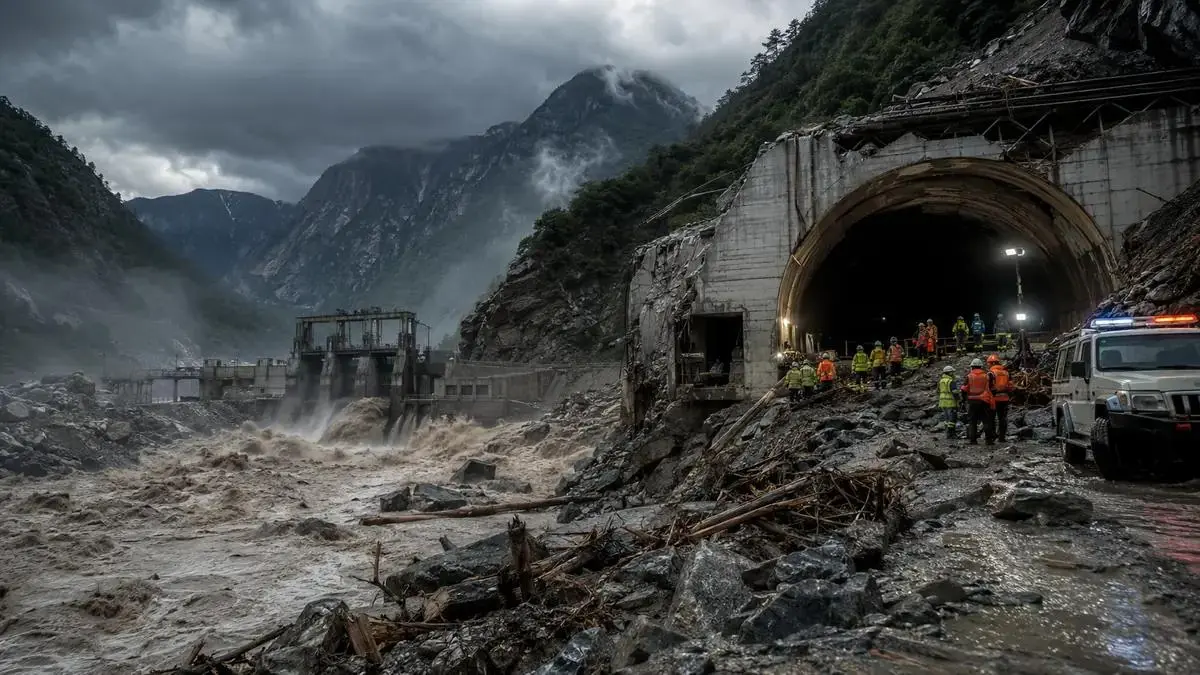
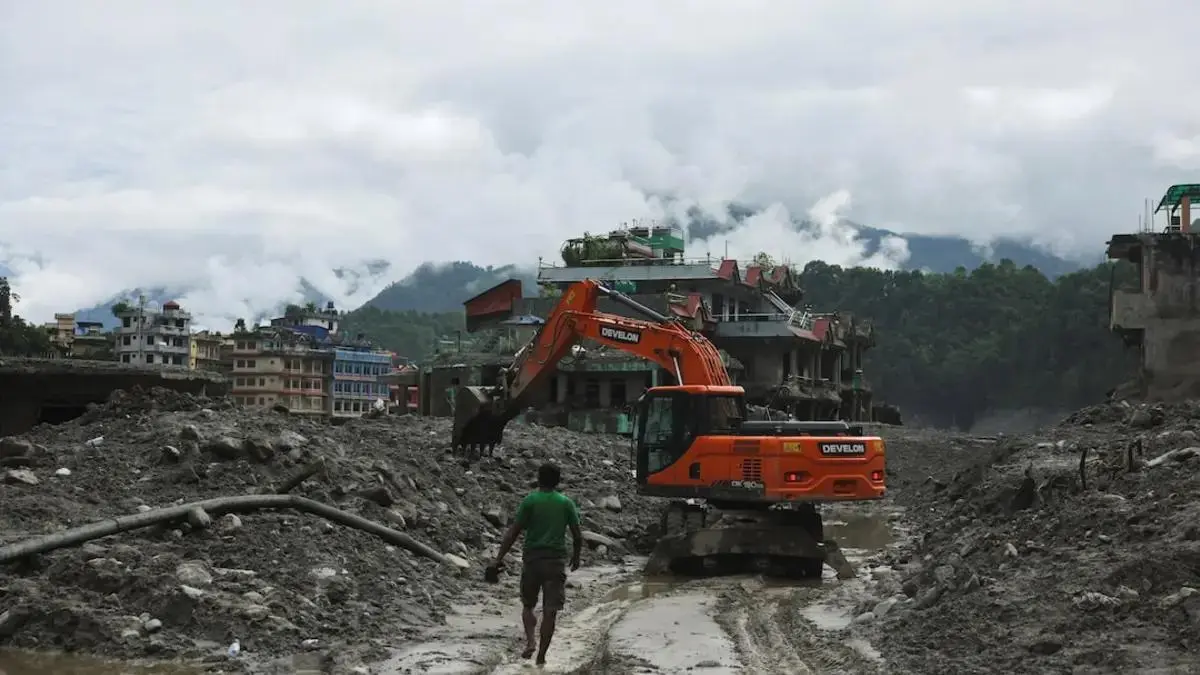
Rescue teams are still searching isolated Himalayan communities after catastrophic flooding along the Nepal-China border swept through valleys, damaged transport routes and left families waiting for information about missing relatives.
The operation entered its fourth day on Saturday, August 29. Poor weather temporarily restricted helicopter flights in Nepal, while the scale of the affected mountain terrain continued to slow efforts to reach survivors. Reports carried by the Associated Press said authorities were transporting people from cut-off areas as search teams worked across unstable ground.
Casualty and missing-person figures have changed rapidly as communication returns to remote settlements. Readers should treat any single number as a time-stamped estimate rather than a final total.
What happened at the Nepal-China border?
The disaster struck on August 26 after a sudden surge of water, mud, rock and ice moved through high-altitude river valleys near the Nepal-China frontier. Early scientific assessments cited by the AP suggest that a large section of glacier may have broken away, temporarily blocked a river and then released a destructive flood when the natural dam failed.
That sequence can produce an extremely fast-moving wall of debris. Unlike a river that rises gradually after hours of rain, a glacial or landslide-dam failure can give communities downstream very little time to react.
Roads used by residents, workers, trekkers and pilgrims were damaged or buried. Bridges and communications were also affected, leaving authorities with an incomplete picture of who had been in each location when the flood arrived.
Why the number of missing people remains uncertain
In a major mountain disaster, a missing-person list is not the same as a confirmed death toll. Several factors can inflate or distort early estimates:
- Mobile and internet networks may be unavailable.
- Visitors may not appear on local resident lists.
- The same person can be reported missing by multiple relatives.
- Survivors may move to another village before registering with authorities.
- Entire settlements can remain inaccessible for days.
Officials have been reconciling local records, travel information and reports from families while rescuers reach previously isolated areas. That process can cause the total to rise sharply before it eventually becomes more accurate.
Why helicopters are essential—and limited
The Himalayas make conventional disaster response unusually difficult. A damaged road can isolate several communities at once, and heavy machinery cannot simply be driven into steep valleys covered by mud and debris.
Helicopters can evacuate injured survivors, deliver food and medicine, and place rescue teams near cut-off settlements. But they depend on visibility, wind and safe landing or winching conditions. Clouds, rain and unstable slopes can halt flights even when people urgently need assistance.
Aircraft also carry limited loads at high altitude. A single helicopter may have to make repeated trips, forcing rescue coordinators to prioritise medical emergencies and the most isolated groups.
What survivors need now
The immediate rescue phase is focused on locating people and treating injuries, but the humanitarian needs extend well beyond the first few days.
Safe drinking water is a priority because floodwater can contaminate springs, pipes and storage tanks. Temporary shelter is also critical in cold mountain conditions, particularly for families who lost homes or cannot return because of unstable slopes.
Other urgent needs commonly include:
- Trauma care and essential medicines
- Food that can be transported and stored easily
- Sanitation supplies and water purification
- Satellite communications and portable power
- Fuel for rescue aircraft and ground equipment
- Support for children separated from relatives
Cross-border coordination matters because rivers, roads and communities in the Himalayas do not stop at national boundaries. Information from both Nepal and China can help teams understand where the flood travelled and which settlements remain at risk.
Could there be more flooding?
The first flood does not always end the danger. Loose rock, saturated soil and damaged glacial areas can remain unstable. Aftershocks are not required for a weakened slope to collapse; further rain or natural movement may be enough.
Authorities must therefore balance speed with the safety of rescuers. Teams entering narrow valleys need updated weather information and assessments of upstream lakes, river blockages and landslides.
Residents downstream should rely on official evacuation instructions rather than viral social-media forecasts. Old videos and images from unrelated disasters often circulate during major emergencies, making verification especially important.
Why Himalayan communities face growing risk
Mountain regions naturally experience landslides and sudden floods, but climate change is altering the background conditions. Warmer temperatures can accelerate glacier retreat, expand some glacial lakes and destabilise ice and surrounding rock.
No single disaster should be attributed to climate change without detailed scientific analysis. The broader risk, however, is well established: changing glaciers and more intense rainfall can create hazards that existing roads, bridges and warning systems were not designed to handle.
The latest disaster will renew questions about upstream monitoring, sirens, communication networks and evacuation routes in remote border areas.
What happens next?
The search-and-rescue operation will gradually shift toward recovery as authorities account for survivors and determine which locations can be safely re-entered. Investigators will also examine satellite images, weather records and field evidence to reconstruct the flood's origin.
Rebuilding will take much longer. Restoring a mountain road or bridge requires not only construction work but confidence that the surrounding slope and river channel are stable. Families may remain displaced while those assessments continue.
For now, the most important figures are the verified updates issued by emergency authorities. Early totals are likely to change as teams reach more communities and duplicate missing-person reports are resolved.
The bottom line
The Nepal-China border floods are both a rescue emergency and a warning about the difficulty of protecting high-altitude communities from sudden, fast-moving hazards. Helicopters and specialist teams are reaching survivors, but weather, damaged infrastructure and uncertain records are slowing the operation.
Follow updates from established news organisations and official disaster agencies, and avoid sharing casualty figures or donation links that cannot be verified.
For background on public alerts, read our guide to how flash-flood warnings work. More verified updates are available in the News section.