# Nepal Floods Are Moving Toward India: Which States Could Be Affected?
A devastating flash flood near the Nepal-Tibet border has killed at least 157 people in Nepal and left hundreds of people missing, including foreign tourists and Indian nationals.
The disaster struck suddenly on August 26, 2026, sending a huge surge of water, mud, rocks and debris through communities in northern Nepal.
The destruction has been severe.
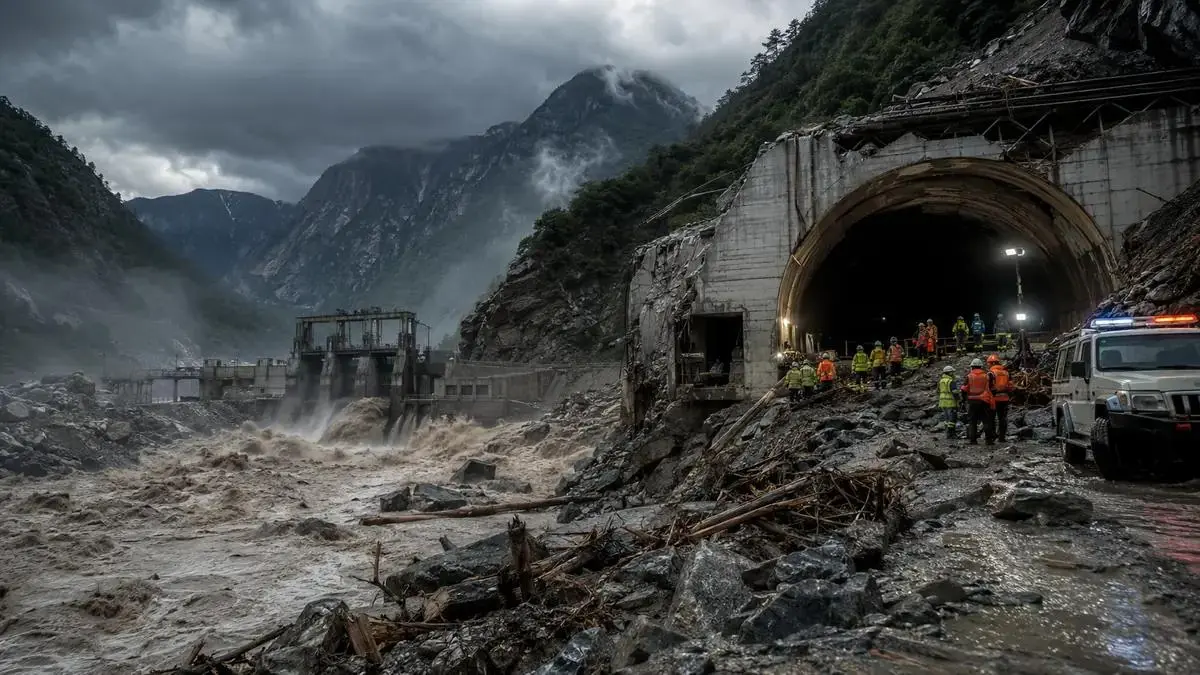
Homes, roads, bridges, vehicles and hydropower infrastructure were swept away or buried, while rescue teams have been struggling to reach some of the worst-hit areas.
Now there is another concern.
Because the flood entered the Bhote Koshi and Trishuli river systems, authorities in India are watching downstream water levels, particularly around the Gandak River system in Bihar and Uttar Pradesh.
So what exactly happened in Nepal, how did the flood start, and which parts of India could be affected?
What Happened in Nepal?
The disaster struck on Wednesday, August 26, in the mountainous region near the Nepal-Tibet border.
A sudden surge of water and debris entered the Bhote Koshi River from the direction of Tibet.
The flood then moved through parts of Nepal, affecting settlements and infrastructure in districts including Rasuwa, Nuwakot and Dhading.
The speed and force of the water left people with very little time to react.
Buildings were damaged or destroyed, vehicles were swept away and roads and bridges were badly affected.
Several hydropower projects and other infrastructure were also damaged.
The disaster also struck an area used by tourists and pilgrims travelling through the Himalayas, making the number of missing foreign nationals particularly significant.
How Many People Have Died in Nepal?
As of August 27, Nepalese authorities had reported at least 157 deaths from the disaster.
Hundreds of people were still reported missing.
The numbers have varied between updates because rescue teams are continuing to search damaged areas and authorities are still verifying missing-person lists.
Among those reported missing are foreign nationals, including a large number of Indians.
Because the rescue operation is ongoing, the casualty and missing-person figures should be treated as provisional and may change.
How Many Indians Are Missing?
Indian nationals are among the foreign travellers reported missing after the disaster.
Reports on August 26 and 27 put the number of missing Indian nationals at more than 100, with some reports citing 133 Indians among those missing.
Many of the affected Indian travellers were believed to be travelling through the region for pilgrimage and tourism.
The exact number can change as authorities verify identities and rescue teams reach previously inaccessible locations.
Why Were So Many Tourists in the Area?
The affected Himalayan region is an important route for tourists, trekkers and pilgrims.
The wider area is connected to routes used by people travelling towards religious and tourist destinations, including areas associated with Mount Kailash and other Himalayan pilgrimage routes.
The sudden flood therefore caught many travellers and local residents in the affected area.
Rescue teams have been using helicopters and ground operations to search for missing people.
However, damaged roads, bridges, communication networks and unstable terrain have made the operation extremely difficult.
How Did the Nepal Flood Start?
The exact trigger is still being investigated.
Initial reports described a sudden release of water associated with an ice-and-rock avalanche or landslide near the Nepal-Tibet border.
The mass of ice and rock entered the river system and appears to have created a rapid and destructive surge downstream.
There was also an earthquake recorded in the wider region shortly before the disaster, leading to early speculation that seismic activity may have triggered the avalanche.
However, the precise relationship between the reported earthquake, the avalanche and the flood remains under investigation.
That means it would be too early to state with certainty that an earthquake caused the entire disaster.
Was This Definitely a Glacial Lake Outburst Flood?
Not necessarily.
A Glacial Lake Outburst Flood, or GLOF, occurs when water stored in or behind a glacial lake is suddenly released.
Some early reports described the Nepal disaster as potentially linked to a glacial outburst.
However, later assessments have focused on an ice-and-rock avalanche or landslide as a possible immediate trigger.
The safest description at this stage is therefore a catastrophic flash flood associated with a sudden ice-and-rock event, while experts and authorities continue to determine the exact sequence of events.
Which Rivers Were Affected?
The flood moved through the Bhote Koshi River and then affected the wider Trishuli river system.
This is particularly important for India because the Trishuli is connected to the river system that becomes the Narayani in Nepal and the Gandak after entering India.
The simplified downstream route is:
Tibet/Nepal → Bhote Koshi → Trishuli → Narayani → Gandak → India
This river connection explains why a disaster in northern Nepal can create a flood-management concern hundreds of kilometres downstream.
How Can a Nepal Flood Affect India?
A large amount of water entering a river upstream does not stop at the international border.
It continues following the river's natural course.
In this case, the floodwater can move through the Trishuli-Narayani system and eventually reach the Gandak in India.
The effect in India depends on how much water actually reaches the downstream river, how quickly it arrives and what the existing river levels are.
This is why Indian authorities are monitoring river gauges and barrage operations instead of assuming that the destruction in Nepal will automatically be repeated in India.
Which Indian States Could Be Affected?
The immediate concern is primarily around Bihar and parts of Uttar Pradesh connected to the Gandak system.
Other areas of northern India may also monitor rivers originating in Nepal, but the direct concern from this particular event is concentrated around the downstream river systems.
The situation can change depending on rainfall, river discharge and water-management decisions.
Why Is Bihar on Alert?
Bihar is particularly important because the Gandak River flows through the state.
The Bihar administration has been monitoring the potential rise in water levels and preparing disaster-response teams.
The Central Government has also been coordinating with Bihar authorities.
The government has said that local administrations and rescue teams, including NDRF personnel in potentially affected border areas, have been placed on high alert.
This does not mean that the entire state of Bihar is facing a confirmed major flood.
It means vulnerable areas are being monitored and preparations are being made in case river levels rise.
Which Bihar Districts Are Being Watched?
Several districts in northern Bihar are receiving particular attention because of their connection to the Gandak and other Nepal-fed river systems.
These include:
- West Champaran
- East Champaran
- Gopalganj
- Saran
- Muzaffarpur
- Vaishali
The exact level of risk is different for each district.
Areas closest to the river and low-lying settlements are generally more vulnerable if water levels rise significantly.
Why Is Valmikinagar Important?
The Gandak Barrage at Valmikinagar is one of the most important locations in the downstream system.
The barrage helps regulate water entering the Gandak system in Bihar.
Bihar authorities opened the barrage gates as a precaution while monitoring the incoming water.
A technical team was also sent to the barrage to monitor the situation.
The purpose of these measures is to manage the flow and reduce the risk to downstream communities.
Could Uttar Pradesh Be Affected?
Yes, but the current concern is concentrated in areas connected to the Gandak system.
Maharajganj and Kushinagar are among the Uttar Pradesh districts being closely monitored.
The Gandak flows through these areas before continuing into Bihar.
However, officials have indicated that the current situation is not expected to create a major flood threat across Uttar Pradesh.
That distinction is important.
Being placed on alert does not mean widespread flooding is guaranteed.
It means authorities are preparing for a possible rise in water levels.
Could Delhi Be Affected?
There is currently no indication that this particular Nepal flood is directly threatening Delhi.
The floodwater does not simply travel from Nepal to Delhi in a straight line.
It follows specific Himalayan and northern Indian river systems.
The immediate downstream concern is around the Gandak and other Nepal-fed rivers in northern India.
Therefore, people in Delhi should not interpret the current Nepal flood alert as a direct Delhi flood warning.
What About Uttarakhand?
Uttarakhand is also geographically close to Nepal and has several Himalayan river systems, so authorities can monitor developments in the broader region.
However, the immediate downstream concern from this particular event is much more closely associated with the Gandak system and northern Bihar and Uttar Pradesh.
There is no basis to suggest that the entire state of Uttarakhand is facing the same flood threat.
Can Bihar Flood Even If It Does Not Rain Heavily There?
Yes.
This is one of the most important things to understand about river flooding.
A river can rise because of water entering the system upstream, even if the area downstream is not experiencing heavy rainfall at the same time.
If an unusually large volume of water enters the river system in Nepal, that water can travel downstream towards India.
Local rainfall is still important because it can add more water to the river.
But the original flood surge does not need to be caused by rainfall inside Bihar.
How Quickly Can the Water Travel Downstream?
The speed depends on the river, terrain, volume of water and existing flow conditions.
Mountain rivers can respond extremely quickly to sudden upstream releases.
Once the flood reaches flatter terrain, the water behaves differently and can spread over wider areas.
This is why authorities use river-level measurements and forecasts to determine when downstream communities may need warnings.
A flood event in the mountains does not mean that the same water level will automatically appear downstream.
What Damage Has Nepal Suffered?
The damage reported in Nepal has been extensive.
The flood and debris destroyed or damaged:
- Homes
- Roads
- Bridges
- Vehicles
- Hydropower infrastructure
- Electricity infrastructure
- Communication links
- Border facilities
- Tourist routes
Entire sections of some settlements were buried under mud and debris.
The destruction of roads and bridges has also made it harder for rescue teams to reach isolated areas.
Why Are Rescue Operations So Difficult?
The affected area is mountainous.
That creates several challenges.
Roads and bridges have been damaged, while mud and debris have blocked access routes.
Helicopters are being used to reach areas that cannot easily be reached by road.
Rescuers also have to deal with unstable slopes, rivers that can rise suddenly and damaged communication infrastructure.
As a result, authorities have warned that the number of missing people could change as teams reach more locations.
Did China Also Suffer Damage?
Yes.
The disaster affected areas on the Chinese side of the Nepal-Tibet border as well.
Flooding and mudslides damaged infrastructure around the border region.
China also reported casualties and missing people.
This makes the event a cross-border Himalayan disaster rather than a disaster limited to Nepal alone.
Why Is This Disaster So Destructive?
The danger comes from the combination of several factors.
A sudden release of water can pick up rocks, soil, trees and other debris as it moves downhill.
That turns a normal river surge into a powerful debris flow.
The steep Himalayan terrain can also accelerate the movement of water.
When the flood reaches settlements, the combination of speed, depth and debris can destroy buildings and infrastructure within minutes.
What Is India Doing About the Situation?
The Government of India is closely monitoring the situation.
The Union Home Minister spoke with the Chief Ministers of Bihar and Uttar Pradesh after the disaster.
According to the government, local administrations and rescue teams, including NDRF personnel in potentially affected border areas, have been placed on high alert.
India has also begun sending humanitarian assistance to Nepal following the disaster.
The response therefore has two parts:
Helping Nepal with the disaster itself and preparing Indian communities that could potentially be affected downstream.
Is a Major Flood in Bihar Confirmed?
No.
A flood risk and a confirmed major flood are not the same thing.
Authorities are monitoring the situation because a large amount of water entered the river system upstream.
However, the eventual impact in Bihar depends on the actual downstream flow and river levels.
Officials are therefore preparing for the possibility while continuing to monitor conditions.
What Should People Living Near the Gandak Do?
People living near the Gandak or other rivers connected to Nepal should follow official local advisories.
They should:
- Keep important documents and medicines ready.
- Keep phones charged.
- Follow district administration updates.
- Avoid going near swollen rivers.
- Do not cross flooded roads or bridges.
- Keep children away from riverbanks.
- Know the nearest safe location.
- Follow evacuation instructions if authorities issue them.
- Avoid relying on unverified social-media videos or rumours.
The most important rule is simple:
If authorities order evacuation, leave early rather than waiting for floodwater to reach your home.
What Should People Outside the Alert Areas Know?
People living far from the affected river systems do not need to assume that the entire country is at risk.
The downstream impact depends on the specific river network.
For this event, the most important route is:
Bhote Koshi → Trishuli → Narayani → Gandak → Bihar
That means the strongest immediate focus is on vulnerable areas connected to these rivers.
People should follow official state and district advisories rather than assuming that every part of northern India will be affected.
What Happens Next?
The next stage will depend on how the upstream flood surge behaves.
Authorities will continue watching:
- Water levels in Nepal
- Bhote Koshi river conditions
- Trishuli water levels
- Narayani water levels
- Gandak water levels
- Incoming flow from Nepal
- Valmikinagar Barrage
- Low-lying areas in Bihar
- Maharajganj and Kushinagar
- Embankments
- Weather conditions
If the upstream water levels continue to fall, the immediate downstream threat could gradually decrease.
If the river rises again, authorities may need to expand precautionary measures.
Nepal Flood and India: The Situation Explained in One Minute
The disaster began near the Nepal-Tibet border.
A sudden and extremely powerful surge of water and debris entered the Bhote Koshi river system.
The flood then affected the Trishuli basin and several communities in Nepal.
At least 157 people had been confirmed dead in Nepal by August 27, with hundreds still missing.
Foreign tourists and Indian nationals were among those reported missing.
The river system eventually connects with the Narayani in Nepal and the Gandak in India.
That is why authorities in Bihar and Uttar Pradesh are monitoring the situation.
But this does not mean that the entire country is facing a flood emergency.
The actual impact in India depends on how much water reaches the downstream river system and how river levels respond.
Why the Nepal Flood Matters Beyond India
The disaster is also a warning about the vulnerability of Himalayan communities.
The Himalayas contain glaciers, steep valleys and fast-flowing rivers.
When large amounts of water, ice and rock suddenly move through these systems, the consequences can be catastrophic.
The event also shows why early-warning systems, river monitoring and cross-border cooperation are important.
A disaster that starts in a remote mountain valley can affect communities hundreds of kilometres downstream.
Frequently Asked Questions
What happened in Nepal on August 26, 2026?
A catastrophic flash flood and debris surge struck areas near the Nepal-Tibet border, affecting the Bhote Koshi and Trishuli river systems and causing widespread destruction.
How many people died in the Nepal flood?
At least 157 deaths had been reported in Nepal by August 27, although the number could change as rescue and recovery operations continue.
How many people are missing?
Hundreds of people were reported missing, including foreign nationals and Indian citizens. The exact number was still being verified as rescue operations continued.
How many Indians are missing in Nepal?
Reports on August 26 and 27 indicated that more than 100 Indian nationals were among those reported missing, with some reports putting the figure at 133.
Which Indian states could be affected by the Nepal flood?
The immediate concern is mainly around Bihar and parts of Uttar Pradesh connected to the Gandak river system.
Which Bihar districts are being monitored?
West Champaran, East Champaran, Gopalganj, Saran, Muzaffarpur and Vaishali are among the districts under heightened vigilance.
Which UP districts are being monitored?
Maharajganj and Kushinagar are among the key Uttar Pradesh districts being watched because of their connection to the Gandak system.
Will Delhi be affected by the Nepal flood?
There is currently no indication of a direct flood threat to Delhi from this particular event.
Can a Nepal flood affect Bihar without heavy rain in Bihar?
Yes. Water released or entering the river system upstream can travel downstream into India even if the main trigger occurred outside Bihar.
What is the Gandak River called in Nepal?
The river system is commonly known as the Narayani in Nepal and the Gandak after entering India.
Is the Nepal disaster definitely a GLOF?
No definitive conclusion should be drawn yet. Initial reports have discussed glacial or ice-and-rock processes, but the exact trigger and sequence of events remain under investigation.
Is Bihar under a flood alert?
Authorities have placed vulnerable areas under heightened vigilance and are monitoring the Gandak and other Nepal-fed rivers.
Should people in Bihar panic?
No. People in vulnerable areas should remain alert and follow official instructions, but an alert does not mean that widespread flooding is guaranteed.
Final Word
The Nepal flood is a major Himalayan disaster with consequences that extend beyond the country's borders.
The immediate t