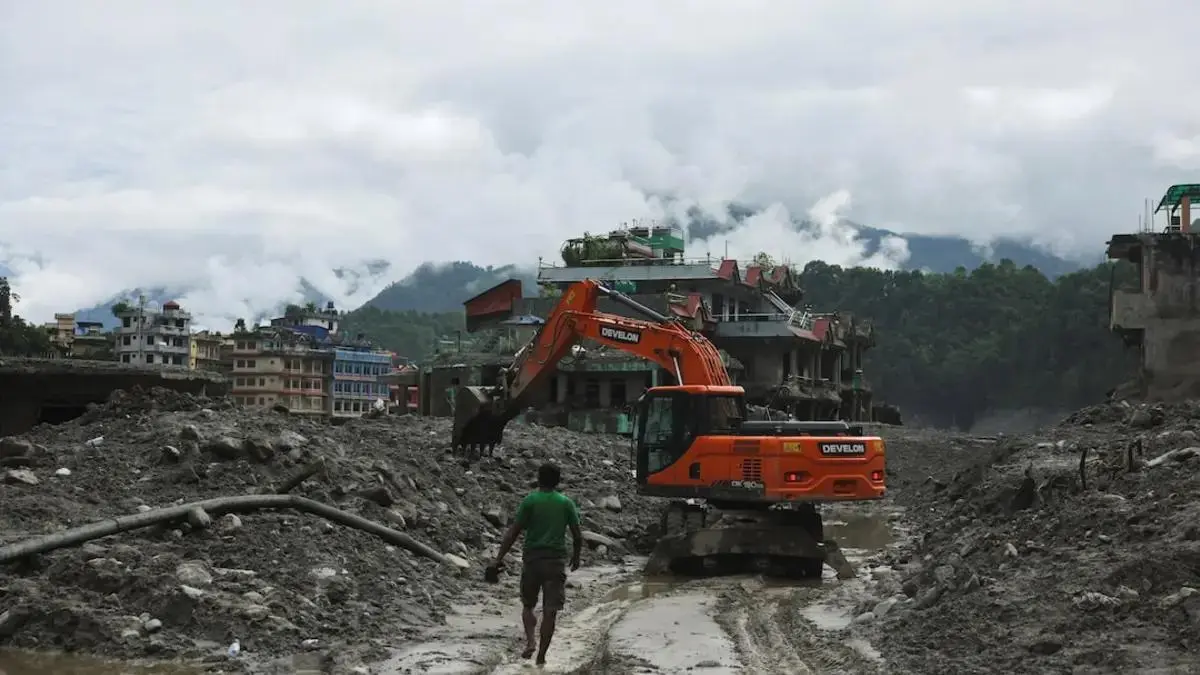
Rescue teams in Nepal pulled two people alive from separate disaster sites 10 days after destructive floods swept through the country, offering rare moments of hope during an operation still focused on thousands of missing people.
One survivor, a Chinese national, was found inside a 225-metre hydropower tunnel. A woman was rescued from a damaged home in Nuwakot. Both operations took place as military personnel and international specialists continued searching unstable, debris-filled areas.
What happened in the tunnel rescue?
Nepal's army said a joint team involving Nepalese military personnel and South Korean disaster experts rescued the man from a tunnel at the Trishuli hydropower project. He was taken for a medical assessment after being brought out.
The rescue raised the number of workers recovered alive from the Trishuli project to three. Two Nepalese workers had been rescued from the Trishuli 3A hydropower tunnel a day earlier.
Finding a survivor after 10 days is exceptional. Tunnel rescues are slowed by blocked access, limited ventilation, unstable debris and uncertainty about conditions deeper underground. Teams must create a safe route without triggering another collapse.
A second survivor found in Nuwakot
In a separate operation, rescuers found a woman alive in a house in flood-hit Nuwakot. The two cases were not part of the same site, but both underline how search operations can remain lifesaving even after the initial emergency window has passed.
The survivors' precise medical conditions were not immediately detailed beyond the assessment following rescue. Authorities remained focused on reaching areas damaged by mud, rock and floodwater.
Why the disaster response is so difficult
Nepal's steep terrain and dependence on mountain roads make major rescue operations especially complex. Floods and landslides can isolate communities, damage bridges and interrupt communications just when heavy equipment and medical support are most urgently needed.
Hydropower sites create an additional challenge. Workers may be deep inside tunnels with only limited access points, while water and debris can damage both the structure and the approach roads. Search teams must balance speed with the risk faced by rescuers themselves.
International specialists can provide equipment and experience, but coordination still depends on safe transport, local knowledge and reliable information about where people were last seen.
What the rescues mean
The discovery of survivors does not reduce the scale of the disaster. It does, however, justify continued targeted searches where there is credible evidence that trapped people may have found air pockets, shelter or access to water.
It also highlights the importance of accurate missing-person records. In a fast-moving disaster, the same person may be reported by several relatives, while displaced residents can temporarily lose contact. Authorities must reconcile lists while directing teams toward the most promising locations.
For families waiting for news, every rescue can renew hope—but officials must avoid creating unrealistic expectations. Conditions differ sharply from one site to another, and survival in one tunnel does not predict conditions elsewhere.
What happens next?
The priority remains rescue and medical care, followed by restoring access to isolated communities. Longer-term work will include assessing damaged hydropower infrastructure, roads, bridges and homes.
The disaster will also renew questions about Himalayan flood preparedness, early-warning systems and emergency planning around major infrastructure. A changing climate can increase the danger associated with extreme rainfall and unstable glaciers, but local vulnerability also depends on construction, evacuation planning and communications.
Readers following major global disruptions can also see our explainer on how the Strait of Hormuz affects oil prices and our latest updates in the News section.