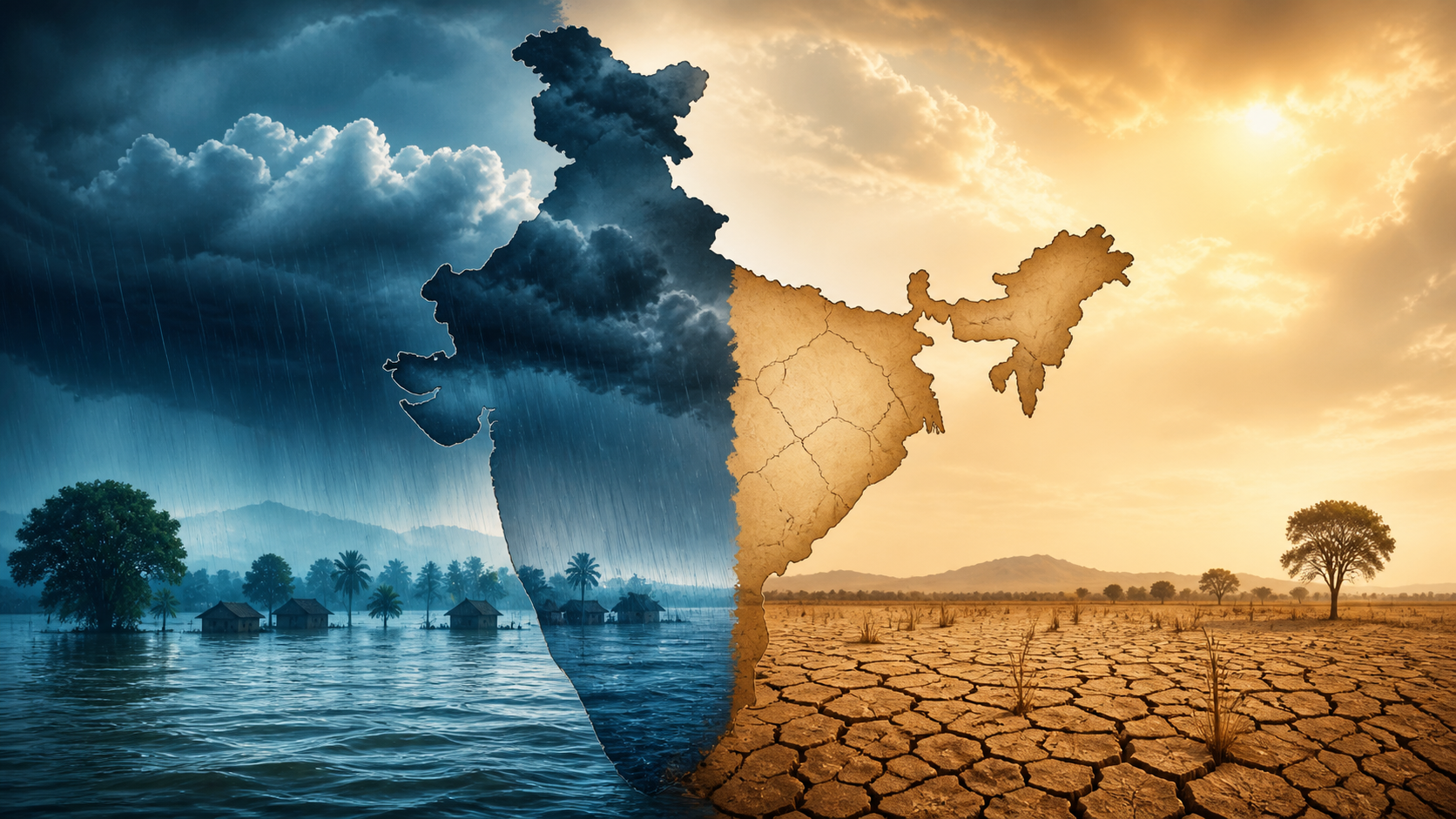
One monsoon, two very different stories
Every year, headlines about India's monsoon report a single national number — whether the season's total rainfall came in above, at, or below the long-term average. That single figure hides enormous regional variation: it is entirely normal for one state to receive well above-average rainfall to the point of flooding, while another state in the same season falls short enough to face drought-like conditions, and for the national average to still land close to normal.
Two monsoon systems, not one
India actually experiences two separate monsoon wind systems in most years. The southwest monsoon, arriving from around June, brings the bulk of the country's annual rainfall, moving up from the Arabian Sea and Bay of Bengal. The northeast monsoon, arriving later in the year, brings rainfall mainly to the southeastern coast, particularly Tamil Nadu, which receives comparatively little from the southwest monsoon but depends heavily on the northeast one instead.
Why geography decides so much
Mountain ranges intercept and redirect monsoon winds, which is a major reason rainfall is so uneven. The Western Ghats force moisture-laden winds upward as they hit the coast, causing heavy rainfall on the western coastal side while the region just east of the mountains, in what is called a rain shadow, receives far less from the same passing system. This single geographic feature is a large part of why coastal Maharashtra and Karnataka can see flooding while nearby interior districts remain comparatively dry.
Why "normal" rainfall can still mean disaster
A season classified as having normal overall rainfall can still include severe flooding, because that classification is based on the total volume of rain, not how it was distributed across time or location. A month of below-average rain followed by an intense multi-day downpour that dumps a large share of the season's total rainfall in a short window can register as a normal season on paper while still causing serious flood damage where that downpour landed.
Why this matters beyond the weather report
Agricultural planning, reservoir management and flood preparedness all depend on regional rainfall patterns, not the national average. A national headline reporting a normal monsoon offers little practical information to a farmer in a drought-affected district or a resident of a flooded one — which is why meteorologists increasingly emphasise state and district-level rainfall data over the single national figure that tends to dominate news coverage.
Uneven rainfall is one of several reasons infrastructure projects like metro rail expansion take longer in some cities than others. More like this in our Regional section.