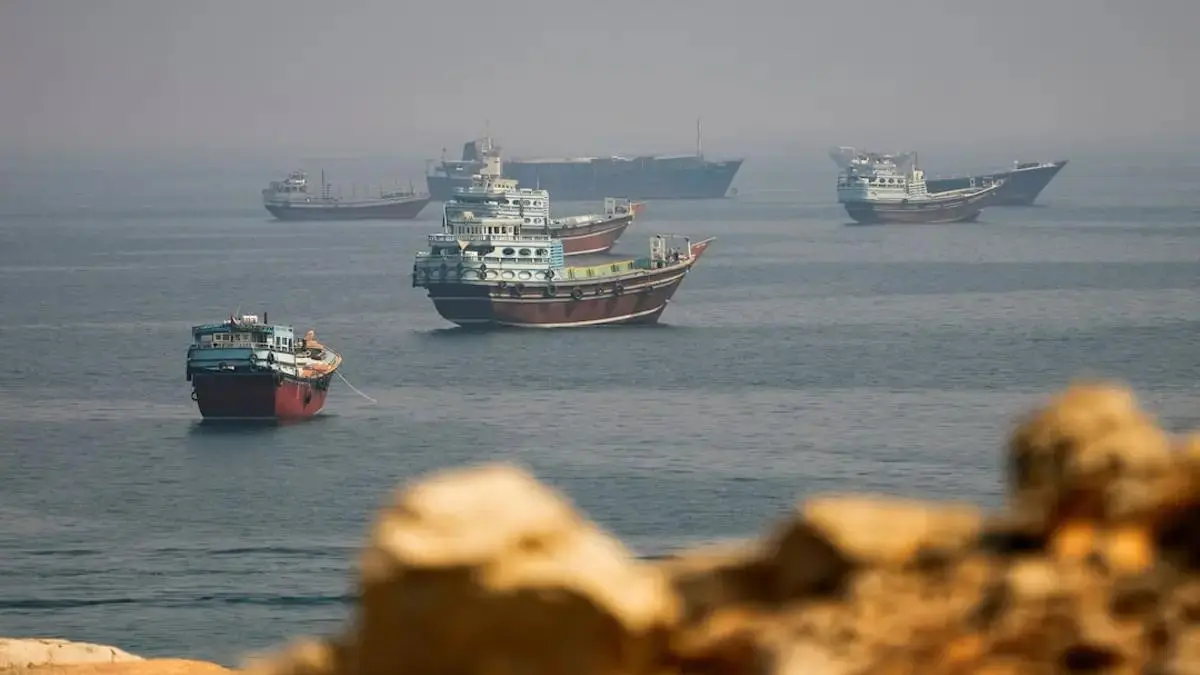
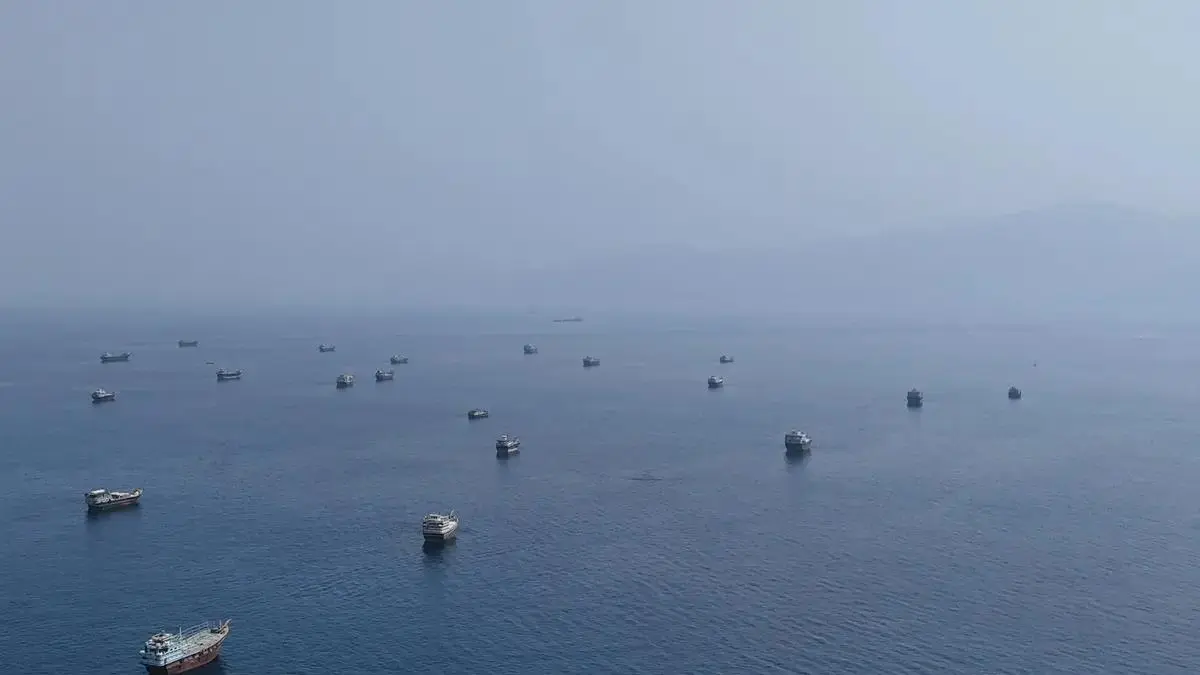
Brent crude rose above $100 a barrel after Iran said it attacked 10 ships near the Strait of Hormuz and the United States said it destroyed five Iranian oil tankers. The exchange marked the largest declared wave of attacks on shipping by both sides during the six-month conflict.
The price move reflects more than the oil physically lost from damaged vessels. Traders are pricing the risk that tankers cannot move safely through a narrow waterway that carried roughly one-fifth of global oil before the war.
That risk can reach consumers through petrol, diesel, aviation fuel, freight, food and manufacturing costs. The effect depends on how long disruption lasts, whether alternative supply reaches the market and whether governments release emergency stocks.
What happened near the Strait of Hormuz?
Iran's Islamic Revolutionary Guard Corps said it fired on two U.S. vessels and eight oil tankers attempting to cross an area it had declared off-limits. The U.S. military said it destroyed five Iranian tankers after reported Iranian missile attempts against an American warship.
Maritime authorities also received reports of merchant ships being struck in the northern Gulf and Gulf of Oman. The tanker New Andros, carrying about two million barrels of fuel oil, caught fire in Iraqi waters after a reported drone strike. Officials said its 22 crew members were not reported hurt.
Claims from belligerents can be difficult to verify immediately. Ship identities, damage, casualties and environmental effects may change as authorities and operators provide evidence.
Where is the Strait of Hormuz?
The Strait of Hormuz is the narrow sea passage connecting the Persian Gulf with the Gulf of Oman and the Arabian Sea. Iran lies to the north, while Oman and the United Arab Emirates are on the southern side of the broader approach.
Oil and liquefied natural gas produced by Gulf exporters must often pass through the strait to reach customers in Asia, Europe and elsewhere. Pipelines can bypass some traffic, but they do not have enough capacity to replace every seaborne shipment.
Its geography creates a chokepoint: a disruption in a relatively small area can affect a large share of global energy trade.
Why did Brent crude rise above $100?
Brent is an international benchmark used to price a large share of the world's crude oil. It responds to expected future supply and demand, not only to barrels delivered on the same day.
When tankers are attacked, buyers face several risks at once. Ships may be unavailable, crews may refuse voyages, insurers may raise premiums, ports may slow operations and naval escorts may create delays. Even cargoes that are not hit become more expensive to move.
Traders therefore add a geopolitical risk premium. If the threat fades quickly, part of that premium can disappear. If transit remains restricted or oil infrastructure is damaged, high prices can persist or rise further.
Is the Strait completely closed?
Not in the simple sense of a permanent physical barrier. Reuters reported that Iran had largely choked off traffic and that preliminary tracking data showed only six ships crossing with active transponders during one 24-hour period.
Ship-tracking data has limitations. Vessels may switch off identification signals for security, and military movements or confidential commercial routes may not be fully visible. A low count nevertheless indicates severe disruption compared with normal traffic.
The United States says it has guided tankers through while maintaining a blockade of Iranian ports. Iran has announced exclusion areas and threatened to enlarge the restricted zone. Conditions can therefore change hour by hour.
How much of the world's oil uses Hormuz?
Before the conflict, about one-fifth of global oil consumption passed through the strait, according to the Reuters report. The exact daily share varies with production, exports and how analysts define oil liquids.
Major flows include crude and products from Saudi Arabia, Iraq, the United Arab Emirates, Kuwait, Qatar and Iran. Qatar's liquefied natural gas exports also rely heavily on the route, linking the crisis to gas and electricity markets.
Not every Gulf barrel must use Hormuz. Saudi Arabia and the UAE operate pipelines to ports outside the strait, but spare capacity and destination constraints limit the amount that can be diverted.
What do tanker attacks do to shipping costs?
War-risk insurance premiums rise when underwriters see a greater chance of damage, detention or crew injury. Shipowners may demand higher freight rates or decline voyages entirely.
Routes cannot simply detour around Hormuz because it is the only sea exit from the Persian Gulf. Cargo can move through pipelines or be replaced with oil from another region, but both options require available capacity and commercial agreements.
Delays also tie up tankers for longer. When the same fleet completes fewer trips, effective transport capacity falls and freight costs rise.
How does $100 oil affect petrol and diesel prices?
Crude is a major input cost for refineries, but retail fuel prices also include refining margins, distribution, taxes and currency movements. A jump in Brent therefore does not produce the same percentage increase at every pump.
Diesel can react strongly because it powers trucks, ships, farms and industrial equipment. Reuters reported the average U.S. retail diesel price above $5.94 a gallon, a record at the time.
Countries that import most of their oil can face a larger trade bill and currency pressure. Governments may absorb part of the shock through tax cuts or subsidies, but that shifts the cost to public finances.
Why can food and airline tickets become more expensive?
Farms use diesel, fertiliser production depends on energy, food travels through refrigerated supply chains and packaging uses petrochemical inputs. Higher energy costs can therefore move through several stages before reaching a supermarket.
Airlines buy jet fuel, often their largest variable expense. Carriers hedge some future fuel needs, so ticket prices may not change immediately. Prolonged increases eventually affect fares, routes or profitability.
Manufacturers also pay more for transport and energy-intensive materials. The broad result can be higher inflation and slower economic growth at the same time.
Can other producers replace the missing oil?
Producers outside the affected route may increase output if they have spare capacity, and consuming countries can release strategic petroleum reserves. Refiners can also change crude suppliers within technical and contractual limits.
Replacement is not instant. Oil grades differ, ports have capacity limits, voyages take time and some spare production is itself located inside the Gulf. A policy announcement can calm markets before replacement barrels arrive, but sustained disruption requires sustained supply.
What should readers watch next?
The most important indicators are verified ship transits, war-risk insurance rates, port operations, pipeline flows and official production data. Brent's daily price shows market expectations but not the full physical picture.
Also watch whether Iran expands its exclusion zone, whether naval escorts remain effective and whether attacks spread to Saudi, Iraqi, Emirati or Omani infrastructure. Diplomatic developments can reduce the risk premium even before normal shipping fully resumes.
Social-media videos should be checked against vessel names, dates and geolocation. Old footage of ship fires often recirculates during a new crisis.
For a related look at consumer fuel pressure, see our report on record U.S. Labor Day gas prices. Follow MatchUpWorld's explainers for clear guides to developing stories.
Source: Reuters report on the U.S.-Iran tanker attacks and Hormuz disruption.