Two supertankers carrying Saudi crude oil were struck by unknown projectiles within minutes of each other while sailing out of the Strait of Hormuz late on August 31.
The vessels were identified by maritime intelligence firms as the Saudi-flagged Sidr and the Liberian-flagged Senegal Prosperity. Each had loaded about two million barrels of crude at Saudi Arabia's Juaymah terminal.
All crew members were reported safe. No confirmed attribution for the attacks had been announced at the time of publication, and authorities were investigating.
Strait of Hormuz tanker attacks: key facts
- Vessels: Sidr and Senegal Prosperity
- Location: Approximately 17 nautical miles east or northeast of Khasab, Oman
- Direction: Outbound from the Strait of Hormuz
- Time: Around 19:52-20:00 UTC on August 31
- Cargo: About two million barrels of Saudi crude on each ship
- Weapon: Unknown projectiles
- Crew status: Reported safe
- Environmental impact: None reported in the confirmed UKMTO incident
- Responsibility: No verified attribution at publication time
The incidents occurred in the Omani corridor of one of the world's most important energy routes.
What happened to the Sidr?
Maritime security consultant Marisks said the Sidr, a Saudi Arabian-flagged very large crude carrier, was struck by unknown projectiles about 16.6 nautical miles northeast of Khasab.
The vessel is operated by Saudi shipping company Bahri. Reuters reported that the company had not immediately responded to a request for comment.
Details about the exact point of impact and damage were limited. Early reporting did not identify casualties among the crew.
Iranian media separately reported that a Saudi tanker had been stopped while using the southern corridor of the strait. That report should not automatically be treated as a full explanation of the incident because independent maritime reporting had not established who launched the projectiles or why.
What happened to the Senegal Prosperity?
Minutes after the Sidr incident, the Liberian-flagged Senegal Prosperity was reportedly hit by three unknown projectiles approximately 17 nautical miles east of Khasab.
The United Kingdom Maritime Trade Operations agency received a report from a company security officer that a tanker had been struck three times during an outbound transit. UKMTO said there were no casualties or environmental consequences reported and that authorities were investigating.
The location and timing appeared to match the Senegal Prosperity incident. Maritime reporting identified the ship as a very large crude carrier operated by Sinokor.
Early reports can change as crews, operators and authorities inspect damage. The confirmed points are that the ship was struck, the crew was safe and no environmental impact had been reported.
Who carried out the attacks?
No responsible party had been independently confirmed when this article was published.
The projectiles were described as unknown, and neither Reuters nor UKMTO attributed the incident to a state or armed group. Regional military tensions provide important context, but context is not proof.
Readers should be cautious with social-media posts that assign blame without evidence. Ship attacks can involve missiles, rockets, drones, mines or other weapons, and determining origin requires debris analysis, sensor data, witness accounts and official investigation.
Attribution has diplomatic and military consequences. It should not be inferred only from which countries are in conflict nearby.
Why the Strait of Hormuz matters
The Strait of Hormuz connects the Persian Gulf with the Gulf of Oman and the Arabian Sea. At its narrowest points, commercial shipping moves through designated lanes between Iran and Oman.
Before the current conflict disrupted traffic, roughly one-fifth of global oil supplies passed through the strait, according to Reuters. Major exporters including Saudi Arabia, Iraq, Kuwait, the United Arab Emirates and Qatar depend on Gulf routes.
Crude oil is not the only concern. Liquefied natural gas, refined fuels and other commodities also travel through the region.
A disruption does not need to close the strait completely to affect prices. Higher insurance premiums, delayed sailings, longer routes and reduced willingness among crews and operators can all tighten supply.
How much oil were the tankers carrying?
Kpler data cited by Reuters showed that each ship loaded approximately two million barrels of Saudi crude at the Juaymah terminal the previous week.
That places the combined cargo near four million barrels. The figure describes the oil loaded, not necessarily oil lost.
No major spill was reported in the confirmed incident information. A vessel being struck does not automatically mean its cargo tanks were breached.
The distinction matters because dramatic headlines can imply that millions of barrels entered the sea when available reports say no environmental impact was observed.
Were the crews injured?
All crew members aboard the two vessels were reported safe.
UKMTO's notice for the tanker struck by three projectiles reported no casualties. Maritime firm Marisks also said the crew of the Senegal Prosperity was safe.
Information about the Sidr was more limited, but no crew injuries were reported by the sources cited in the initial Reuters account.
Crew status can be updated after medical checks. Official notices from ship operators and maritime authorities remain the best source for any change.
Did the attacks cause an oil spill?
No environmental impact was reported in the UKMTO incident that appeared to involve the Senegal Prosperity.
There was no confirmed major spill from either tanker in the first reports. Authorities and operators may conduct further hull and cargo inspections before providing a complete damage assessment.
Oil tankers are divided into multiple cargo compartments, and modern double-hull construction can reduce the risk of a breach. The outcome still depends on where a projectile hits and the force involved.
Until inspection findings are released, it is accurate to say that no spill was reported—not that environmental damage has been definitively ruled out forever.
What the attacks mean for oil prices
Oil prices rose as the new month began, reflecting renewed concern about Gulf supplies and wider military tension.
Markets respond not only to barrels physically removed from supply but also to the probability of future disruption. Two near-simultaneous strikes can increase the risk premium traders attach to oil moving through the strait.
The price impact depends on what follows:
- Whether more vessels are attacked
- Whether shipping traffic falls further
- Whether insurers raise war-risk premiums
- Whether Gulf exporters can use alternative routes
- Whether diplomatic efforts reduce tensions
- Whether any country announces a blockade or military response
One day of higher prices does not establish a permanent trend. A confirmed reopening or successful de-escalation could reduce the premium, while repeated attacks could push it higher.
Why tanker traffic was already under pressure
Traffic through Hormuz had already fallen sharply because of Iranian and U.S. blockades and continuing regional conflict.
Reuters reported that only five commodity vessels transited on Monday, based on preliminary Kpler data—far below a recent average of about 14. No liquid tankers were among those recorded movements.
Public ship-tracking data is not complete. Some vessels switch off or limit Automatic Identification System transmissions for security reasons, making exact counts difficult.
The broader signal is still clear: operators were already cautious before the latest strikes.
Can Saudi oil avoid the Strait of Hormuz?
Saudi Arabia has pipeline and Red Sea export capacity that can bypass Hormuz for some volumes. Other Gulf producers also have limited alternative routes.
Those systems reduce vulnerability but cannot instantly replace all normal traffic through the strait. Capacity, terminal availability, crude grades and onward shipping logistics all matter.
Rerouting also takes time and can increase transport costs. The global market therefore remains sensitive even when some oil can move through other corridors.
The Bab-el-Mandeb route near Yemen carries its own security risks, so shifting cargo west does not remove every threat.
What happens next?
Authorities will seek to establish the type and origin of the projectiles, inspect the vessels and determine whether they can continue safely.
Shipping companies and insurers will reassess routes. Some vessels may wait outside the high-risk area, travel with additional security guidance or use alternative export terminals where possible.
Diplomatic efforts led by countries including Qatar and Oman remain important. Reuters reported that attempts to broker an agreement to reopen the strait had not produced a conclusive result.
The most important immediate indicators are new UKMTO alerts, operator statements, shipping traffic and any independently verified claim of responsibility.
How to follow updates without misinformation
Maritime incidents attract old videos, unrelated ship photos and unverified military claims.
Readers should check:
- Whether an image is dated and located
- Whether a vessel name matches official tracking information
- Whether UKMTO or another maritime authority confirms the incident
- Whether casualty and spill claims come from the operator or authorities
- Whether attribution is verified or merely alleged
The absence of a public operator statement does not prove a cover-up. Companies may need time to contact crews and assess damage before releasing details.
The bottom line
The attacks on Sidr and Senegal Prosperity mark a serious escalation in the security risk facing ships in the Strait of Hormuz.
Both tankers were carrying Saudi crude, both were struck within minutes, and all crew members were reported safe. No confirmed perpetrator had been identified and no major environmental impact was reported.
The next question is whether this remains an isolated episode or triggers further disruption along a route that is central to world energy supply.
Sources
- Reuters: Two tankers carrying Saudi oil attacked in Strait of Hormuz
- UK Maritime Trade Operations: Recent incident notices
- Reuters: Strait of Hormuz commodity-vessel transits remain low
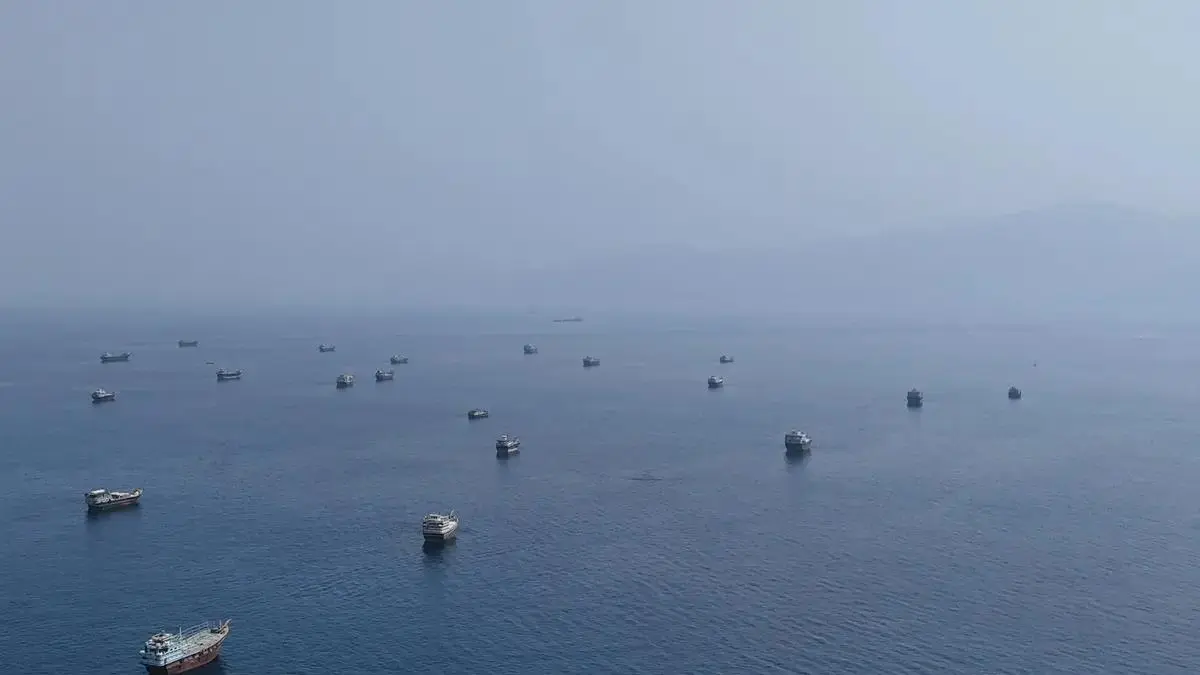
Thumbnail: Vessels near the Strait of Hormuz off Musandam, Oman, on August 28, 2026. Photo by Reuters/Stringer.


