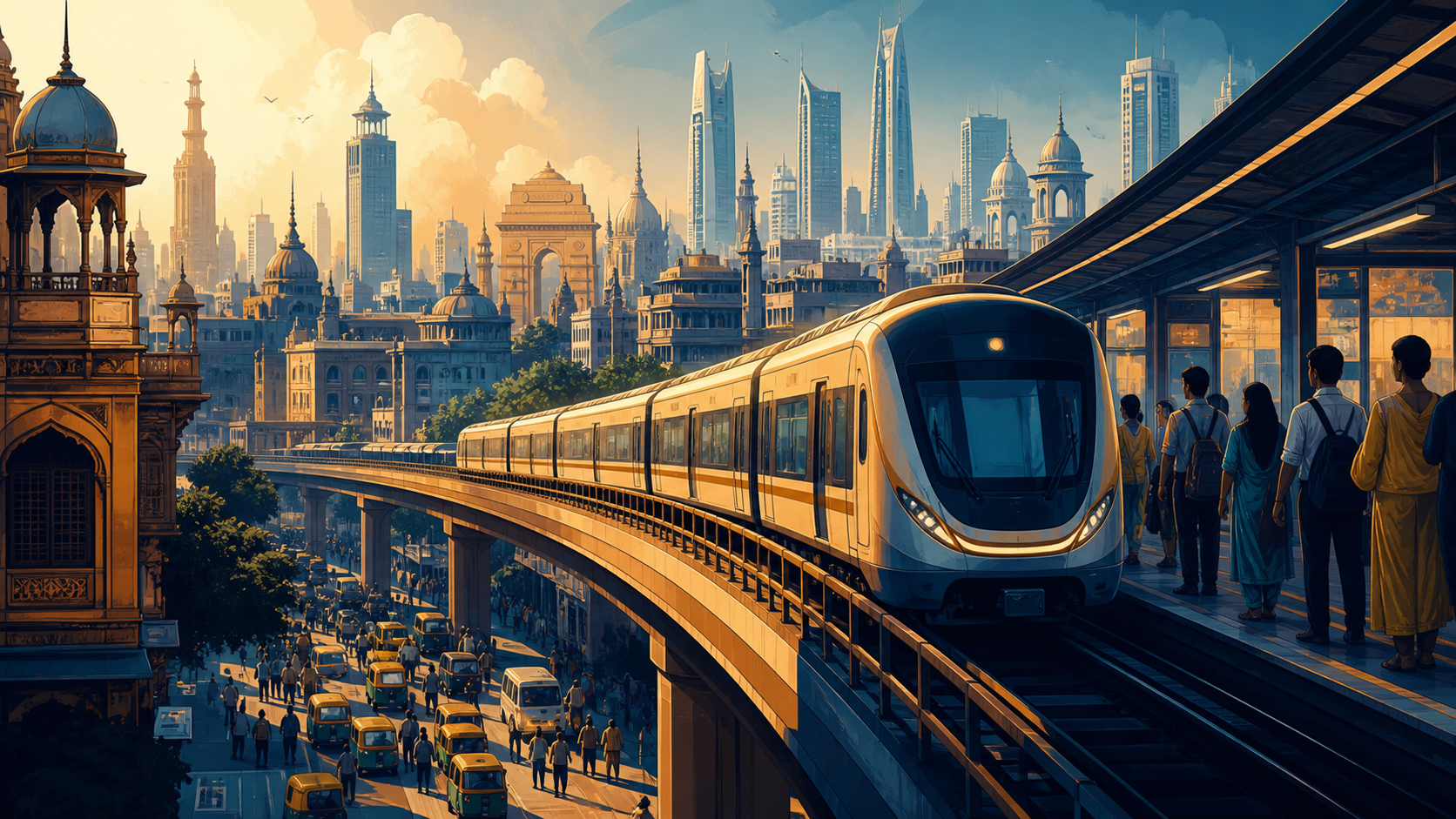
From one city to a national pattern
Delhi Metro's early success changed how Indian city planning thinks about public transport. What began as a single showcase project has become a template that city after city has tried to replicate — Bengaluru, Chennai, Hyderabad, Pune, Kochi, Nagpur and a growing list of smaller cities have all built or are building their own metro networks, each modelled loosely on lessons from the ones that came before.
Why metro over expanding roads
Widening roads to handle more traffic runs into a hard limit in dense Indian cities: there is often no more available land to widen into without demolishing existing buildings. A metro line moves people vertically, above or below existing roads, without requiring the same continuous strip of land a road-widening project needs. For a city already built up, that makes metro rail one of the few ways to meaningfully increase transport capacity without large-scale demolition.
The funding pattern behind most projects
Metro projects in India are typically funded through a mix of state government contribution, central government contribution, and loans from international lending agencies such as Japan International Cooperation Agency or the World Bank. This shared funding structure is part of why metro projects can stall — they depend on coordinated commitment from both state and central governments, and a change in either government's priorities can delay a project that was otherwise ready to proceed.
Why timelines slip so often
The most common cause of delay is not construction itself but land acquisition — getting the legal right to build on the specific strip of land a route requires, especially through dense, already built-up city centres. Utility relocation, moving underground water pipes, electrical cables and sewage lines out of a planned tunnel's path, is another recurring source of delay that rarely gets factored into a project's original timeline.
What it means for a city's growth
A functioning metro line does more than move commuters — it tends to reshape property values and development patterns along its route, as areas near stations become more desirable for both residential and commercial construction. This is part of why state governments continue pursuing metro projects even when they are expensive and slow to build: the economic effect extends well beyond the value of the transport system itself.
Infrastructure planning like this also has to work around India's sharply uneven weather patterns — see our explainer on why the same monsoon floods one state and skips another. More like this in our Regional section.


