The United States has drawn criticism from European officials after welcoming Russia's finance minister back to an in-person G20 meeting while denying credentials to several journalists covering the gathering in Asheville, North Carolina.
Anton Siluanov's appearance was the first by a Russian finance minister in person at the forum since Russia invaded Ukraine in 2022. His presence surprised some delegations and immediately shifted attention away from the host country's planned agenda of economic growth, global debt and trade imbalances.
The US Treasury also faced objections over its refusal to credential teams from Bloomberg News and individual reporters from the New York Times and Wall Street Journal. More than 300 media representatives were admitted, according to the department, but European ministers argued that selective exclusions undermine open coverage of an international summit.
What happened at the Asheville G20 meeting?
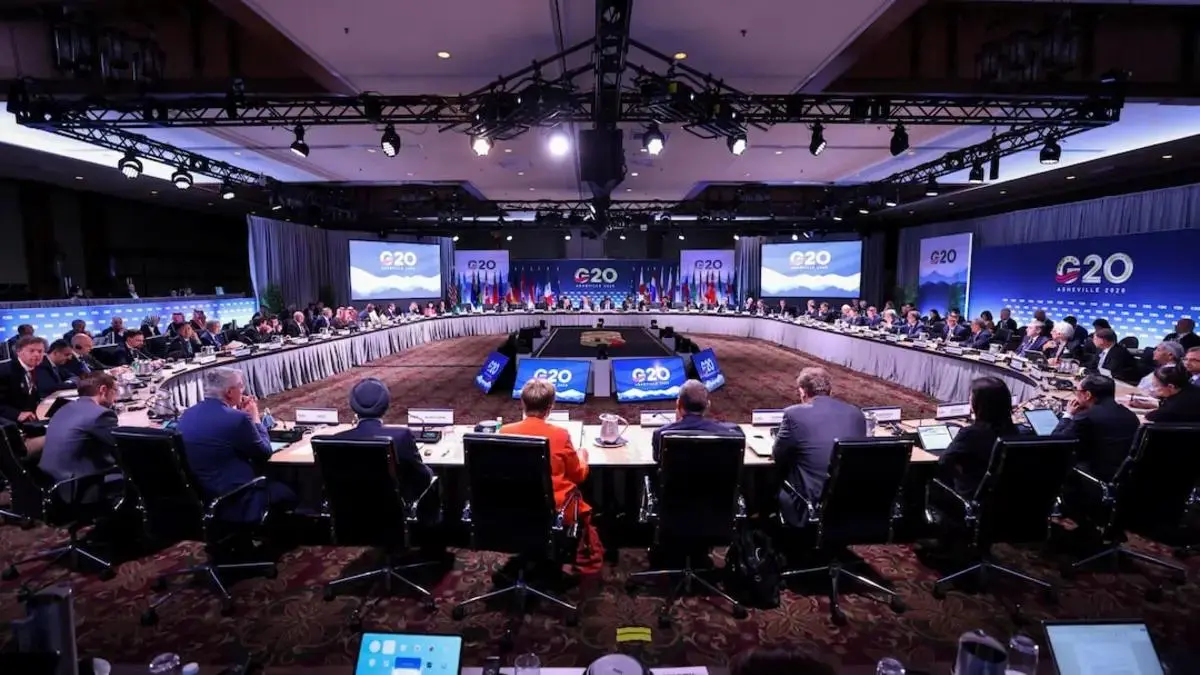
Finance ministers and central bank governors gathered for a two-day meeting on August 31 and September 1.
The US, as host, invited Siluanov to attend. Poland's Finance Minister Andrzej Domanski said he was unhappy to see Russia represented and warned that discussions with Moscow required extreme caution. German Finance Minister Lars Klingbeil called the signal “quite troubling” for cooperation on sanctions.
Several European officials opposed including Siluanov in the traditional group photograph. The final picture was taken without him.
The contrast with 2022 was sharp. When Siluanov joined a G20 finance meeting virtually soon after the invasion, officials from the US, Britain, Canada and the European Central Bank walked out.
Why was Russia invited back?
The United States has not presented Siluanov's appearance as a removal of sanctions or a return to normal economic relations.
US Treasury Secretary Scott Bessent met the Russian minister separately. Russia's finance ministry said the discussion covered cooperation within the G20 framework. A US official said President Donald Trump's Ukraine peace plan was the focus.
A person familiar with the talks told Reuters that Bessent said Russia would receive no economic relief and no agreements on other issues until the war ends.
That distinction is central to Washington's position: dialogue at a multilateral forum does not necessarily mean sanctions relief. European officials remain concerned, however, that treating a Russian minister as a normal participant weakens the political isolation built since 2022.
Why European ministers objected
European governments are preparing another sanctions package against Russia and continue to support Ukraine. In that context, Siluanov's presence was more than a procedural issue.
Klingbeil said he wanted clearer assurance from the American side that the Russian minister would not be received as an ordinary guest. Domanski said Poland did not trust Russia and considered it the aggressor in the war.
The disagreement reveals a broader tension within the G20. The group includes countries with sharply different positions on Ukraine, and its economic mandate requires officials to share a table even when political relations have broken down.
Hosts have discretion over invitations and meeting arrangements. Yet every invitation carries symbolic weight, especially when sanctions and diplomatic isolation are part of an active strategy.
Which journalists were denied access?
The US Treasury denied credentials to Bloomberg News teams and selected reporters from the New York Times and Wall Street Journal, according to Reuters.
The department said more than 300 journalists were covering the meeting and noted that another New York Times reporter had received access. A spokesperson argued that access came with a responsibility to report factual information consistent with journalistic standards.
Critics say a government should answer reporting it considers inaccurate rather than decide which established outlets or reporters can attend. Selective credentialing can limit scrutiny, reduce the range of questions asked and create the appearance that access depends on favourable coverage.
Klingbeil said the press had a legitimate interest in reporting openly and freely on the summit and called the exclusions unacceptable.
The economic agenda the US wanted to highlight
Bessent opened the meeting by arguing that stronger economic growth is the best route out of the world's debt burden.
Global debt reached nearly $353 trillion earlier in 2026. High borrowing levels have increased concern about financial stability and led some investors to reconsider assets traditionally treated as safe, including US government debt.
The Treasury identified several barriers to growth for G20 members:
- Heavy regulatory and administrative burdens
- Poorly designed tax systems and financial incentives
- Insufficient public and private investment
- Fragmented internal markets
- Skills and worker-mobility gaps
Private-sector leaders were invited to some sessions, reflecting the Trump administration's emphasis on deregulation, expanded energy production and technology investment.
AI investment and the global debt debate
Federal Reserve Chair Kevin Warsh used his first international economic policy meeting since taking office in May to describe a global investment surge led partly by artificial intelligence.
The argument is that large spending on data centres, power systems and computing infrastructure is absorbing capital that might otherwise flow into government bonds. That can support productivity and growth over time, but it may also push bond yields and borrowing costs higher in the near term.
Bessent rejected descriptions of debt-market turmoil and pointed to US growth as evidence that the country's fiscal position should be viewed differently from slower-growing advanced economies.
Economists who disagree with that emphasis say growth alone may not be enough. Large and persistent fiscal deficits can continue adding to debt even when the economy expands.
China trade surplus becomes another flashpoint
The United States also wants G20 countries to review their trading relationships with China.
Bessent said the global economy could not sustainably absorb a Chinese goods trade surplus of about $1.2 trillion. Washington argues that Beijing should rely less on exports and strengthen domestic consumption.
China's manufacturing scale can lower prices for consumers and businesses abroad, but large imbalances create political pressure when importing countries believe local industries cannot compete with subsidised or excess production.
French Finance Minister Roland Lescure said all major economic regions have work to do, including China, the United States and Europe. That response reflects resistance to framing global imbalances as a problem caused by only one country.
What the G20 can realistically achieve
The G20 is valuable because it brings advanced and emerging economies into the same room. Its members account for most global output, trade and emissions.
It is not a treaty organisation with the power to force compliance. Progress usually comes through shared principles, coordinated policy and pressure built across several meetings.
Political disputes can therefore consume time without producing a formal resolution. Russia's participation, press access, China trade and US debt policy are all issues on which consensus is difficult.
The Asheville meeting can still produce technical cooperation on debt transparency, financial stability and growth. But the controversy at its opening demonstrates that economic policy cannot be separated neatly from war, diplomacy and democratic norms.
What happens next?
Delegations will continue discussing trade imbalances, global borrowing costs and the effect of energy and AI investment on growth.
Attention will remain on whether Bessent's meeting with Siluanov leads to any further contact and whether European governments receive stronger US assurances on sanctions. Washington's public position is that economic relief will not come before the Ukraine war ends.
Media organisations may also seek explanations or appeal the credential decisions. Even if access is not restored for this meeting, the dispute could shape coverage rules at future US-hosted international events.
The political outcome may be measured less by a final communiqué than by confidence between allies. If European ministers leave Asheville believing the US is normalising Russia or restricting scrutiny, that distrust could complicate cooperation well beyond one G20 session.
Sources
- Reuters: US irks G20 ministers by bringing back Russia and barring journalists, August 31, 2026
- Reuters: Bessent tells Russian minister no economic relief until Ukraine war ends, August 31, 2026
- G20: Finance ministers and central bank governors process and membership information
Thumbnail: G20 finance ministers and central bank governors meet in Asheville on August 31, 2026. Photo by Sam Wolfe/Reuters.