North Korea fired a ballistic missile from the Wonsan area toward the sea on Saturday, October 3, according to South Korea's military. The missile travelled more than 700 kilometres before coming down outside Japan's exclusive economic zone, Japanese and South Korean officials said.
The launch adds to a series of North Korean weapons demonstrations and comes during a fresh rise in tension along the inter-Korean border. It is important, however, not to label the weapon more precisely than officials have done. At the time of publication, South Korea and the United States were still analysing the missile's detailed characteristics.
What happened in the October 3 launch?
South Korea's Joint Chiefs of Staff said the launch originated around Wonsan, a coastal city in eastern North Korea. The reported distance was more than 700 kilometres, or about 435 miles. Japan's Defence Ministry said the missile landed outside the country's exclusive economic zone.
No reported debris impact or injury was announced in the initial statements. South Korea said its military had increased surveillance and readiness in case North Korea attempted another launch and was sharing information with the United States and Japan.
Seoul's presidential national security office called on Pyongyang to stop repeated ballistic launches, describing them as violations of United Nations Security Council sanctions.
Why the timing matters
The test followed a dispute over land-mine explosions near the military demarcation line on September 21. Three South Korean soldiers were injured. South Korea and the US-led United Nations Command said the blasts were caused by mines planted by North Korea south of the line.
Kim Yo Jong, the sister of North Korean leader Kim Jong Un, rejected Seoul's demand for an apology. She denied North Korean responsibility and repeated Pyongyang's increasingly hostile position toward the South.
That border dispute does not by itself prove the purpose of the October 3 missile launch. It does, however, form part of the immediate security environment in which the test occurred.
Was it the same weapon tested in September?
Officials had not confirmed the missile model when the first reports were published. North Korea said it tested a hypersonic missile system from the Wonsan area on September 20, but geographical similarity is not enough to conclude that the October 3 projectile was the same system.
Missile type, maximum altitude, speed, trajectory and launch platform are all needed for a reliable assessment. Until those details are released, “ballistic missile” is the most accurate public description.
How South Korea, Japan and the US responded
South Korea, Japan and the United States exchanged tracking data and monitored for additional activity. Their response reflects an established regional system in which early-warning information is shared to improve detection and assessment.
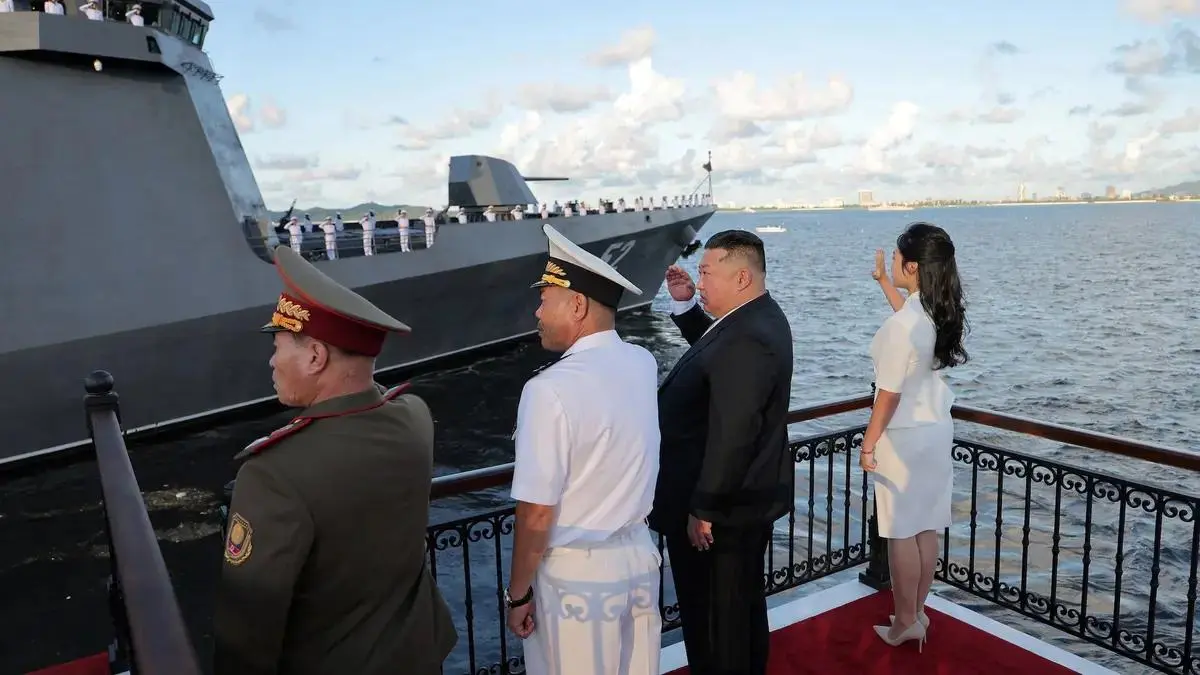
The launch also reinforces the strategic concerns surrounding North Korea's broader weapons programme. Pyongyang has developed short-, medium- and long-range systems, including weapons described as nuclear-capable. It has paired missile development with naval modernisation, including the recently commissioned Kang Kon destroyer and its strategic role.
What could happen next?
Analysts will watch for an official North Korean account, which may identify the weapon and the stated goal of the test. South Korean, Japanese and US agencies may also release revised flight data after completing their assessment.
A single launch does not reveal whether Pyongyang plans an immediate series of tests. North Korea has often used multiple demonstrations, military exercises and state-media statements to send overlapping technical and political messages. The safest conclusion is that the October 3 launch raises pressure at an already tense moment; predictions of imminent war go beyond the confirmed evidence.
Confirmed facts
- The launch was detected on October 3, 2026.
- South Korea said it originated in the Wonsan area.
- The missile travelled more than 700 kilometres.
- Japan said it landed outside its exclusive economic zone.
- Regional militaries were still analysing the weapon's characteristics.
Sources
The initial flight details and official reactions were checked against Associated Press reporting and the early Reuters report on the launch.
Frequently asked questions
Where was the North Korean missile launched from?
South Korea's military said it was launched from the Wonsan area on North Korea's east coast.
Did the missile enter Japan's exclusive economic zone?
Japan's Defence Ministry said it landed outside the EEZ.
What type of missile was it?
Officials initially described it as a ballistic missile. A more specific model had not been publicly confirmed at publication time.