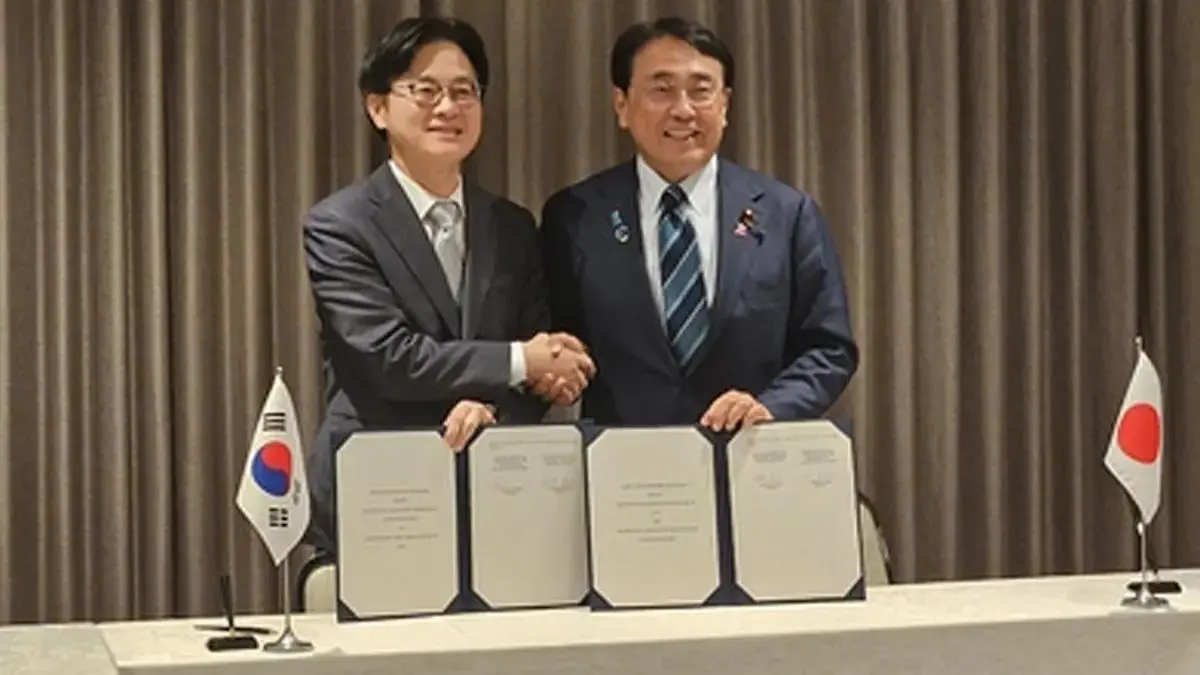
South Korea and Japan have held their first official meeting focused on emergency energy supplies, advancing a partnership designed to protect both economies from disruptions affecting liquefied natural gas, crude oil and petroleum products.
Officials met in Tokyo to implement a wider supply-chain agreement. They discussed how the two countries could coordinate during shortages and also exchanged views on carbon policy and new European supply-chain rules.
The talks come as conflict and shipping risks continue to expose how quickly events far from East Asia can raise fuel prices for major importing nations.
Why Korea and Japan need cooperation
Both countries are industrial powers with limited domestic fossil-fuel resources. They import large quantities of LNG and crude oil to support electricity generation, manufacturing and transport.
That shared dependence creates competition for cargoes during a crisis, but it also creates an incentive to cooperate. Storage capacity, shipping schedules and seasonal demand are not identical. One country may be able to redirect or exchange a cargo when the other faces a temporary shortage.
Formal coordination can make those decisions faster than emergency negotiations started after supplies are already disrupted.
LNG is at the centre
LNG security has become increasingly important since global gas markets were transformed by Russia's invasion of Ukraine and Europe's move away from Russian pipeline supply.
Asian buyers now compete directly with Europe for flexible cargoes. Prices can rise rapidly during cold weather, production outages or shipping disruption.
South Korea's KOGAS and Japan's JERA have already explored LNG swap arrangements. Such deals allow companies to exchange delivery timings or destinations, reducing costs and responding to local shortages without always buying an additional cargo on the spot market.
Oil and petroleum products
The partnership also covers crude oil and refined fuels. Much of the region's oil passes through strategic maritime routes, including the Strait of Hormuz and the Strait of Malacca.
Renewed conflict around Iran has made Hormuz risk especially visible. Even when physical shipments continue, insurance and freight costs can increase immediately.
Japan and South Korea maintain strategic petroleum reserves, but coordination can improve how those reserves are used. Releasing stocks too early may waste protection; waiting too long can deepen price shocks and industrial disruption.
A relationship shaped by history and necessity
Seoul and Tokyo have a difficult political relationship rooted in Japan's colonial rule of Korea and recurring disputes over history, compensation and territory.
Security and economic conditions have nevertheless pushed the two governments toward closer practical cooperation. North Korea's weapons programme, competition with China and vulnerable supply chains give both countries reasons to maintain regular channels even when political tensions return.
Energy coordination is useful because it produces measurable benefits without requiring every historical dispute to be resolved first.
Carbon tariffs and supply-chain rules
The meeting also addressed carbon emissions and due-diligence requirements, including European Union carbon-border policies. Exporters in both countries need to measure emissions accurately if they want to avoid higher costs when selling carbon-intensive goods into Europe.
Coordinated standards could reduce duplication for companies operating across both markets. It may also support joint investment in cleaner fuels, hydrogen, ammonia and lower-carbon industrial processes.
However, energy security and decarbonization can pull policy in different directions. Governments may retain fossil-fuel reserves for emergencies even while promising long-term emissions reductions.
What happens next
The value of the partnership will depend on operational detail. Officials need agreed triggers for emergency meetings, clear authority for companies to exchange cargoes and systems for sharing supply information without exposing commercially sensitive data.
They must also decide whether cooperation extends to joint purchasing or remains focused on swaps and emergency assistance. Joint procurement could improve bargaining power but may attract competition concerns.
The first formal meeting does not create a shared energy market. It does create a channel that can be activated before a crisis becomes severe.
For two import-dependent neighbours, that preparation is strategically important. South Korea and Japan cannot control wars, shipping disruptions or global fuel prices, but they can reduce the damage by treating energy security as a problem better managed together.
