The US Federal Trade Commission and a bipartisan group of 22 states have sued Amazon, accusing the company of secretly manipulating its advertising auctions and causing advertisers $20 billion or more in alleged harm.
The complaint, filed in the US District Court for the Western District of Washington on August 31, 2026, says Amazon represented its system as a second-price auction while using undisclosed reserve prices that pushed winning advertisers closer to paying their full bids.
Amazon denies the allegations. The company says its advertising system aims to show shoppers relevant ads, that average advertising cost per click remained flat from 2019 to 2024, and that sales generated per click increased.
The lawsuit is an allegation, not a finding of liability. Amazon will have an opportunity to challenge the claims and evidence in court.
Amazon FTC lawsuit: key facts
- Defendant: Amazon.com
- Plaintiffs: US Federal Trade Commission and 22 state attorneys general
- Court: US District Court, Western District of Washington
- Filed: August 31, 2026
- Alleged conduct: Undisclosed surcharges in online advertising auctions
- Period covered: Changes beginning in 2019
- Advertisers affected: More than one million brands and sellers, according to the FTC
- Small and medium businesses: More than 500,000, according to the complaint
- Alleged harm: $20 billion or more
- Amazon's position: It denies wrongdoing and says advertisers benefited
The case covers Sponsored Products, Sponsored Brands and Display Ads placed alongside search results on Amazon's website and mobile app.
What is Amazon accused of doing?
The FTC alleges that Amazon told advertisers it operated a generalised second-price auction. In that type of auction, the winning advertiser does not normally pay its maximum bid. Instead, it pays the minimum amount required to beat the next-highest ranked competitor, often explained as one cent more.
According to the complaint, Amazon changed its pricing rules without properly telling advertisers. The FTC says Amazon added what employees called a “soft reserve price” and sometimes inserted an internally calculated proxy bid that raised the price paid by the winner.
The regulator characterises this as a hidden surcharge. It argues that advertisers continued bidding as though the final charge would be set by genuine competition from another advertiser, while Amazon's own system was raising the minimum winning price.
The complaint says this practice affected as much as 80% of Sponsored Products auctions by 2024. It alleges advertisers increasingly paid their own full bid, effectively making the system behave more like a first-price auction.
Amazon disputes that description and says the FTC has misinterpreted how its auction technology improves relevance and value.
How a second-price ad auction works
Imagine two sellers bidding to place an advertisement next to a search for headphones:
- Seller A bids up to $2.00 per click.
- Seller B bids up to $1.40 per click.
In a simplified second-price auction, Seller A wins but pays only slightly more than Seller B's bid—perhaps $1.41—rather than the full $2.00.
This system encourages advertisers to bid closer to the true value of a click because they expect to pay only what is required to beat the next competitor.
In a first-price auction, the winner pays its own bid. Seller A would therefore pay the full $2.00. Advertisers who know they are in a first-price system may reduce, or “shade,” their bids to avoid overpaying.
The FTC's central argument is that Amazon's public explanations led advertisers to behave as second-price bidders while hidden reserve pricing moved the amount charged toward their first-price bids.
What is a soft reserve price?
A reserve price is a minimum amount an auction operator is willing to accept. If the highest competitive result falls below that minimum, the reserve can raise the winning price or prevent a sale.
The complaint alleges Amazon created undisclosed soft reserves that did not come from a competing advertiser. The FTC says internal materials described an “invented auction participant” and a calculated “proxy second price.”
The regulator compares those interventions to shill bids because they allegedly increased the amount real advertisers paid without representing genuine marketplace demand.
Amazon's defence is expected to focus on the purpose and effect of its auction design. Digital ad systems commonly consider relevance, predicted click-through rate and other quality factors in addition to the bid. The legal question is not simply whether Amazon used complex pricing, but whether its representations to advertisers were deceptive or unfair.
Why the FTC says consumers were affected
The advertisers directly paying Amazon include brands, marketplace sellers and more than 500,000 small and medium-sized businesses, according to the FTC.
The agency argues that higher advertising expenses do not stop with those companies. Sellers may incorporate marketing costs into product prices, reducing margins or charging shoppers more.
Amazon rejects the claim of consumer harm. It says its pricing approach supports relevant advertising and helps customers find products, while its retail business continues to offer competitive prices.
Whether advertisers actually passed alleged surcharges to consumers—and by how much—will be an important question if the case advances to damages.
How much money is involved?
Reuters reported that the FTC and states allege at least $20 billion in harm to advertisers. An agency official said the plaintiffs would seek tens of billions of dollars, although a final damages request had not been fixed.
The potential scale reflects the size of Amazon's advertising operation. Amazon has become the world's third-largest digital advertising company behind Google and Meta.
Its advertising sales rose 26% year over year to $19.8 billion in the second quarter of 2026. For the full 2025 year, advertising revenue increased 22% to $68.6 billion.
Those figures cover the overall business and should not be confused with the amount challenged in the lawsuit. The complaint focuses on the allegedly undisclosed pricing intervention, not every dollar Amazon earned from advertising.
What Amazon says in response
Amazon denies that it illegally overcharged advertisers. The company says average cost per click stayed flat from 2019 through 2024 while sales per click increased.
It also says average winning bids for Sponsored Products search advertisements fell 50% between 2019 and 2025 and claims its practices saved advertisers about $8 billion from 2021 through 2025.
Those numbers directly challenge the FTC's theory that auction changes harmed advertising customers. The court will need to examine the calculation methods, auction data and internal decision-making behind both sides' claims.
Amazon also argues that its system should be judged by customer relevance and economic results, not isolated descriptions of internal technology.
Which 22 states joined the case?
The attorneys general of the following states joined the FTC:
- Alaska
- Arizona
- California
- Colorado
- Florida
- Idaho
- Illinois
- Indiana
- Iowa
- Kentucky
- Louisiana
- Maryland
- Nebraska
- New Jersey
- New York
- North Carolina
- Oklahoma
- Pennsylvania
- Rhode Island
- South Carolina
- Vermont
- Washington
The participation is politically significant because it crosses traditional party lines. State consumer-protection laws may also provide separate paths to penalties or restitution.
What happens next?
Filing the complaint begins the federal court process. Amazon can respond with motions challenging the legal claims, the scope of the case or particular allegations.
If the case continues, discovery could require both sides to exchange documents, auction data, expert analysis and witness testimony. That process may reveal more detail about how reserve prices were designed, communicated and measured.
The plaintiffs are seeking to stop practices they consider unlawful, obtain civil penalties under applicable laws and recover money for affected advertisers. No refunds are currently available merely because the lawsuit was filed.
Advertisers should be cautious about services claiming they can immediately collect compensation. Any official settlement, judgment or refund programme would be announced separately by the FTC or court.
How this case fits Amazon's wider legal battles
The advertising case adds to years of regulatory scrutiny around Amazon's retail and subscription businesses.
In September 2025, Amazon agreed to pay $2.5 billion in penalties and customer reimbursements to settle FTC allegations involving Prime subscriptions. The company did not admit wrongdoing under that settlement.
Amazon also faces another FTC case alleging it unlawfully maintained monopoly power through practices affecting sellers and pricing. That antitrust dispute is legally separate from the new advertising-auction complaint.
The current lawsuit is narrower but targets a rapidly growing profit centre. Amazon's advertising business is valuable because shoppers on the platform often have immediate purchase intent, making sponsored placements especially attractive to sellers.
Why the outcome matters globally
Amazon's marketplace and advertising tools serve businesses well beyond the United States. Although this case is based on US federal and state laws, any required changes to auction disclosures or pricing could influence Amazon's systems in other markets.
The dispute may also affect the wider digital advertising industry. Regulators are increasingly examining not only who controls ad markets, but how automated auctions set prices in fractions of a second.
For advertisers, the core issue is transparency: whether they receive an accurate explanation of the rules that determine what they pay. For Amazon, the case concerns its freedom to optimise a complex marketplace while maintaining that its system creates value.
The filing is only the beginning. The FTC has presented serious allegations supported by a 181-page complaint, while Amazon has issued a direct denial backed by its own cost and performance figures. Liability, damages and any operational changes will depend on evidence tested in court.
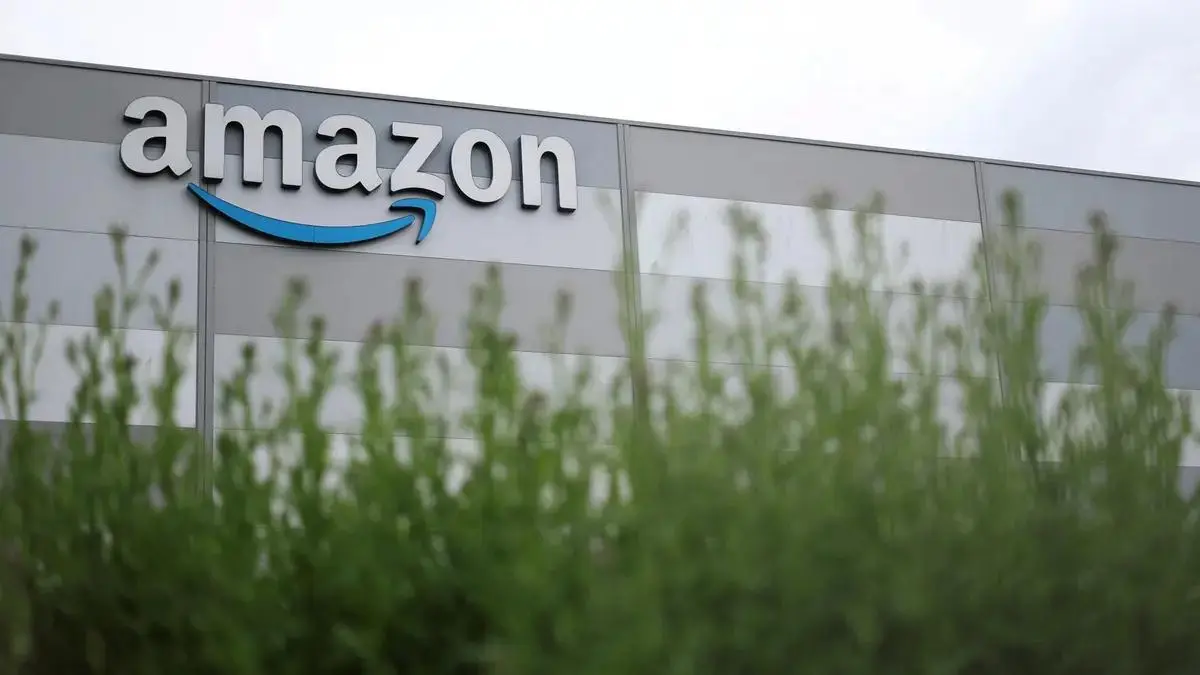
Photo: The Amazon logo at a company logistics centre in Carquefou near Nantes, France, on May 6, 2026. Reuters/Stephane Mahe.