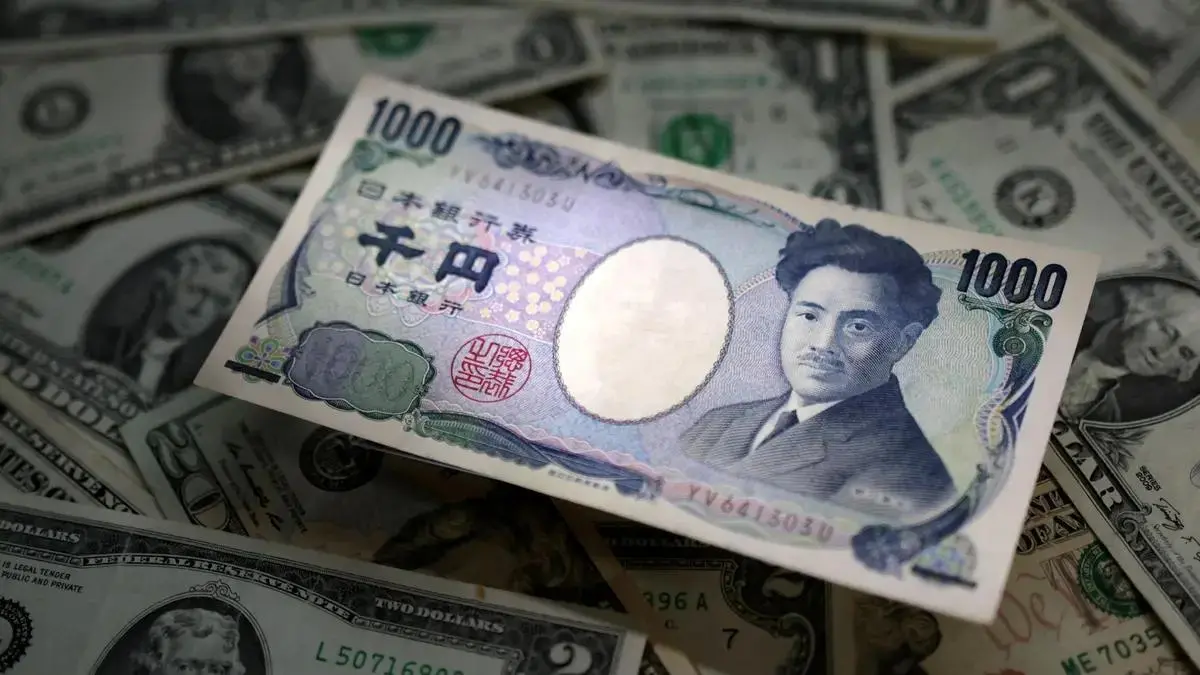
Japan's foreign reserves suffered their largest monthly fall on record in August after the government carried out an unprecedented operation to support the yen.
The Ministry of Finance reported reserves of $1.208 trillion at the end of August, down $79.6 billion, or 6.18%, from $1.287 trillion a month earlier.
Why the reserves fell
Japan intervened by selling dollars and buying yen. When a government uses foreign-currency assets to purchase its own currency, the transaction can reduce the reported reserve balance.
Tokyo spent 15.4 trillion yen, or about $98.66 billion at the exchange rate cited by Reuters, on intervention between July 30 and August 26. It was the country's largest intervention total for a single month.
Foreign securities, mostly US Treasuries accumulated during past dollar-buying operations, account for around 70% of Japan's reserves and led the decline.
What happened to the yen
The intervention initially pushed the currency away from 40-year lows near 164 yen per dollar. It strengthened as far as 155.20 on August 3, later weakened toward 160 and then returned to roughly 155-156 in early September.
That path shows both the power and limitation of intervention. Large purchases can move a market quickly, but the effect may fade if interest-rate differences and investor demand continue to favour the dollar.
Why the US role was unusual
Part of the operation was coordinated with the United States, the first joint US-Japan currency intervention since 2011.
Tokyo and Washington also pointed to a Federal Reserve facility created during the COVID-19 market shock. The arrangement allows major central banks to raise dollar liquidity without immediately selling as many US Treasury holdings.
Does Japan still have enough reserves?
A $79.6 billion fall is substantial, but Japan still holds more than $1.2 trillion in reserves. The more important question for markets is how often officials may need to intervene and whether repeated action changes the yen's underlying direction.
Investors will watch US and Japanese interest-rate expectations, inflation data and official statements for clues about the next move.

