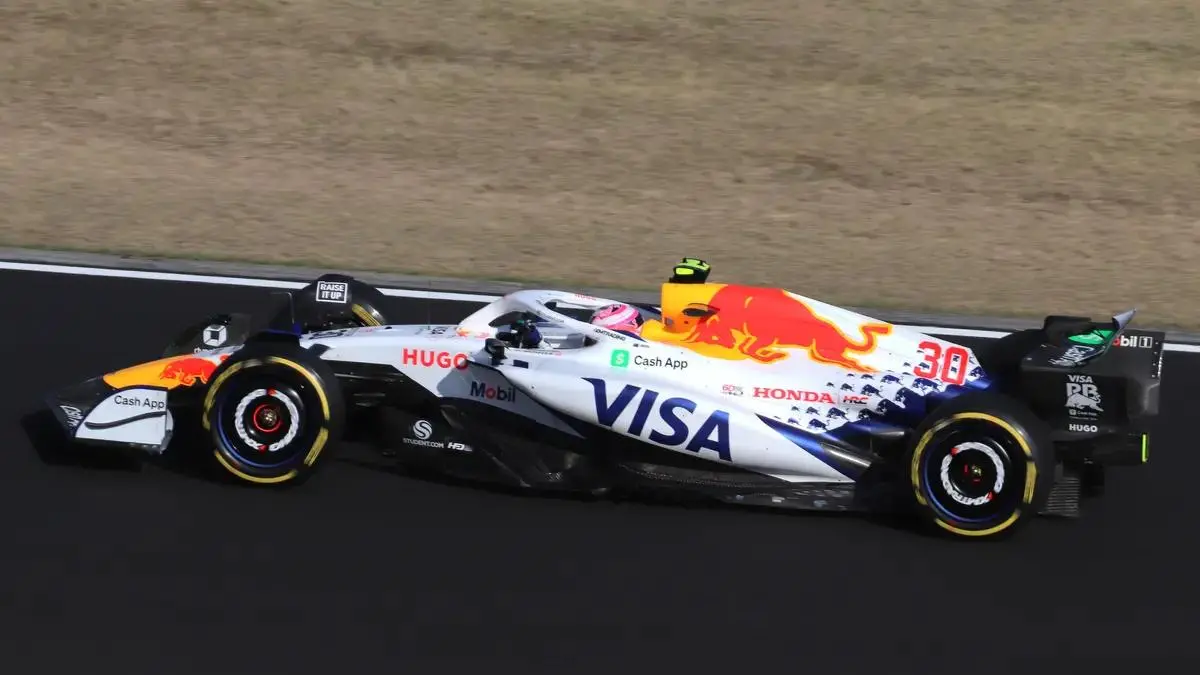
Formula 1's fastest traditional circuit hosts the Italian Grand Prix on Sunday, September 6, with Monza's long straights, heavy braking zones and extreme heat expected to turn a simple-looking race into a demanding strategy test.
The Grand Prix is scheduled to start at 3:00 p.m. local time in Italy. That is 1:00 p.m. UTC and 6:30 p.m. IST. Viewers should check their local broadcaster because television build-up normally begins well before the formation lap.
Italian Grand Prix 2026 key details
- Date: Sunday, September 6, 2026
- Start time: 3:00 p.m. in Italy
- Venue: Autodromo Nazionale Monza
- Race distance: 53 laps
- Circuit length: 5.793 kilometres
- Total distance: 306.72 kilometres
- Expected weather: Hot and mostly dry
Formula 1's official weekend page lists the race at 13:00 UTC. The forecast published by F1 puts the daytime temperature near 34C, with track temperature potentially reaching about 57C and only a small chance of rain after sunset.
Why Monza produces a different kind of race
Monza rewards straight-line speed more than almost any other circuit. Teams use low-downforce rear wings to reduce drag, allowing the cars to reach high speeds on the run towards the first chicane and again through the final sector.
The trade-off is stability. Less downforce makes braking, kerb riding and traction more difficult. A car that looks fast in clean air can become nervous when following another car into a braking zone.
That balance gives engineers a difficult choice: remove wing for speed on the straights or keep enough load to protect tyres and give the driver confidence through Lesmo, Ascari and the Curva Alboreto.
The first lap will matter
The Rettifilo chicane arrives after a long run from the grid and compresses the field into a narrow right-left sequence. Drivers at the front must defend the inside line without braking too late. Those in the midfield have to judge gaps while cars arrive on different trajectories.
An incident or a missed chicane can immediately change the strategic picture. An early safety car may make a tyre stop attractive for some drivers, but pitting too soon can leave them with a long final stint in severe heat.
Track position is especially valuable because passing is not automatic. The straights create opportunities, yet a low-downforce car can struggle to stay close through the corners before the DRS zone.
How the heat could shape tyre strategy
High track temperatures increase the risk of thermal degradation. The surface of a tyre can overheat when a driver follows closely, slides through a corner or repeatedly locks a wheel under braking.
A one-stop race is often the fastest theoretical route at Monza, but teams will compare it with the flexibility of two stops. The decision depends on starting compound, degradation, traffic and safety-car timing.
Undercutting can be powerful when fresh tyres deliver an immediate lap-time gain. Overcutting may work if a driver has clean air and the new tyre takes time to reach its best operating window.
The pit lane itself carries a meaningful time cost. Teams will not add a stop casually, even if the hot track makes tyre management uncomfortable.
Ferrari's home-race pressure
Ferrari arrive at Monza carrying the expectations of the Tifosi. Charles Leclerc led Lewis Hamilton in the opening practice session, while both drivers described a competitive Friday.
Hamilton called a Ferrari pole at Monza an “ultimate dream,” but practice pace does not guarantee race pace. Fuel loads, engine modes and tow effects can make the Friday order misleading.
The emotional importance of the weekend can also magnify small decisions. A conservative strategy may protect points but disappoint a crowd expecting a win; an aggressive call can create a chance while increasing risk.
What to watch after the start
Five variables should tell viewers how the race is developing:
- Whether the leader can break the DRS gap in the opening laps.
- Which cars suffer front-tyre locking at the first chicane.
- Whether drivers can follow through the Lesmo corners without overheating.
- The first pit-stop window and the size of the undercut.
- Any safety car that allows a discounted stop.
Also watch for slipstream partnerships in qualifying order carrying into the opening laps. A tow can help a following car attack, but it can also expose the leading car to pressure under braking.
Where to watch
F1 TV Pro carries the race in supported territories, while rights differ by country. The official Formula 1 broadcast information page is the safest place to confirm a local provider.
Because streaming and television rights can change, viewers should avoid relying on old season guides. Check the official race hub shortly before the event.
The bottom line
Monza's reputation is built on speed, but the 2026 Italian Grand Prix could be decided by restraint: managing brake temperatures, avoiding tyre slides and choosing the moment to trade track position for fresh rubber.
With a hot, dry forecast and Ferrari under intense home pressure, every mistake will be visible—and expensive.
Sources
- Formula 1: Official 2026 Italian Grand Prix race hub
- Formula 1: Italian Grand Prix weather forecast
- Formula 1: Race start time and viewing guide
More: How stoppage time is calculated in football and our latest Sports coverage.