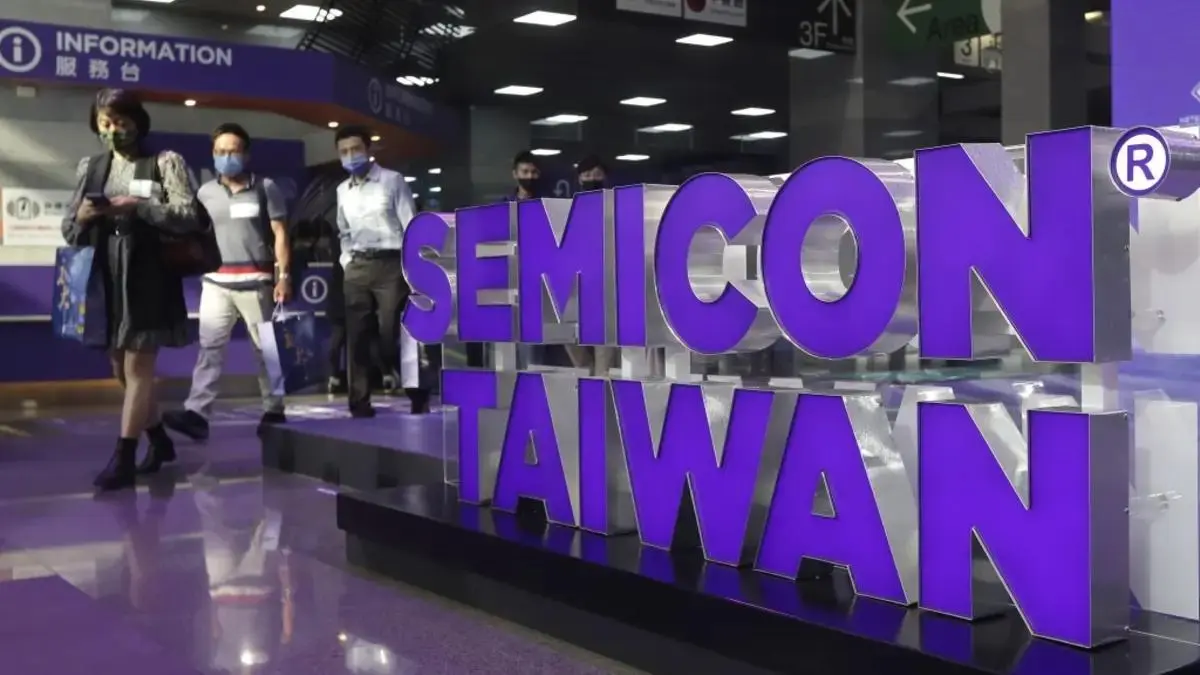
Taiwanese companies are planning an additional $20 billion in United States investment, a fresh sign that the artificial-intelligence boom is reshaping where the world's most important computing hardware is built.
Taiwan Economy Minister Kung Ming-hsin announced the estimate at the SEMICON trade show in Taipei. He said AI and semiconductor orders were extremely active, although he did not identify the companies considering the new projects.
Why the $20 billion figure matters
The plan sits alongside a much larger American expansion by TSMC. The chip manufacturing giant increased its planned Arizona investment by $100 billion in July, taking the total to $265 billion. The newly disclosed $20 billion would come from other Taiwanese businesses and could spread the supply chain beyond wafer fabrication.
Advanced chips depend on an ecosystem that includes packaging, testing, components, chemicals, equipment and server manufacturing. Moving more of those capabilities into the US could make domestic chip production more resilient, while giving Taiwanese suppliers closer access to their largest customers.
The announcement also supports the goals of the US CHIPS Act. Bill Frauenhofer, a US Commerce Department official overseeing semiconductor investment, said the projects would strengthen a secure and innovative electronics supply chain.
AI is driving the expansion
Generative AI services require huge clusters of processors, memory, networking equipment and cooling systems. That demand has produced record orders across the technology supply chain and encouraged companies to build capacity closer to American data centres.
For Taiwan, overseas expansion is a commercial opportunity but also a delicate strategic issue. The island remains the centre of advanced semiconductor manufacturing. Building plants abroad can reduce geographic concentration without immediately replacing Taiwan's deep network of engineers and specialist suppliers.
The next questions are which firms will participate, where their factories will be located and how quickly the projects can move from planning to production. Semiconductor facilities require skilled workers, reliable power and long approval timelines, so the investment will likely arrive in stages.
Even without those details, the announcement shows that the AI infrastructure race is becoming a cross-border industrial buildout rather than a short-lived software trend.
Source: Reuters report from SEMICON Taiwan.