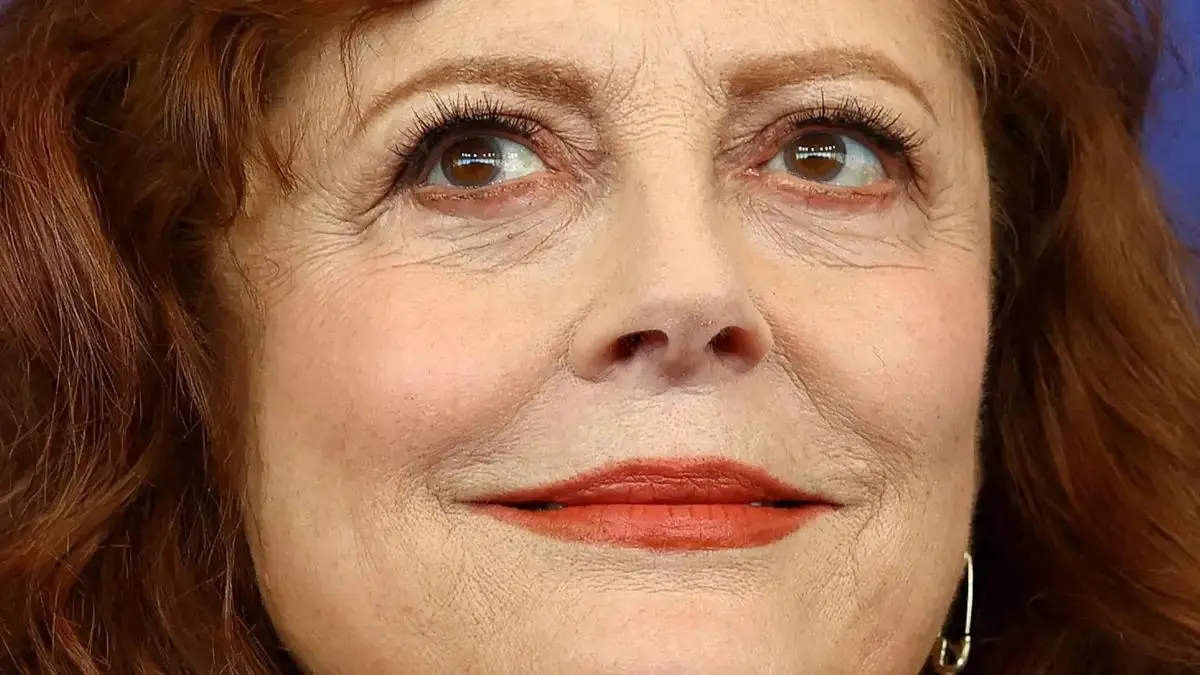
Oscar-winning actor Susan Sarandon says her public support for Palestinians continues to cost her film work, even as she believes international attitudes toward Israel and Gaza are changing.
Sarandon made the comments at the Venice Film Festival on Sunday, September 6, while promoting her new film “The Echo Chamber.”
What Sarandon said in Venice
The 79-year-old actor said some agencies still advise people not to hire her and that projects had recently been taken away. She contrasted that response from parts of the entertainment business with the welcome she receives from audiences internationally.
Her remarks describe her own experience. Reuters did not identify the projects, agencies or producers involved, so those details should not be inferred or attached to unverified online claims.
Why the dispute follows her career
Sarandon has long combined acting with political activism. Her advocacy for Palestinians intensified public debate around her position in Hollywood after the Gaza war began in 2023.
She argues that public understanding of US support for Israel and the history of the Palestinian issue has shifted. Recent US opinion polling cited by Reuters has shown softer support for Israel and increased sympathy for Palestinians.
That broader change does not mean the film industry's response is uniform. Studios, agencies, filmmakers and audiences can make different decisions, and private hiring discussions are rarely visible.
Her new film at Venice
Sarandon attended the festival for “The Echo Chamber,” which is competing at the 83rd Venice International Film Festival.
The appearance places her back on one of cinema's biggest international stages while the controversy over speech, activism and professional consequences remains active.
The wider Hollywood question
The story raises a recurring issue in entertainment: where employers draw the line between an artist's political speech and the commercial risk attached to a production.
Supporters may see Sarandon's stance as protected political expression; critics may strongly oppose her views. A factual account should separate those arguments from the narrower confirmed claim that she says the position has affected her employment.
What remains unverified
No public evidence in the report identified a formal industry blacklist. The most accurate description is that Sarandon says individual roles were withdrawn and some agencies discouraged hiring her.