Olivia Rodrigo’s first Daisy Chain Fields festival has turned a one-day music event into a $20 million fundraising effort for organisations supporting women and girls in the United States and around the world.
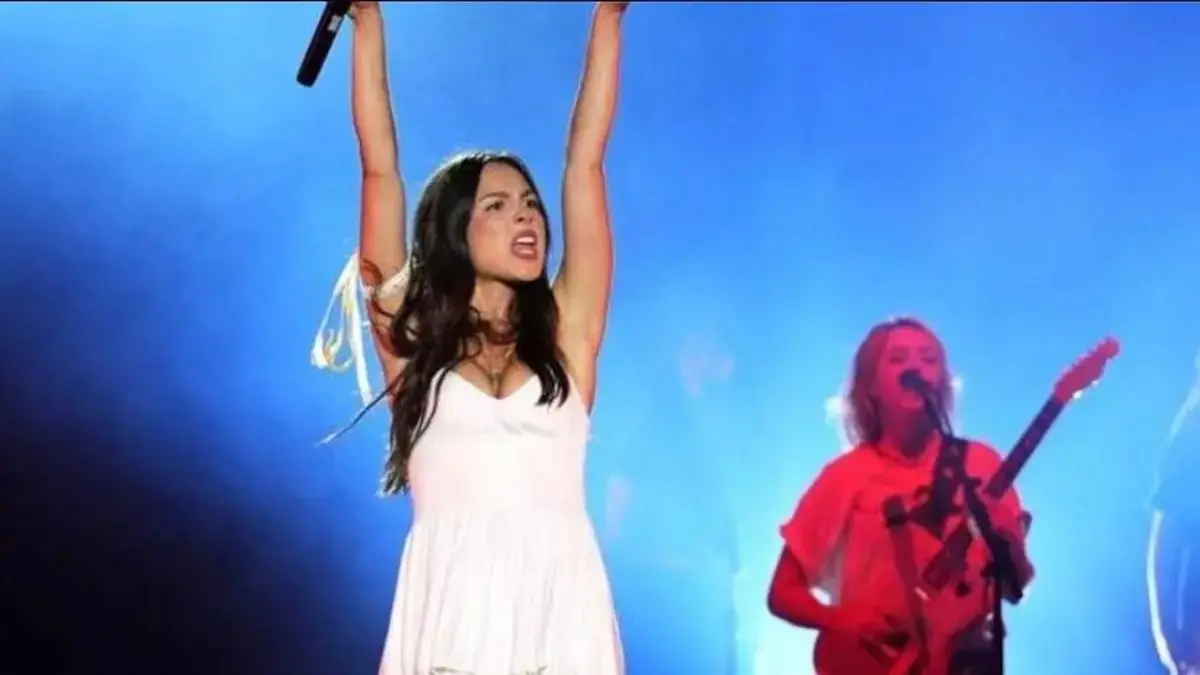
The festival took place on August 29 at Great Park in Irvine, California, with a women-led lineup spanning several generations of pop, rock and alternative music. Rodrigo announced that the event had generated $10 million for 10 nonprofit partners. Melinda French Gates then matched that amount through Pivotal, bringing the total commitment to $20 million.
The result has attracted attention far beyond a conventional celebrity benefit. Daisy Chain Fields combined major performances, nonprofit outreach, voter engagement and volunteer activity in a format designed to connect Rodrigo’s predominantly young audience with organisations working on health, legal rights, economic security and family support.
How Daisy Chain Fields reached $20 million
The first $10 million came from the festival’s fundraising model. Organisers said 100% of net proceeds would benefit the 10 nonprofit partners. Participating artists performed without a fee, while ticket buyers, sponsors and donors helped build the initial total.
Rodrigo announced the $10 million donation before the sold-out event. During the festival, French Gates appeared at the start of Rodrigo’s headline set and pledged an additional $10 million through Pivotal, the organisation she founded to advance social progress.
That match doubled the total to $20 million. The money is expected to be divided among the festival’s 10 partner organisations, which work across reproductive and maternal health, legal advocacy, economic justice, Indigenous health, family assistance and workplace rights.
The total gives Daisy Chain Fields an unusually large impact for the debut edition of a music festival. It also places the event within a long history of benefit concerts that have used major artists and shared cultural experiences to raise money and visibility for social causes.
Which nonprofits will receive the money?
The 10 nonprofit partners cover different but connected areas affecting women, children and families:
- Baby2Baby provides essential items such as diapers, formula, food and clothing to children and families facing poverty.
- Black Mamas Matter Alliance works to improve maternal health outcomes and ensure Black mothers receive care, respect and resources.
- Center for Reproductive Rights uses law and advocacy to defend access to reproductive healthcare in the US and internationally.
- FreeFrom supports survivors of gender-based violence, with a particular focus on financial security and direct assistance.
- Jhpiego works with communities and health systems around the world to improve care for women, girls and families.
- Johns Hopkins Center for Indigenous Health partners with Indigenous communities on health programmes and research.
- National Domestic Workers Alliance advocates for rights and protections for domestic workers, many of whom are women and immigrants.
- National Institute for Reproductive Health supports reproductive freedom and access to healthcare.
- National Women’s Law Center works on sex discrimination, workplace equality, education and legal rights.
- Planned Parenthood provides reproductive and sexual healthcare and related services.
The mix matters because it spreads support across both immediate needs and longer-term structural work. Some groups provide healthcare or material assistance directly, while others litigate cases, campaign for workplace protections or build community-led health programmes.
Organisers have said the grants can be used for urgent and underfunded priorities. That flexibility is valuable for nonprofits because celebrity-linked donations can sometimes be restricted to a narrow campaign rather than the organisation’s most pressing needs.
Who performed at Olivia Rodrigo’s festival?
Daisy Chain Fields brought together a broad women-led lineup. Rodrigo headlined alongside artists including Chappell Roan, Doechii, Mitski, Bikini Kill, Garbage, Santigold, The Breeders, Rachel Chinouriri and Devon Again.
The festival also featured special guests and collaborations. Stevie Nicks, Sarah McLachlan and Alanis Morissette appeared during the event, connecting Rodrigo’s Gen Z audience with artists associated with earlier eras of women-led pop and rock.
That intergenerational structure was deliberate. The event drew inspiration from Lilith Fair, the women-focused touring festival founded by McLachlan in the 1990s. Lilith Fair challenged the music industry’s assumption that audiences would not support women artists appearing consecutively on the same bill and raised millions for charity during its original run.
Daisy Chain Fields updated that idea for a social-media era. Instead of treating fundraising as a side note, the festival put nonprofit participation inside the main event experience.
More than a benefit concert
Festivalgoers could visit a dedicated “philanthropy village” and speak directly with representatives of the partner organisations. The area was designed to help fans understand the work behind the fundraising total and find ways to remain involved after the performances ended.
The wider campaign also included volunteer activity and civic engagement. According to information shared by partner organisation Jhpiego, more than 600 fans generated nearly 3,000 volunteer hours across 20 Los Angeles organisations before the festival. A partnership with HeadCount generated more than 45,000 civic actions and included on-site voter registration.
Women-led businesses, local vendors and visual artists were also part of the festival programme. That gave the event a community component instead of limiting it to a stage lineup and donation announcement.
This approach helps explain why the story is resonating internationally. Rodrigo has a global fan base, several beneficiaries operate outside the US, and the festival offers a model for how artists can turn fandom into sustained participation rather than a one-time social-media post.
Why Olivia Rodrigo’s fundraiser is significant
Benefit concerts are not new, but Daisy Chain Fields stands out because of the scale of the opening event and the age of the audience it was built to reach. Nonprofits have often found it difficult to develop long-term relationships with younger donors, who may prefer informal mutual-aid campaigns, online fundraising or volunteering over traditional institutional giving.
Rodrigo’s festival connects those habits with established organisations. Fans could attend performances by artists they already follow while encountering groups working on maternal care, domestic violence, Indigenous health and employment rights.
The event also gave smaller or younger organisations exposure alongside widely recognised names. For groups that do not usually receive entertainment coverage, appearing in the same conversation as Rodrigo, Roan and Doechii can introduce their work to millions of potential supporters.
The $20 million figure is the headline, but the audience connection may be the more lasting result. A successful first edition could influence other artists and promoters to build philanthropy into festivals from the planning stage rather than adding a charitable element after tickets go on sale.
Will Daisy Chain Fields return?
Organisers have not yet announced full plans for a second edition. The inaugural event was presented as both a festival and an impact platform, suggesting the project may continue beyond one weekend, but a future date, venue and lineup have not been confirmed.
For now, the immediate focus is on distributing the grants and maintaining the connections created between fans and nonprofit partners. Any future edition would face the challenge of preserving the event’s community purpose while operating at a larger scale.
What is confirmed is that the first Daisy Chain Fields ended with a substantial result: $10 million raised through the festival and another $10 million matched by Melinda French Gates, supporting 10 organisations working with women and girls.
Photo: Olivia Rodrigo performs at the Daisy Chain Fields Music Festival on August 29, 2026, in Irvine, California. AP Photo/Chris Pizzello.