Naomi Osaka survived two tense tiebreaks to beat Anastasia Zakharova 7-6(6), 7-6(3) in the first round of the 2026 US Open, pairing a hard-earned victory with one of the tournament's most talked-about entrances.
The 13th seed initially looked ready for a comfortable night after racing to a 4-1 lead inside Arthur Ashe Stadium. Zakharova, the world number 101, refused to let the match get away and forced Osaka to find her best tennis in the points that mattered most.
Osaka held her nerve in both breakers and completed the straight-sets win shortly before 12:30 a.m. local time. She will face Czech player Katerina Siniakova in the second round.
The match also drew attention far beyond the score. Osaka walked onto the court in a custom Allen Iverson-inspired look featuring a hooded tunic, panels made to resemble newspaper clippings and a flowing white tulle train.
Naomi Osaka vs Anastasia Zakharova result
- Tournament: 2026 US Open
- Round: Women's singles first round
- Winner: Naomi Osaka
- Score: 7-6(6), 7-6(3)
- Venue: Arthur Ashe Stadium, New York
- Osaka's seed: 13
- Zakharova's ranking: World number 101
- Next opponent: Katerina Siniakova
- Osaka's US Open titles: 2018 and 2020
The score shows a straight-sets victory, but it does not describe how narrow the contest became. Neither player could create lasting separation once Zakharova recovered from the early deficit.
How Osaka won the first set
Osaka opened aggressively and built a 4-1 advantage, suggesting her greater experience on the Arthur Ashe Stadium stage might produce a quick first set.
Zakharova changed the rhythm by extending rallies and making Osaka hit additional shots. The Russian recovered the break and pushed the set to 6-6, turning the opener into a pressure test.
In the tiebreak, Osaka leaned on the hard-court strengths that have delivered four Grand Slam titles: a powerful first strike, a willingness to attack and the ability to shorten points when tension rises.
She edged the breaker 8-6. Winning it was especially important because losing a set after leading 4-1 could have shifted the emotional balance of the match toward Zakharova.
Instead, Osaka left the opening set with the scoreboard advantage and evidence that she could win even when her level was not completely smooth.
Why the second set remained difficult
Zakharova did not fade after the disappointment of the first tiebreak. She continued to absorb Osaka's pace and prevented the favourite from controlling every service game.
Osaka acknowledged after the match that she felt rusty and nervous. This was her first competitive appearance since Toronto, and first rounds at major tournaments often create a different kind of pressure from later matches.
The second set again reached a tiebreak, but Osaka played the decisive points more cleanly this time. She took it 7-3 to finish the match without being dragged into a third set after midnight.
That is a useful result early in a two-week Grand Slam. Osaka received a meaningful competitive test without spending the additional physical and emotional energy required by a deciding set.
Naomi Osaka's Allen Iverson-inspired US Open outfit explained
Osaka's entrance was designed as a tribute to NBA Hall of Famer Allen Iverson, whose influence extends from basketball into athlete fashion and self-expression.
Her walk-on outfit combined sportswear with couture. The hooded tunic carried patchwork-style panels resembling press coverage from previous tournaments, while a long white tulle train created a dramatic silhouette as she entered the stadium.
The idea was not simply to wear basketball merchandise on a tennis court. Iverson changed how professional athletes presented themselves, challenged traditional expectations and made personal style part of his public identity.
Osaka has followed a similar approach in tennis. Clothing is not separate from the performance; it helps build the story around each major and allows her to connect sport, heritage and popular culture.
She had worn an Iverson shirt during US Open media activities before the tournament and described him as a trailblazer in athlete fashion. The match-day design turned that admiration into a complete entrance concept.
Osaka's fashion theme across the 2026 Grand Slams
The New York look continued a year-long sequence of custom Grand Slam outfits:
- At the Australian Open, her visual theme drew inspiration from a jellyfish.
- At Roland Garros, she used the nighttime sparkle of the Eiffel Tower as a reference.
- At Wimbledon, she paid tribute to her Japanese heritage with a kimono-inspired ensemble and a traditional kanzashi hair ornament.
- At the US Open, she blended New York energy with Allen Iverson's influence on basketball and fashion.
These outfits work because they are tied to a clear idea rather than being random additions. They also give each tournament appearance a distinct visual identity that travels across sports, fashion and social media coverage.
For the US Open in particular, Osaka's approach fits a tournament played in New York, where athletes have historically been encouraged to show more personality than at tennis's most traditional events.
What the victory says about Osaka's form
Osaka was not flawless, but the match offered several positive signs.
First, she won both tiebreaks. Those are the moments in which one loose point can decide an entire set, and Osaka raised her level twice.
Second, she did not panic after losing the early 4-1 cushion. A player returning from a competitive break could easily become frustrated when an apparent routine set turns complicated.
Third, she closed the contest in straight sets. The ability to finish difficult matches without extending them is essential for a deep Grand Slam run.
There are also areas to improve. Osaka will want more consistent control of her service games, cleaner conversion of early leads and a higher sustained level between the biggest points. Stronger opponents may not allow her to recover those margins in every tiebreak.
Why the US Open has always suited Naomi Osaka
Flushing Meadows is the setting for two of Osaka's four Grand Slam titles. She won her first major there in 2018 and lifted the trophy again in 2020.
The conditions reward her game. The hard courts allow her to take the ball early, redirect pace and use her serve to begin points on the front foot. The large evening crowd can create pressure, but Osaka has already shown that she can perform on the tournament's biggest stage.
Her relationship with New York is also personal. Born in Japan and raised in the United States, Osaka has often used the US Open to connect different parts of her identity.
That history does not guarantee another title, especially in a strong women's draw. It does mean she enters the tournament knowing that her best tennis has succeeded here before.
Who is Katerina Siniakova, Osaka's next opponent?
Katerina Siniakova is best known as one of the leading doubles players of her generation, but her singles game can be difficult to solve.
The Czech uses variety, changes direction effectively and is comfortable disrupting an opponent's preferred rhythm. Against a power player such as Osaka, Siniakova will try to prevent points from becoming a predictable exchange of first-strike groundstrokes.
Osaka leads their career head-to-head 2-1, according to available tour records. That history makes her the likely favourite, but the matchup will require patience and better control than portions of the Zakharova match.
The key areas for Osaka will be:
- Landing enough first serves to protect her service games
- Attacking Siniakova's second serve without overhitting
- Staying composed when the Czech changes pace
- Converting break chances before sets reach another tiebreak
- Managing recovery after the late first-round finish
What Osaka said after the match
Osaka described the victory as requiring everything she had and thanked the supporters who remained inside Arthur Ashe Stadium past midnight.
She said her main instruction to herself was to leave the court without regrets. Osaka also acknowledged the rust that came with not playing since Toronto and admitted that opening rounds make her nervous.
Those comments match what happened on court. This was not a performance built on complete dominance; it was a win built on accepting discomfort and playing the biggest points with conviction.
Can Osaka make a deep run at the 2026 US Open?
The first round offered reasons for optimism but is too early to establish Osaka as the title favourite.
Her serve, power and record in New York give her the tools to beat elite opponents. She also showed resilience under pressure. However, a deep run will require her to maintain a cleaner level across entire sets rather than depending repeatedly on tiebreak execution.
The draw has already changed after Novak Djokovic's shock departure from the men's event and Jannik Sinner's injury withdrawal before the tournament, but the women's field remains full of major champions and in-form contenders.
For Osaka, the immediate task is not to look toward the final. It is to recover from the late finish, prepare for Siniakova's variety and build rhythm one match at a time.
Her opening night delivered both of the things fans now expect from her: a memorable visual statement and tennis that becomes strongest when the pressure is highest.
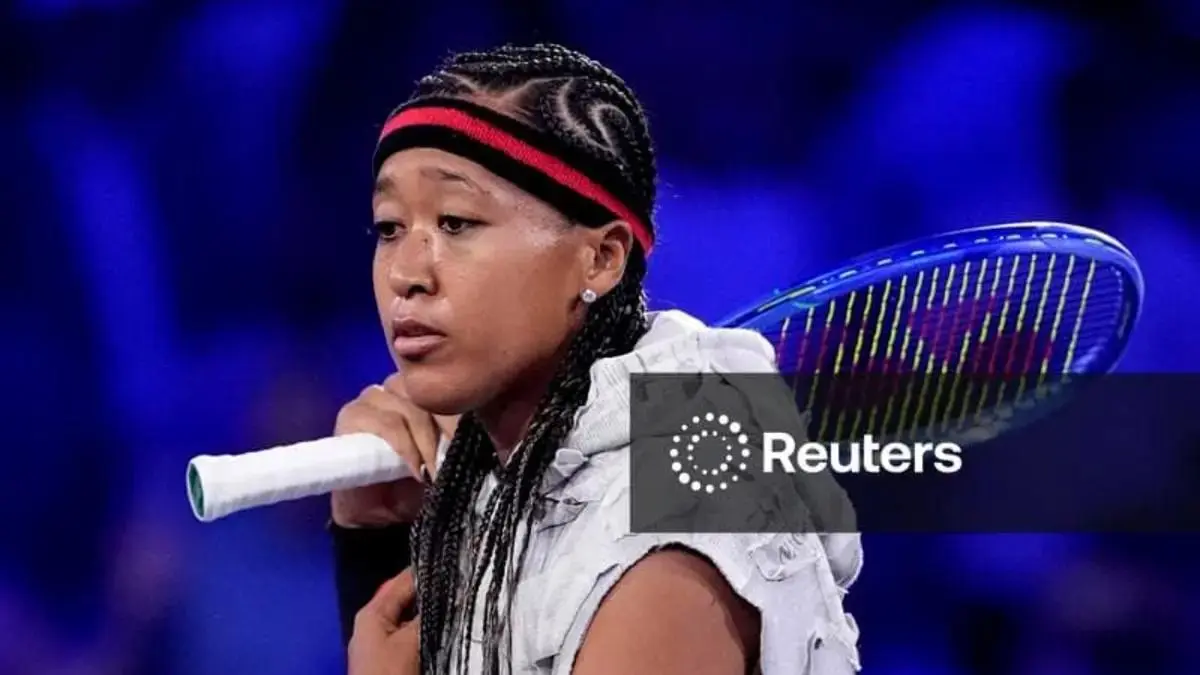
Thumbnail: Naomi Osaka before her first-round match at the 2026 US Open. Photo by Eduardo Munoz/Reuters.