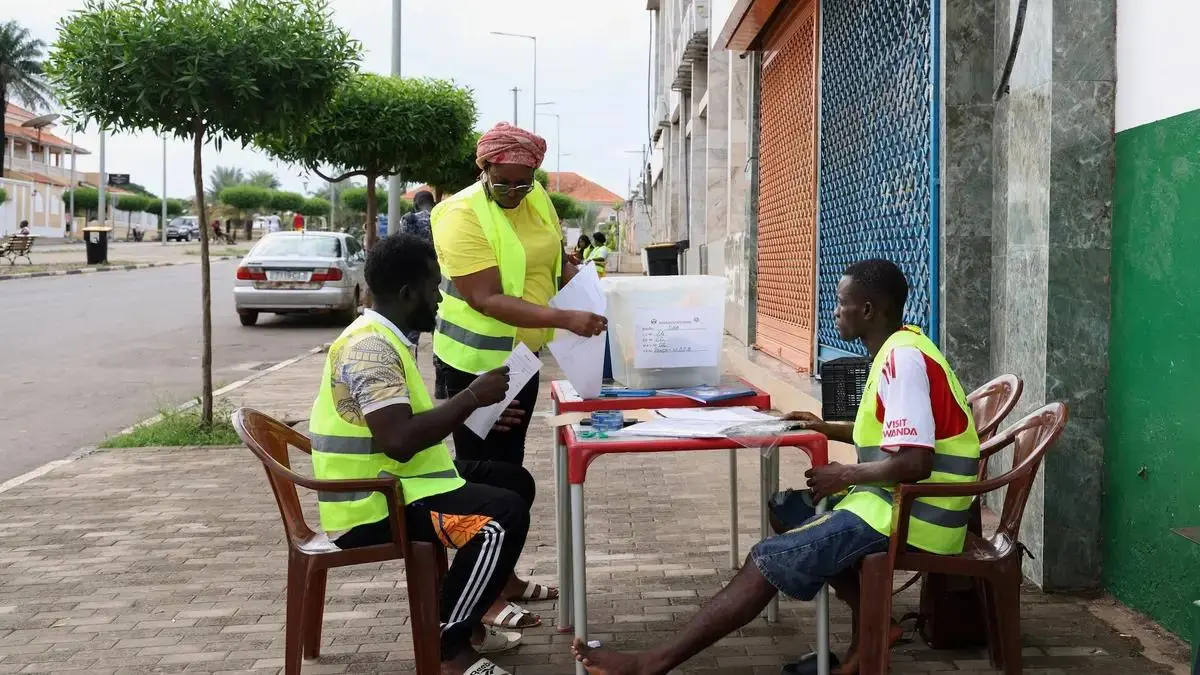
Guinea-Bissau has approved a new constitution that transfers more authority to the president and rewrites electoral rules months before a presidential election scheduled for December.
Provisional results from the National Electoral Commission showed 70% voting in favour and 30% against. About 544,060 people participated, representing nearly 60% of registered voters.
The result is consequential because the West African country is governed by military officers who seized power after a disputed election in November 2025. The main opposition PAIGC boycotted the referendum and questioned its safeguards.
What the new constitution changes
The charter gives the president power to:
- Appoint and dismiss the prime minister.
- Appoint and remove cabinet members.
- Create or abolish government ministries.
- Dissolve parliament during a grave political crisis.
Under the previous constitutional structure, parliament named a prime minister who then appointed a cabinet. The reform therefore shifts the system away from power-sharing between the presidency and legislature.
Parliament will become much smaller
The constitution reduces the National People's Assembly from 102 seats to 65. It also cuts the number of electoral constituencies from 29 to 12.
Supporters may argue that a smaller legislature is easier and less expensive to manage. Critics worry that fewer seats and larger constituencies can reduce local representation, especially in a country with regional and political divisions.
The practical impact will depend on how district boundaries are drawn and how seats are allocated. Those rules can influence whether smaller parties and rural communities retain meaningful representation.
New residency rule for presidential candidates
Anyone seeking the presidency must have lived continuously in Guinea-Bissau for the previous five years.
Residency requirements can be defended as a way to ensure candidates maintain a direct connection to the country. They can also exclude opposition figures who spent time abroad because of exile, work or security concerns.
The rule's significance will become clearer when the candidate list for December's election is finalized.
Why the opposition boycotted
The PAIGC urged supporters not to participate, saying the referendum lacked adequate political and institutional safeguards.
Party leader Domingos Simoes Pereira accused the process of threatening freedom and democracy. The military government's spokesperson was not available to Reuters for comment.
A boycott can reduce the opposition vote against a proposal and make the final percentage look more decisive. Turnout therefore matters alongside the 70% approval figure.
Reuters observed largely empty polling stations in the capital on voting day, and some residents told local media they did not know about the referendum or did not understand its purpose. The commission's nationwide turnout figure nevertheless approached 60%.
Why the timing matters
The referendum changes the rules before a presidential election expected in December 2026. That gives the military-led authorities constitutional backing to reshape the political system before voters choose a president.
Guinea-Bissau has a long history of coups and military intervention. The November 2025 takeover was the ninth coup in West and Central Africa in five years, according to Reuters.
Supporters of the new charter may present a stronger presidency as a response to repeated institutional conflict. Opponents fear concentrated authority will weaken checks and balances instead of creating stability.
What happens next
The provisional result must move through the country's formal certification process. Authorities then need to adapt election laws, constituencies and institutions to the new charter.
Key issues to watch include:
- Whether opposition parties accept the final result.
- How the 12 constituencies are designed.
- Which candidates qualify under the five-year residency rule.
- Whether the December election timetable remains unchanged.
- What international and regional observers say about the transition.
The Economic Community of West African States and other partners will be watching for a credible return to civilian rule.
Why the story matters beyond Guinea-Bissau
West Africa has experienced a wave of military takeovers and contested transitions. Each constitutional process becomes a test of whether juntas create a genuine route back to elected government or use legal changes to entrench power.
Guinea-Bissau is also strategically important because of maritime routes, regional security and its reputation as a transit hub for cocaine trafficking.
The referendum has produced a clear provisional majority, but the political debate is not finished. The decisive test will be whether the new institutions deliver a competitive election and peaceful transfer of authority in December.
Thumbnail uses a Reuters file photograph of referendum ballot counting in Bissau.