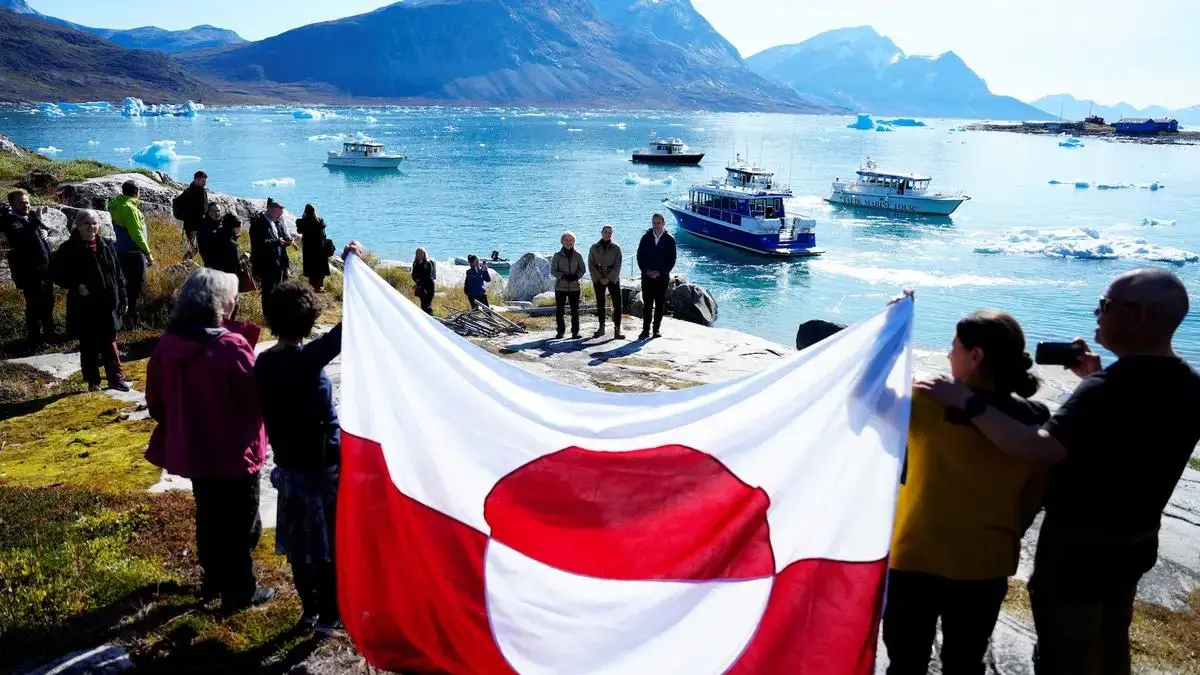
European Commission President Ursula von der Leyen is preparing to announce a major increase in European Union investment in Greenland, placing critical minerals, satellite communications and renewable energy at the centre of a wider Arctic partnership.
Von der Leyen arrived in Greenland on Sunday for a two-day visit with Danish and Greenlandic leaders. She described the planned package as “substantial,” but no final amount had been disclosed in the initial announcement.
Why the EU is increasing its support
The investment plan is both economic and strategic. Greenland holds important mineral resources, occupies a central position in Arctic shipping and security, and is increasingly exposed to competition among the United States, Europe, Russia and China.
Climate change is opening routes and making some resources more accessible. That creates opportunities for infrastructure and energy development, but also raises questions about environmental safeguards, local consent and who benefits from new projects.
The political background
US President Donald Trump has repeatedly argued that the United States should control Greenland. The territory's government and Denmark have rejected that position.
Those demands created strain inside NATO because Greenland is a semi-autonomous part of the Danish realm and therefore lies within alliance territory. The United States already has rights to expand its military presence under an existing agreement.
Talks involving the US, Denmark and Greenland have not produced a settlement. The EU visit is therefore a visible statement that European institutions intend to remain deeply involved in Greenland's future.
What sectors are expected to receive money
EU officials identified three broad priorities:
- critical-mineral projects and related supply chains;
- satellite and communications infrastructure;
- renewable-energy development.
The package is expected to expand the EU's existing support, which has historically focused heavily on education and fishing arrangements.
Greenland's relationship with Europe
Greenland left the European Economic Community in 1985, while Denmark remains an EU member. Greenlanders are Danish citizens and therefore also EU citizens, but the territory is not part of the bloc.
Greenland Premier Jens-Frederik Nielsen said his government wanted to build on its close partnership with the EU. Any investment debate will still need to respect Greenland's political autonomy and domestic priorities.
What remains unknown
The value, timetable and individual projects were not yet public. Readers should distinguish the confirmed investment commitment from estimates circulating before the formal announcement.