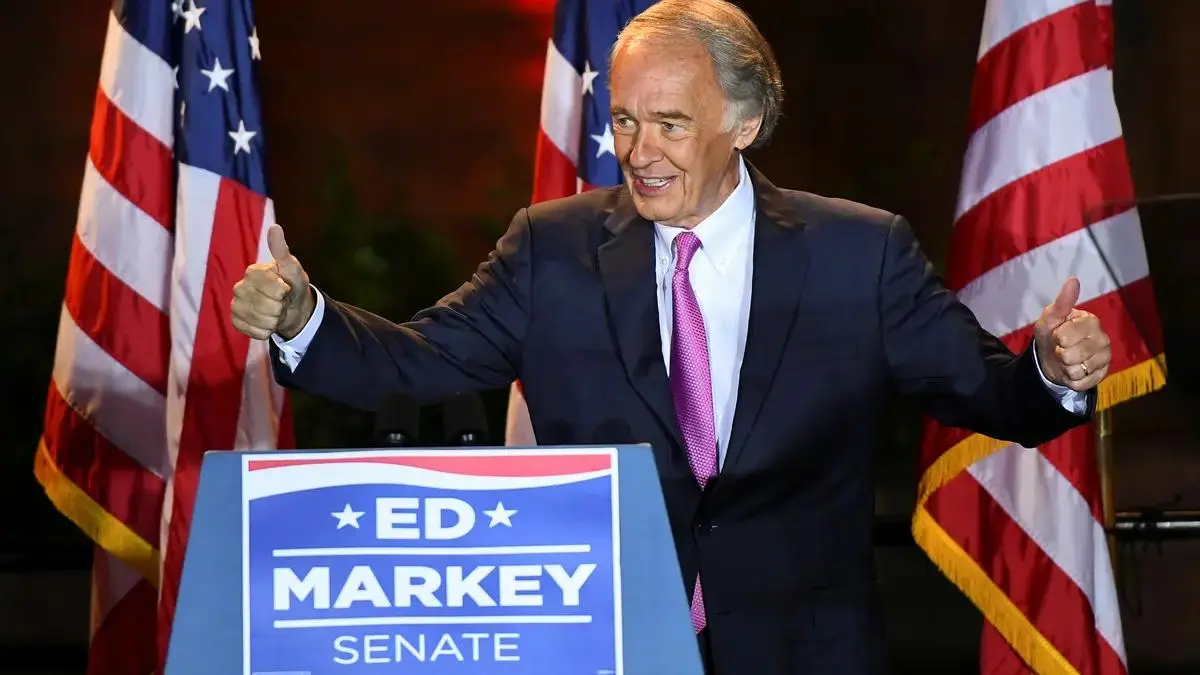
US Senator Ed Markey has defeated Representative Seth Moulton in the Massachusetts Democratic primary, overcoming a challenge built around generational change and demonstrating that age alone is not enough to dislodge a well-organized progressive incumbent.
Markey, 80, led with roughly 65 percent of the vote after about three-quarters of ballots had been counted, while the 47-year-old Moulton stood near 35 percent. The margin was decisive enough to end a campaign that had been presented as one of the clearest tests of whether Democratic voters wanted younger leadership before the November midterms.
Markey is now strongly favoured against Republican John Deaton in a state that consistently supports Democrats in federal elections.
Why Moulton challenged Markey
Moulton argued that the party needed a new generation of leaders and repeatedly raised questions about Markey's age and ability to represent Massachusetts through another six-year Senate term.
That argument had some national momentum. Several long-serving Democratic incumbents faced difficult primaries in 2026, and voters across the party have expressed concern about politicians remaining in office into their eighties.
But a generational message works only when voters also see a compelling political difference. Markey's supporters presented him not as a defender of the status quo, but as an experienced progressive with strong positions on climate, labour and consumer protection.
How Markey built the winning coalition
Markey received support from Bernie Sanders, Alexandria Ocasio-Cortez, labour organizations and youth-led progressive groups. Those endorsements helped neutralize Moulton's argument that younger voters automatically wanted a younger candidate.
The senator also had a tested campaign organization. In 2020, he defeated Representative Joe Kennedy III, another younger challenger with a famous political name. That race taught Markey's team how to turn attacks on age and longevity into an argument about policy consistency.
Labour support mattered because unions provide volunteers and trusted local networks. Progressive endorsements helped with fundraising and digital attention, while Markey's long record gave him recognition across the state.
The debate over age is not over
Markey's victory does not mean Democratic voters have stopped caring about age. It means they evaluate age alongside ideology, effectiveness and the strength of the challenger.
Moulton tried to make technological awareness and leadership renewal central issues. Markey's campaign answered by emphasizing current policy work and relationships with younger progressive leaders.
The result suggests that calls for generational change are most effective when attached to a broader reason for replacing an incumbent. Voters may agree that a party needs younger leaders while still supporting an older senator they believe represents their priorities.
What the result means nationally
The Massachusetts contest will be studied by potential challengers in other states. It shows that a primary focused heavily on biography can struggle against an incumbent with strong ideological credibility.
It also offers a contrast with races where older Democrats lost support because voters viewed them as disconnected or vulnerable. Markey maintained an identity linked to climate activism and economic populism, allowing him to compete for the same voters who often demand party renewal.
For progressive organizations, the win protects an ally in the Senate. Markey has been closely associated with the Green New Deal and will continue pushing climate policy even as federal politics remain divided.
What happens to Moulton's House seat
Moulton's Senate campaign opened competition for his House district. Dan Koh won the Democratic nomination for that seat after receiving support from prominent national Democrats, including former President Joe Biden and former Vice President Kamala Harris.
The open-seat contest becomes part of the wider November battle for control of the House. Massachusetts is favourable territory for Democrats, but the transition still changes the state's congressional delegation.
The general election
Markey will face Republican John Deaton. The state’s partisan balance makes the Democratic nominee the clear favourite, but the campaign will provide Republicans an opportunity to continue raising questions about age, federal spending and one-party dominance in Massachusetts.
Markey's immediate task is to reunite voters who supported Moulton and shift from an internal party argument to the national stakes of the midterms.
His primary victory was not narrow or defensive. It was a clear rejection of the proposition that longevity by itself disqualifies an incumbent. Massachusetts Democrats chose a familiar progressive record over a campaign for generational change—and gave Markey another chance to make that record relevant to the next six years.
Sources: Associated Press politics coverage, Wall Street Journal result report.
