Senior US officials have accused Chinese state-owned shipping giant COSCO of operating concealed intelligence-gathering equipment aboard commercial vessels. China has rejected the allegation as baseless, and COSCO has not publicly responded to the report.
The claims are significant because COSCO is not a small or isolated operator. It is one of the world's largest shipping companies, calls regularly at US ports and is deeply integrated into global supply chains.
At this stage, the allegation is a US government assessment reported by Reuters—not a publicly proven court finding. That distinction is essential when evaluating the story.
What do US officials allege?
Two senior Trump administration officials told Reuters that COSCO vessels carry sophisticated signals-intelligence equipment intended to intercept military communications near the coastlines of target countries, including the United States.
The officials said the program allows Beijing to collect communications signals from ships and aircraft across North America, Europe and Asia. They did not publicly identify the hardware, affected vessels or specific intercepted communications.
According to their description, the equipment is different from routine maritime communications systems and is designed to gather information about military technologies and encryption.
What is signals intelligence?
Signals intelligence, often shortened to SIGINT, involves collecting and analyzing electronic communications and other transmitted signals. Governments use it to understand military capabilities, track movements and identify technological developments.
Commercial ships travel through major ports and strategic sea lanes without attracting the same attention as naval vessels. That access could theoretically make them useful platforms for passive collection. But proving that ordinary-looking equipment serves an intelligence purpose requires technical evidence that has not been made public in this case.
How has China responded?
China's embassy in Washington rejected the US allegations. A spokesperson said the Chinese government would not ask companies or individuals to collect intelligence abroad in violation of local law and accused critics of vilifying China.
COSCO did not respond to Reuters' request for comment. The absence of a company response does not confirm the allegation.
China's position directly contradicts the US assessment, leaving the public without independently verifiable technical detail from either side.
Why has COSCO already faced US scrutiny?
The Pentagon added COSCO to a list of companies linked to China's military in January 2025. That designation creates reputational consequences and blocks certain US government procurement, but it is not the same as a comprehensive economic sanction.
A US Naval War College report published in April 2025 also argued that China's military likely uses commercial shipping and fishing fleets for intelligence and surveillance purposes.
US officials point to Chinese laws requiring companies to support national intelligence work. Beijing argues that Western governments misuse those laws to make unsupported accusations against Chinese firms.
Why can't the US simply ban COSCO?
COSCO is embedded in international trade. Its vessels move containers through major ports, and the company participates in terminal-service joint ventures in the United States.
Removing it quickly could disrupt shipping capacity, raise freight costs and damage supply chains. An expert quoted by Reuters compared separating COSCO from US transport networks to dangerous surgery because the economic system has become so interconnected.
That dependence creates a policy problem. Security agencies may see risk, while businesses and ports rely on the same company to keep goods moving.
What could happen next?
Possible responses include tighter inspections, restrictions on port access, requirements to disclose communications hardware, procurement bans or targeted sanctions. Any measure would have to balance security goals against trade disruption.
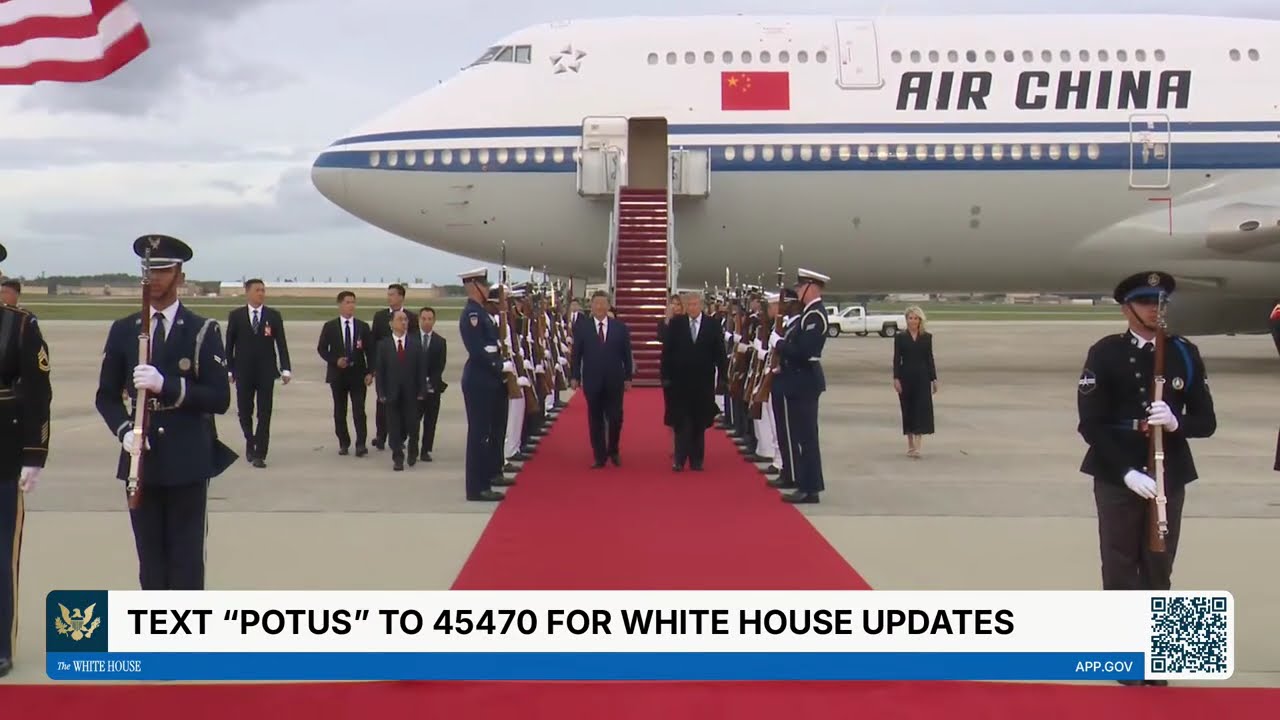
The issue may also enter the agenda when President Donald Trump and Chinese leader Xi Jinping meet later in September. Their talks are expected to cover security and trade disputes.
A year-long US-China trade détente is due to expire in November. The Trump administration had previously planned major fees on Chinese shipping companies but paused that policy after the agreement with Xi.
What evidence is still missing?
The public reporting does not identify:
- Which COSCO vessels allegedly carry the equipment.
- Which ports or coastlines were targeted.
- Technical photographs or inspection reports.
- Examples of communications that were intercepted.
- Whether allied governments independently confirmed the US assessment.
Those gaps do not prove the allegation false, but they limit what can be independently verified. Future inspections, sanctions documents or intelligence disclosures could provide additional evidence.
Why the allegations matter globally
The dispute affects more than US-China relations. COSCO ships operate across Europe and Asia, and any restrictions could alter port schedules, insurance decisions and freight costs.
It also illustrates the blurred line between civilian and military infrastructure. Commercial satellites, telecom networks, drones and cargo vessels can all have legitimate uses while also creating intelligence opportunities.
If governments begin treating major shipping fleets as potential surveillance platforms, port-security rules could change for companies from several countries—not only China.
Bottom line
US officials allege that COSCO has used concealed equipment on commercial ships to collect military communications for Beijing. China denies the claim, COSCO has not responded publicly, and detailed technical evidence has not been released.
The policy challenge is unusually difficult because the company under scrutiny is also essential to global commerce. Washington must decide whether and how to reduce a claimed security risk without causing major damage to its own trade networks.
Frequently asked questions
Has COSCO admitted collecting intelligence? No. COSCO has not publicly responded, and China's embassy rejected the allegations.
Is COSCO sanctioned by the United States? The Pentagon lists it as military-linked, which affects procurement, but the designation is not a full economic sanction.
Have US officials released the equipment details? No detailed hardware description or vessel list has been made public.