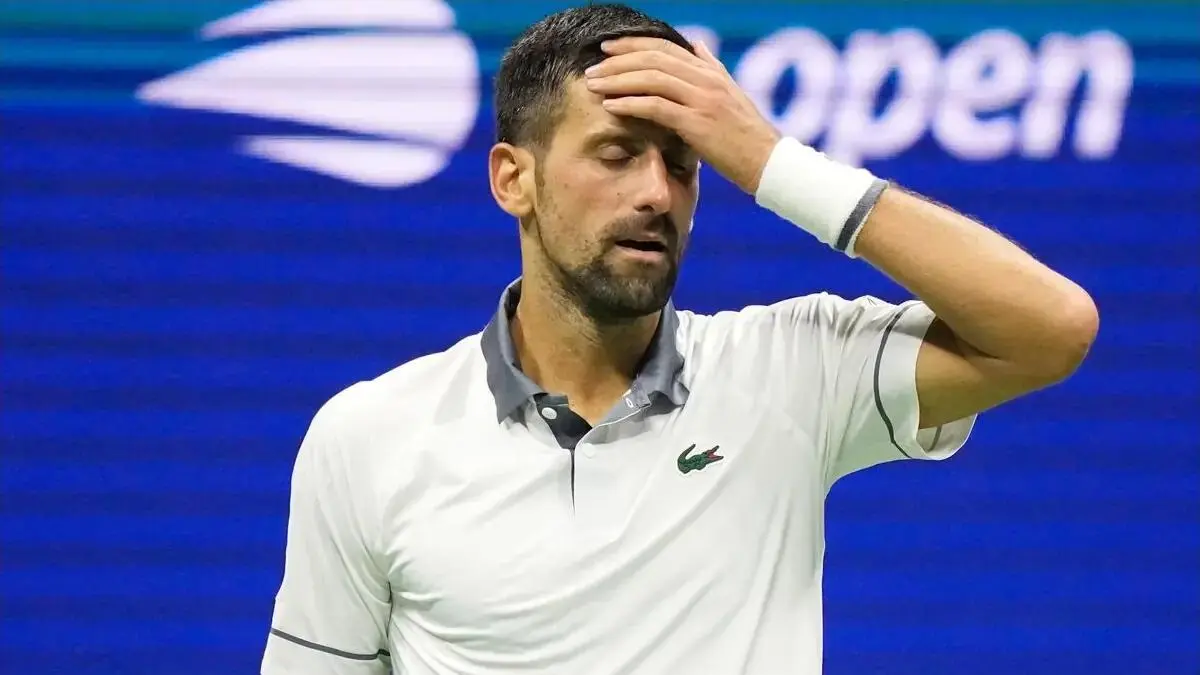
Ben Shelton is through to the fourth round of the 2026 US Open after beating Denis Shapovalov 7-6(3), 6-7(5), 6-3, 6-4 in a late-night contest between two of the biggest left-handed hitters in the men's draw.
The American No. 8 seed did not produce his cleanest tennis, but he handled the difficult moments better and found enough control behind his serve to finish the match in four sets. The result sends him into a Round of 16 meeting with Stefanos Tsitsipas, who earlier reached the fourth round in New York for the first time.
For Shelton, the win matters for more than simply surviving another round. He made his Grand Slam breakthrough with a semifinal run at the US Open in 2023, but had not returned to the second week in either of the following two editions. This victory puts him back into the stage of the tournament where his power, energy and comfort in front of a loud home crowd can become major advantages.
Shelton vs Shapovalov score
- Winner: Ben Shelton
- Score: 7-6(3), 6-7(5), 6-3, 6-4
- Round: Men's singles third round
- Next opponent: Stefanos Tsitsipas
- Venue: Arthur Ashe Stadium, New York
The match always looked likely to turn on narrow margins. Shelton and Shapovalov both generate unusual pace with their left-handed serves, and both prefer to take control early in rallies. That combination produced short, explosive exchanges as well as two opening-set tiebreaks.
How Shelton changed the match
Shapovalov made the stronger start and earned an early break, while Shelton initially struggled to settle into the rhythm of the night session. The American was often searching for too much power too soon. He recovered from breaks of serve, however, and took the first-set tiebreak 7-3.
The second set followed a different path. Shelton moved ahead but could not close it when serving for the set. Shapovalov stayed aggressive, forced another tiebreak and levelled the match by winning it 7-5.
That moment could have shifted the contest completely. Instead, Shelton simplified his approach. He protected his serve more efficiently in the third set and became more selective about when to attack. Rather than trying to end every point with one spectacular strike, he made Shapovalov play an additional ball and waited for clearer openings.
The adjustment was important because this was not a match in which Shelton could rely on flawless timing. His ability to win while below his highest level may be the most encouraging part of the performance. Grand Slam progress often depends on finding solutions on difficult nights, not simply dominating when every shot feels right.
Why the fourth-round matchup is compelling
Shelton will now play Tsitsipas, a former world No. 3 whose varied game presents a different challenge from Shapovalov's first-strike power. Tsitsipas reached the fourth round by defeating Jiri Lehecka 2-6, 6-1, 7-6(3), 6-1.
The contrast should shape the next match. Shelton will look to use his left-handed serve to pull Tsitsipas wide on the backhand side and create space for the next forehand. Tsitsipas, meanwhile, will try to change the height and pace of rallies, move forward when possible and prevent the American from building momentum through quick service games.
The return position of Tsitsipas will be one tactical detail to watch. Standing deep can provide more time against Shelton's pace, but it can also open sharp angles and allow Shelton to follow serves into the court. If Tsitsipas moves closer to the baseline, he may take time away from the server but will have less reaction time against deliveries that regularly arrive at elite speed.
What Shelton must improve next
Shelton's competitive response against Shapovalov was strong, yet the Tsitsipas match will demand greater consistency. Three areas could be decisive:
- First-serve percentage: Free points are valuable, but landing enough first serves also protects Shelton from having his second delivery attacked.
- Return depth: Tsitsipas is dangerous when he receives a short ball and can step inside the baseline. Deep central returns may be more useful than risky attempts at immediate winners.
- Shot selection under pressure: Shelton's power gives him access to spectacular winners. The challenge is choosing the right moment rather than forcing them from defensive positions.
There is also an emotional balance to manage. Shelton feeds off the New York crowd, and Arthur Ashe Stadium responds to his athleticism and visible intensity. That energy can lift his level, but the best version of his game appears when aggression is paired with patience.
A meaningful return to the US Open second week
Reaching the Round of 16 does not guarantee another deep run, but it restores Shelton to a position he has experienced before. His 2023 semifinal showed that his serve and fearlessness can translate to the biggest stage. The next step is proving that he can reproduce that success with a more complete and adaptable game.
Tsitsipas also arrives with something to prove. Despite deep runs at the Australian Open and Roland Garros during his career, New York has often been his most difficult Grand Slam. Reaching the fourth round for the first time removes one barrier; beating a leading American in front of a home crowd would represent another.
That makes Shelton vs Tsitsipas one of the most intriguing matches of the next round: a home favourite attempting to rediscover his best US Open form against an established contender enjoying his strongest New York run.
For the broader tournament timetable and viewing information, see our US Open 2026 schedule and how-to-watch guide. You can also follow the rest of our Sports coverage.
Match score and next-round opponent were confirmed by the official US Open report. This article was published on September 5, 2026, and will be updated if the schedule changes.