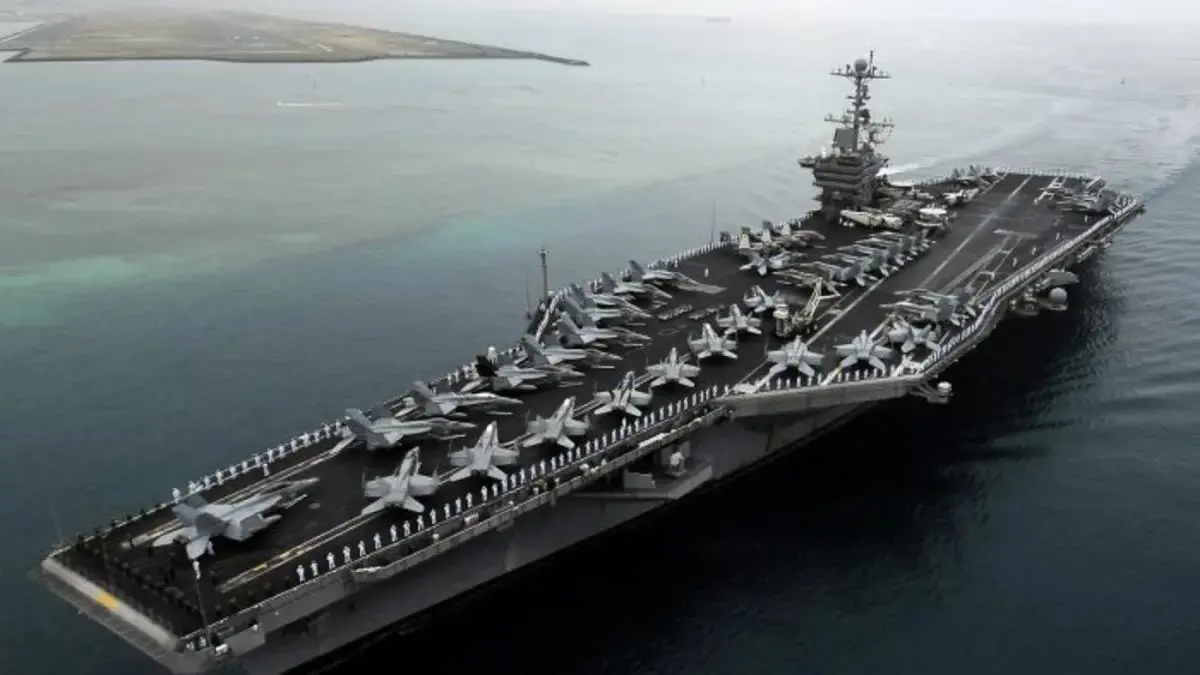
The USS Abraham Lincoln has arrived at Thailand's Laem Chabang port after spending 286 consecutive days at sea, ending what US lawmakers described as a modern record and giving roughly 5,000 sailors and Marines their first port break in more than nine months.
The five-day visit is officially focused on rest, resupply and the long-standing US-Thailand alliance. It also draws attention to the human cost of an unusually extended deployment shaped by combat operations and the war with Iran.
Why the carrier remained at sea
The nuclear-powered carrier and its strike group operated for months without a port visit while supporting US military activity in the Middle East. The ship participated in operations connected to the naval blockade and conflict with Iran, keeping thousands of personnel in a high-tempo environment far longer than a normal uninterrupted stretch.
Aircraft carriers can remain operational for long periods because they generate their own power and receive food, fuel and other supplies from logistics ships. That technical endurance does not remove the strain on the people aboard.
Sailors work rotating shifts in confined conditions, with limited privacy and few opportunities to communicate normally with families. Democratic lawmakers have raised concerns about mental health, fatigue and living conditions during the deployment.
What happens during the Thailand stop
The ship is scheduled to remain near Laem Chabang for five days. Crew members will receive shore leave, while maintenance and replenishment work continues aboard.
Pattaya, located nearby, expects a significant short-term economic boost from thousands of visiting service members. Hotels, restaurants, transport operators and shops are preparing for increased demand.
Thai authorities have increased patrols and coordinated rules with US commanders. Some activities and locations may be restricted for personnel, reflecting the scale of the visit and Pattaya's reputation for nightlife and sex tourism.
Officials in Thailand have emphasized that the visit is logistical and recreational rather than the beginning of a new combat mission from Thai territory.
A test of the US-Thailand alliance
The United States and Thailand have maintained a formal alliance since 1954. Their relationship includes military exercises, training and access arrangements, even as Bangkok also maintains important economic and political ties with China.
A carrier visit is a visible demonstration of that relationship. Laem Chabang provides a major port with access to repair, supplies and recreation, while Thailand benefits from local spending and defence cooperation.
The visit must still be managed carefully. Thailand generally avoids presenting its territory as a platform for conflicts elsewhere, particularly when regional opinion is divided over US policy in the Middle East.
Why 286 days matters
Military records can sound impressive while concealing operational stress. A carrier's ability to remain at sea shows logistical strength, but a deployment extended to this length may also indicate that strategic demands exceeded normal planning assumptions.
Fatigue affects safety in aviation, engineering and deck operations. Repeated high-alert periods increase the risk of mistakes, while separation places pressure on families at home.
Rear Admiral Robert E. Loughran praised the crew's professionalism and described the deployment as historic. The next question is how the Navy handles recovery once the ship completes its mission.
What comes next
After the Thailand visit, the strike group will continue following operational orders rather than immediately becoming a normal tourist presence in the region. The Navy has not treated the port call as the end of the deployment.
Crew members will use the short break to rest, but genuine recovery requires predictable schedules and eventual return home. Lawmakers are likely to examine whether future deployments need stricter limits or more frequent port access.
For Thailand, the arrival is a major diplomatic and economic event. For the sailors and Marines aboard, it is something more basic: the first chance in 286 days to step off the ship.
Source: Reuters report from Thailand.
