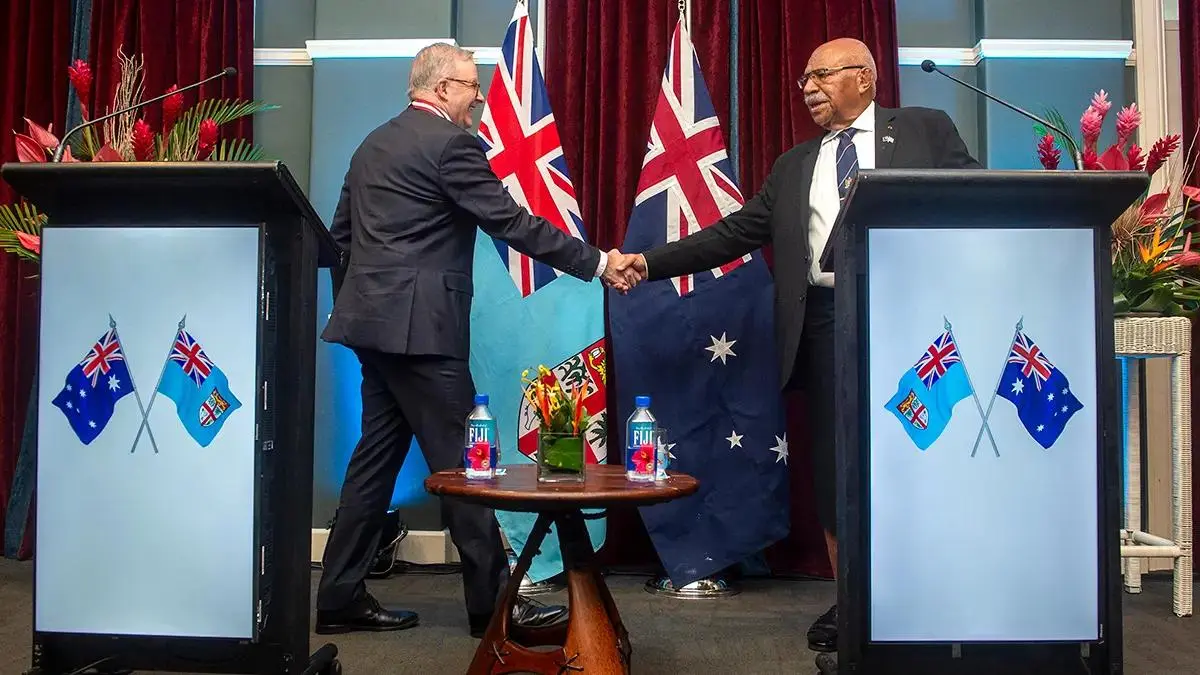
The United States and Australia have announced a combined $580 million in new support for Pacific Island nations, placing organized crime, border security and energy resilience at the centre of their latest regional push.
The commitments were unveiled during the Pacific Islands Forum in Palau, where leaders are meeting from August 30 to September 4. Australia said it would provide A$600 million—about US$430 million—while Washington announced US$150 million.
The money arrives in a region where strategic competition with China is impossible to ignore, but Pacific governments are also demanding that larger powers address practical problems affecting daily life: drug trafficking, fragile power systems, climate exposure and high transport costs.
Where the $580 million is going
Australia's package focuses heavily on policing and border capacity. It is expected to support aerial surveillance, specialist training and cooperation against transnational organized crime, including drug smuggling routes that cross large areas of ocean between small island states.
The United States said its $150 million commitment includes $60 million for energy infrastructure. That funding is intended to strengthen fuel storage and improve the stability of local electricity grids—an urgent issue as global energy disruption creates price and supply pressure for import-dependent islands.
The remaining US support covers wider regional priorities, though implementation details will matter. Pacific leaders have repeatedly argued that announcements should lead to durable local capacity rather than short projects designed around the priorities of outside donors.
Why policing has become a regional priority
The Pacific covers an enormous geographic area with relatively small populations and limited surveillance resources. That creates opportunities for criminal networks moving narcotics and other illicit goods between the Americas, Asia, Australia and New Zealand.
Individual island nations cannot monitor every maritime route alone. Shared intelligence, aircraft access and trained border personnel can therefore have an impact far beyond the size of a single national police service.
Australian Prime Minister Anthony Albanese framed the package as work with Pacific partners rather than a policy imposed on them. That language reflects a wider diplomatic lesson: governments in the region want cooperation, but they do not want their countries reduced to pieces on a US-China chessboard.
The energy-security component
Energy resilience is both an economic and a national-security issue. Many Pacific Island countries depend on imported fuel and operate isolated electricity systems. A shipping disruption or sudden price increase can affect hospitals, communications, water systems and businesses at the same time.
Better storage can create a buffer against interrupted supplies. Grid upgrades can also reduce outages and make it easier to integrate renewable sources such as solar power. The US allocation will be judged on whether it produces reliable infrastructure that local utilities can maintain over the long term.
The timing is especially significant amid renewed disruption around the Strait of Hormuz and wider volatility in global energy markets. Even when conflict occurs thousands of kilometres away, remote island economies can face some of the fastest and most expensive consequences.
China and Taiwan in the background
China objected to Taiwan's participation in the Palau meeting, adding another layer of tension. Palau maintains formal diplomatic relations with Taiwan, and forum members defended their authority to determine who attends their regional gathering.
Beijing has expanded its Pacific presence through infrastructure, trade, policing contacts and diplomatic agreements. The United States and Australia have responded with more visits, financing and security partnerships. Neither side describes every initiative as a direct answer to the other, but the competition shapes how each announcement is interpreted.
For Pacific governments, that attention can create negotiating leverage. It can also create pressure to choose sides on issues where leaders would prefer flexibility. The Forum gives smaller states a collective venue to state their own priorities rather than respond separately to every major power.
What happens next
The headline value is large, but delivery will determine its importance. Key questions include how projects will be selected, how much funding reaches local institutions, which countries receive surveillance resources and whether maintenance costs are covered after the initial investment.
Transparency will also matter. Security assistance can raise questions about data sharing, policing powers and dependence on foreign equipment. Energy investments need public procurement and realistic engineering plans if they are to survive harsh weather and remote operating conditions.
The announcement nevertheless signals that Washington and Canberra view the Pacific as a long-term strategic priority. By combining security and energy funding, the two countries are responding to both geopolitical competition and the everyday vulnerabilities Pacific leaders say require immediate action.
