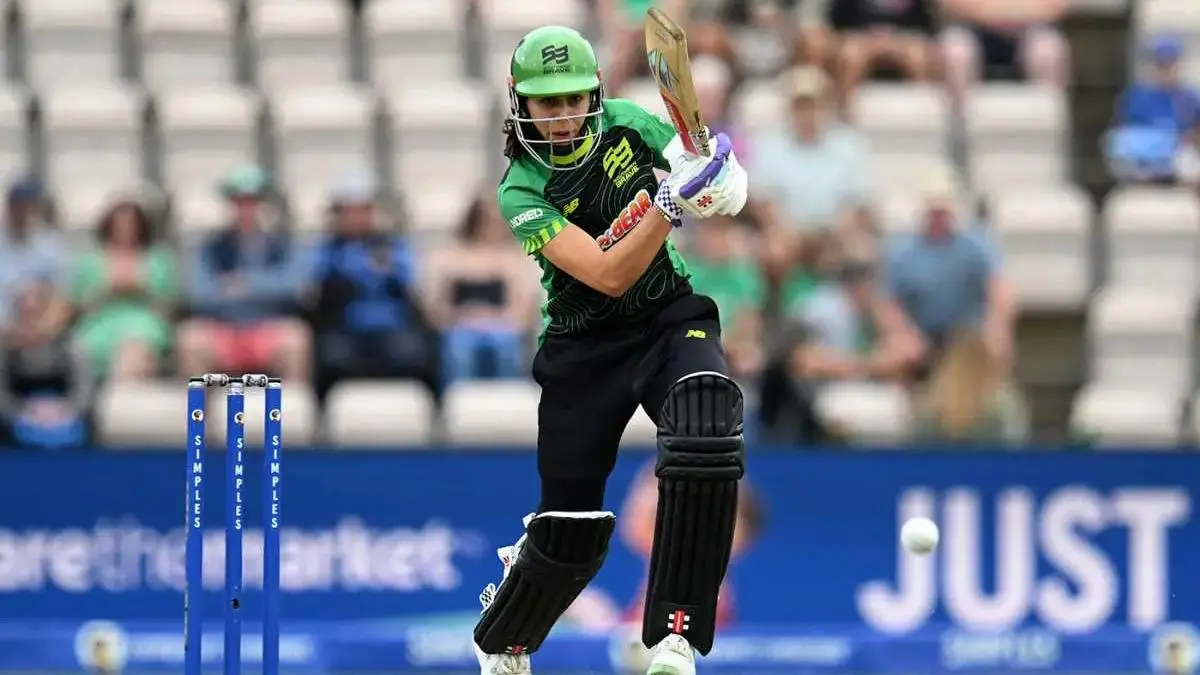
England began their women's one-day international series against Ireland with a performance that was both historic and revealing. Chasing 282 at Grace Road in Leicester, a new-look home side reached 283 for four in only 38.1 overs, winning by six wickets with 71 balls unused. It was England Women's highest successful ODI chase, and Maia Bouchier supplied the innings that made it look far less difficult than the record suggested.
Bouchier scored 104 from 95 balls and shared a 143-run opening stand with Sophia Dunkley, who made 73 from 61. Their approach immediately changed the shape of the match. Ireland had built what appeared to be a genuinely testing total, but England's openers attacked early enough to keep the required rate under control throughout the chase.
The result gives England a 1-0 lead in the three-match series and, more importantly, offers encouraging evidence about the depth of a side moving through a period of change.
England vs Ireland first ODI: key numbers
- Ireland Women: 281 for five from 50 overs
- England Women: 283 for four from 38.1 overs
- Result: England won by six wickets with 71 balls remaining
- Maia Bouchier: 104 from 95 balls
- Sophia Dunkley: 73 from 61 balls
- Opening partnership: 143
- Cara Murray: three wickets for Ireland
The scorecard confirms that this was not simply a successful pursuit. England completed it at more than seven runs per over while losing only four wickets. That combination of speed and control is what separated the chase from a late, anxious escape.
How Bouchier took control
Bouchier's century was built around positive intent rather than reckless hitting. With Dunkley scoring rapidly at the other end, she did not have to force every delivery. The pair used the powerplay to put Ireland's bowlers under pressure and then continued rotating the strike once the field spread.
That balance mattered. A target of 282 can become intimidating if early dots push the asking rate upward. England prevented that scenario from developing. By the time Ireland broke the opening partnership, the hosts had already created a platform from which the middle order could play freely.
Bouchier reached her second ODI hundred before being dismissed for 104. Her innings arrived at a useful moment for both player and team. She was not part of England's T20 World Cup campaign, but her value in the 50-over format remains clear: she can exploit the fielding restrictions without treating a long innings like a sprint.
Ireland's 281 deserved more pressure
Ireland's batting performance should not disappear beneath England's record. Amy Hunter scored 62, captain Gaby Lewis made 69 and Rebecca Stokell finished unbeaten on 51. Those contributions took the visitors to 281 for five, a total that would win many women's ODIs.
Ireland also lost only five wickets, showing considerable discipline against an England attack missing several established names. Yet a strong total still needs to be defended through sustained pressure. England's opening pair denied Ireland that chance by scoring quickly from the beginning.
Cara Murray took three wickets and briefly gave the visitors a path back into the contest. However, Alice Capsey and Freya Kemp ensured there would be no collapse. Capsey finished unbeaten on 41 and helped turn the final phase into a controlled finish.
Why this win matters for England
England rested or moved on from several familiar players, leaving opportunities for a younger group. The retirements of Heather Knight and Tammy Beaumont have also made the top-order question more significant. Against that background, Bouchier and Dunkley did more than win one match: they presented a convincing opening combination for the next stage of England's ODI cycle.
There were still weaknesses. England conceded 33 extras, including 20 wides, and captain Charlie Dean acknowledged that the bowling and fielding could improve. A cleaner performance may be required against stronger batting teams, especially when record chases cannot be treated as a reliable escape route.
Alice Capsey also took the wicketkeeping gloves in the absence of Amy Jones and produced an excellent catch. Her role gives England flexibility, although one match will not settle the longer-term debate about the best balance of the XI.
What happens next
The second ODI will be played in Derby, where Ireland must decide how to turn a competitive batting effort into a complete performance. Their top order showed that it can construct a major total away from home. The immediate challenge is finding more control with the new ball and breaking England's rhythm before the chase settles.
For England, the temptation will be to celebrate the record without overlooking the untidy parts of the first innings. The most valuable outcome would be to retain the aggression of the chase while reducing extras and missed opportunities in the field.
The series has already produced a landmark result. Bouchier's hundred placed her at the centre of it, but the wider story is England's ability to absorb personnel changes and still play fearless one-day cricket. Ireland forced the hosts to make history; England responded by completing that history with more than 11 overs to spare.
Sources: ICC match report, ESPN scorecard, The Guardian report.
