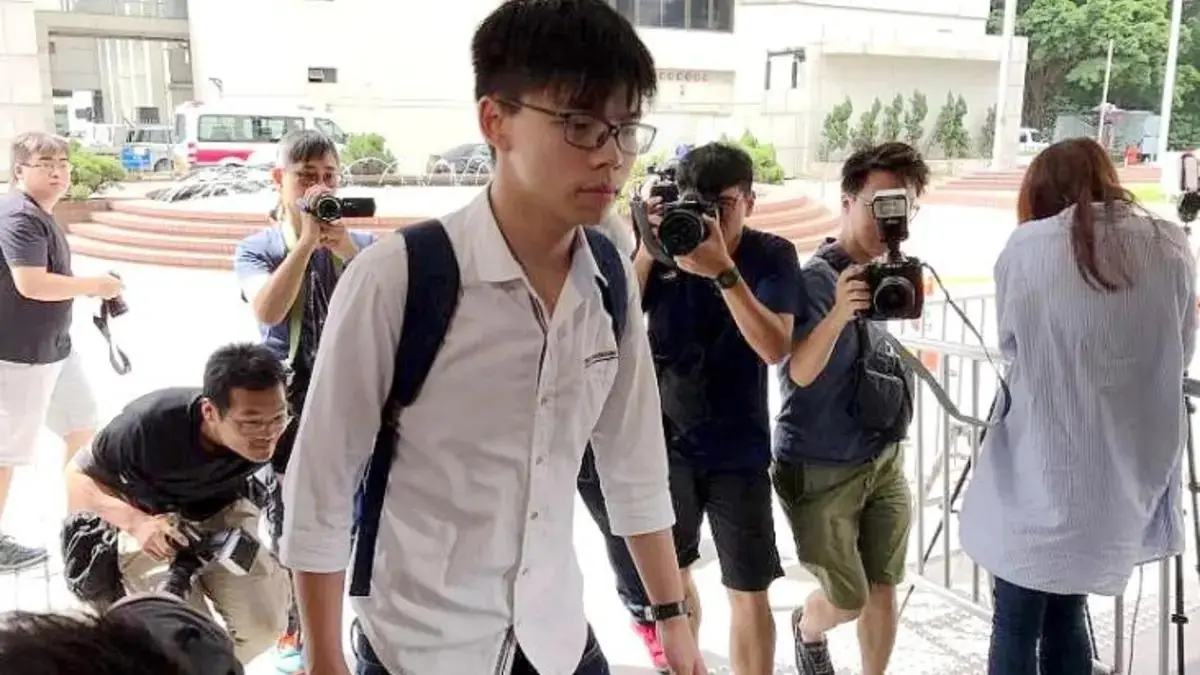
Hong Kong democracy activist Joshua Wong has pleaded guilty to collusion with foreign entities, adding another national-security conviction to the legal cases that have kept one of the city's best-known opposition figures in prison.
The plea was entered under the national security framework imposed after the mass anti-government protests of 2019. Wong became internationally recognized years earlier as a teenage leader during Hong Kong's 2014 Umbrella Movement.
The latest case will be closely watched because it touches the boundary between political advocacy and conduct treated by authorities as a threat involving foreign powers.
Who is Joshua Wong?
Wong rose to prominence through student activism and became a leading advocate for democratic reform. His campaigns attracted support abroad and made him a frequent critic of both Hong Kong's government and Beijing's tightening control over the territory.
Supporters describe him as a political prisoner punished for peaceful activism. Hong Kong and Chinese officials reject that description, arguing that national-security prosecutions target unlawful acts rather than political beliefs.
Wong has already served sentences connected to unauthorized assemblies and other protest-related offences. The new guilty plea concerns a separate and more serious category of national-security conduct.
What “foreign collusion” means in Hong Kong
Hong Kong's national security law criminalizes certain forms of cooperation with foreign governments, organizations or individuals when authorities believe the purpose is to impose sanctions, undermine government institutions or endanger national security.
Critics say the wording is broad enough to criminalize normal international advocacy, including asking overseas lawmakers to respond to human-rights concerns. Authorities say the law is necessary to prevent external interference and restore stability after months of unrest.
The exact sentence depends on the court's assessment of Wong's role and the seriousness of the conduct. A guilty plea can sometimes reduce punishment, but national-security offences carry substantial prison exposure.
Why the case has global importance
Hong Kong was promised a high degree of autonomy under the “one country, two systems” arrangement after Britain returned the territory to China in 1997. Its independent courts, open media and civil liberties helped make the city an international financial centre.
Western governments and rights groups argue that the security crackdown has weakened those distinctions. Beijing responds that sovereignty and security are non-negotiable and that economic freedom remains protected.
Wong's international profile ensures that his case will influence diplomatic debate. Governments may raise the conviction in discussions about sanctions, trade and the treatment of Hong Kong residents seeking to move abroad.
The wider transformation of opposition politics
The case is not isolated. Opposition organizations have dissolved, major media outlets have closed and many activists have been jailed, left politics or moved overseas. Changes to election rules have also limited participation to candidates considered patriotic by authorities.
Supporters of the government say the city is more stable and can focus on economic recovery. Critics say stability has been achieved by removing meaningful political competition.
The result is a very different public environment from the one in which Wong first became famous. Street demonstrations that once drew enormous crowds are now rare, and national-security risks shape what organizations and individuals are willing to say.
What happens next
The court will move toward sentencing after considering the prosecution's case, Wong's admissions and any mitigation presented by his lawyers. The timing and final penalty will determine whether the sentence overlaps with or extends beyond his existing imprisonment.
The proceeding will also test how Hong Kong's courts explain the line between advocacy and collusion. Detailed reasoning matters because future defendants, journalists and civil-society groups use judgments to understand which activities create criminal exposure.
Foreign governments may issue statements, but outside criticism has not changed the direction of Hong Kong's national-security prosecutions. Beijing has consistently treated such responses as interference.
A symbol of Hong Kong's political shift
Wong's journey from teenage campaigner to repeat national-security defendant reflects the scale of Hong Kong's transformation over little more than a decade.
His guilty plea does not settle the broader argument. Authorities will present it as accountability under a law applied by the courts. Supporters will see it as evidence that dissent has been recast as a security crime.
The sentencing will decide Wong's immediate future. The case's lasting importance lies in what it reveals about the space now available for opposition politics in Hong Kong.
Source: Reuters Asia-Pacific coverage.
