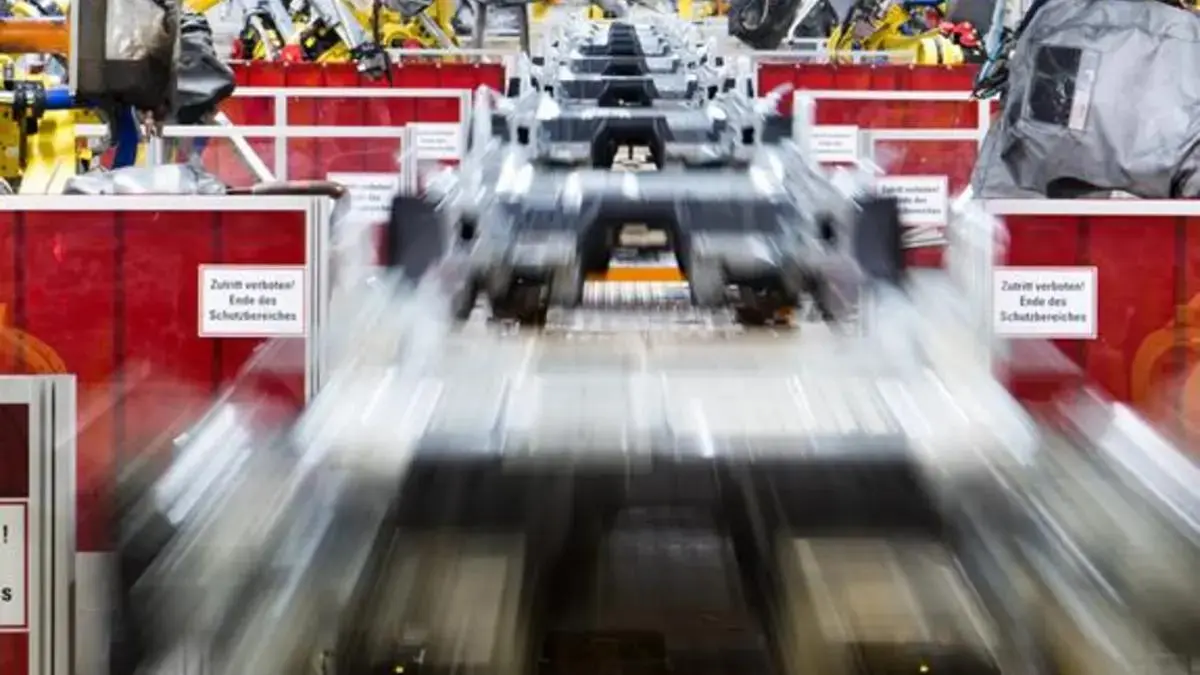
India's factory sector expanded at its slowest pace in five years in August, as weaker demand reduced growth in new orders and prompted manufacturers to cut jobs for the first time in 30 months.
The HSBC India Manufacturing Purchasing Managers' Index, compiled by S&P Global, fell to 52.8 from 53.5 in July. The final result was also slightly below the preliminary estimate of 52.9.
A reading above 50 still indicates expansion, so the survey does not show that Indian manufacturing is shrinking. It shows that activity is growing more slowly than at any point in five years.
India manufacturing PMI: key August numbers
- Headline PMI: 52.8
- July PMI: 53.5
- Preliminary August estimate: 52.9
- Output growth: Slowest in five years
- New-order growth: Slowest since August 2021
- Employment: Fell for the first time in 30 months
- Input-cost inflation: Six-month low
- Selling-price inflation: Weakest in 45 months
- Business confidence: Highest since May, but below its historical average
The data presents a mixed picture. Demand and hiring weakened, but cost pressures eased and firms became slightly more optimistic about the year ahead.
What does a PMI reading of 52.8 mean?
The Purchasing Managers' Index is based on monthly surveys of companies. Managers report whether conditions such as output, orders, employment, delivery times and inventories improved, worsened or stayed the same.
A result above 50 means more firms reported improvement than deterioration. Below 50 indicates contraction.
The distance from 50 matters. A reading of 52.8 signals expansion, but less momentum than a reading of 53.5. It does not mean output grew by 2.8% or that every factory expanded.
PMI is valuable because it arrives earlier than most official production data. It is a directional indicator, not a complete measurement of the economy.
Why did factory growth slow?
Surveyed companies pointed to challenging market conditions and weak demand for some products.
New orders increased at the slowest pace since August 2021. Factories continued receiving more work overall, but the flow was not strong enough to support the rapid expansion seen earlier.
International orders also rose, yet export-demand growth eased from July. That matters because Indian manufacturers are exposed to slower consumption abroad, changing tariffs, exchange rates and competition from other Asian production centres.
When new orders lose momentum, manufacturers often respond by slowing production, reducing overtime, delaying investment and becoming more cautious about hiring.
Why did factories cut jobs?
Factory headcount declined for the first time in two and a half years, although the survey described the reduction as marginal.
Employment is normally a lagging decision. Companies may tolerate a few weak months before reducing staff because recruiting and training new workers is expensive. A job decline therefore suggests some manufacturers believe the softer demand is meaningful enough to require caution.
One month does not establish a trend. The September and October surveys will show whether the reduction was temporary or the start of a broader hiring slowdown.
The composition also matters. A small aggregate decline can hide expansion in electronics or machinery alongside cuts in textiles, metals or consumer goods. Detailed industry and regional data will be needed to identify where pressure is concentrated.
A slowdown after strong economic growth
India's economy grew 7.8% year on year in the April-June quarter, beating a Reuters poll forecast of 7.1%. Investment and manufacturing helped drive that performance.
Economists surveyed by Reuters expect growth to slow to 6.6% in the current quarter. The August PMI is consistent with a loss of momentum, but it does not erase the strong previous quarter.
Economic data often move at different speeds. Gross domestic product is backward-looking and covers the whole economy. PMI is more current but focuses on surveyed businesses. Both can be accurate while telling different parts of the story.
Services, agriculture, government spending and construction can also offset manufacturing weakness. The factory survey should therefore be read as an important warning signal, not a complete forecast of India's GDP.
The positive side: inflation pressure eased
Manufacturers reported input-price inflation at a six-month low.
That means costs for raw materials and other production inputs were still rising, but more slowly. Firms passed through less of those costs to customers, and selling-price inflation fell to its weakest in 45 months.
Lower factory-gate inflation can support consumers and businesses if it continues into retail prices. It may also give the Reserve Bank of India more flexibility than it would have if growth were slowing while prices accelerated.
The benefit is not guaranteed. Global oil prices rose above $90 a barrel as the new month began, and India imports much of its crude. A sustained energy shock could reverse the improvement in transport, chemical and packaging costs.
What the data means for the Reserve Bank of India
The RBI must balance growth, inflation and financial stability.
Slower orders and factory hiring support a less aggressive interest-rate stance. Lower input and output-price inflation point in the same direction.
However, central banks do not set policy using manufacturing PMI alone. Food prices, fuel costs, the rupee, services inflation and global interest rates all matter. Rising US and Japanese bond yields can also influence capital flows into emerging markets.
The August survey strengthens the case for caution. It does not guarantee a rate cut, especially if oil remains high or broader inflation data worsen.
What it means for Indian exporters
Export orders continued to grow, but at a slower rate than in July.
Indian exporters face mixed global conditions. Supply-chain diversification creates opportunities in electronics, pharmaceuticals, engineering goods and speciality chemicals. At the same time, weaker foreign demand and trade restrictions can reduce order volumes.
A softer rupee may make Indian goods cheaper abroad, but it raises the local cost of imported energy, components and machinery. Firms with high import dependence may not benefit from currency depreciation.
Exporters will watch September order books, shipping costs and developments in the United States, Europe and China. Those markets influence both direct demand and the competitive price of goods made elsewhere in Asia.
Which sectors could feel the slowdown first?
The headline survey does not provide a complete industry map, but slower new orders generally affect sectors with shorter production cycles first.
Consumer goods manufacturers can adjust output quickly when retailers reduce orders. Small suppliers may face cash-flow pressure because they have less ability to carry unsold inventory. Labour-intensive sectors can respond through shorter shifts or temporary hiring cuts.
Capital-goods producers may feel the effect later because machinery and infrastructure orders are planned over longer periods. India's investment pipeline could therefore keep parts of manufacturing strong even while consumer-facing factories slow.
Why business confidence improved anyway
Manufacturers' expectations rose to their highest level since May, despite the weaker current data.
Companies may expect demand to recover, new products to launch or investment projects to create orders later in the year. Lower cost inflation can also improve expected margins even when sales growth slows.
Confidence remained subdued by historical standards, so the rise should not be treated as a signal of a rapid rebound. It shows that managers are cautious rather than uniformly pessimistic.
What investors and businesses should watch next
Five indicators will show whether August was a temporary dip or a more durable slowdown:
- September manufacturing and services PMI readings
- Official industrial production data
- Monthly goods exports and imports
- Payroll and wage indicators
- Consumer and wholesale inflation, especially fuel-related costs
New orders are the most important forward signal inside the survey. If they stabilise, output and hiring can recover. If order growth weakens further, the five-year-low headline may be followed by a more serious loss of momentum.
India's factories are still expanding, but the margin above stagnation has narrowed. The policy challenge is to support demand and investment without allowing a global energy shock to rebuild inflation pressure.
Sources
- Reuters: India's factory growth at five-year low in August on weakening demand, September 1, 2026
- S&P Global and HSBC: India Manufacturing PMI methodology and August 2026 survey
- Reuters poll: India quarterly growth expectations
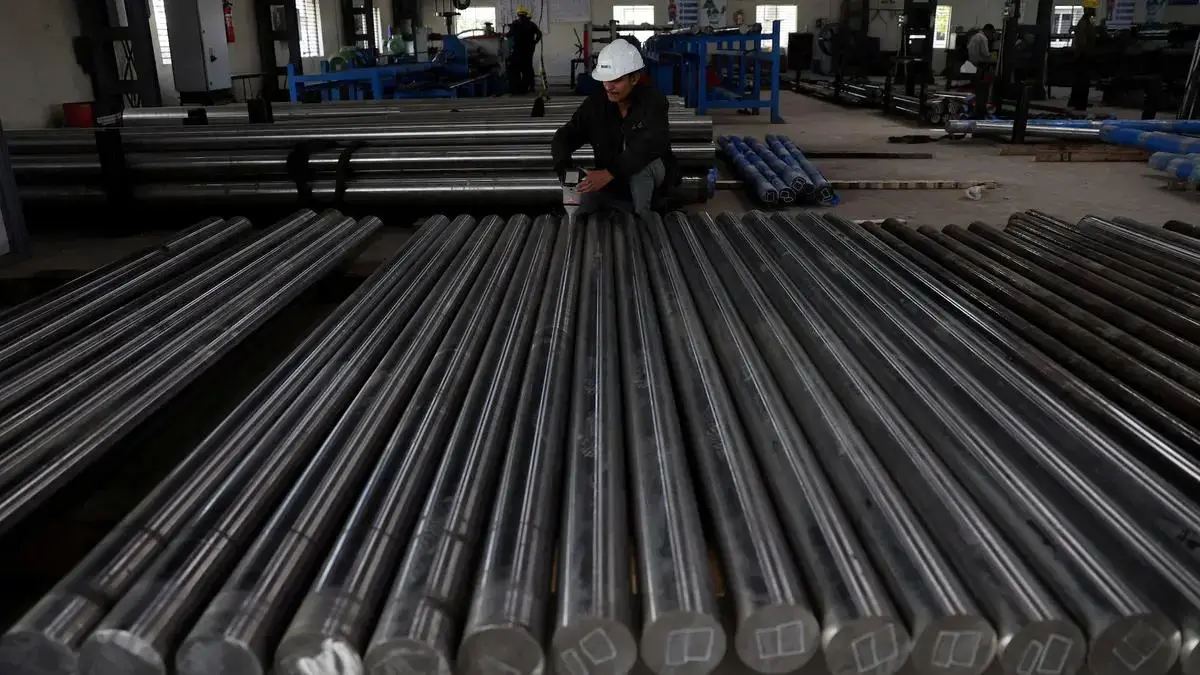
Thumbnail: A worker checks steel bars near Ahmedabad in January 2026. Photo by Amit Dave/Reuters.