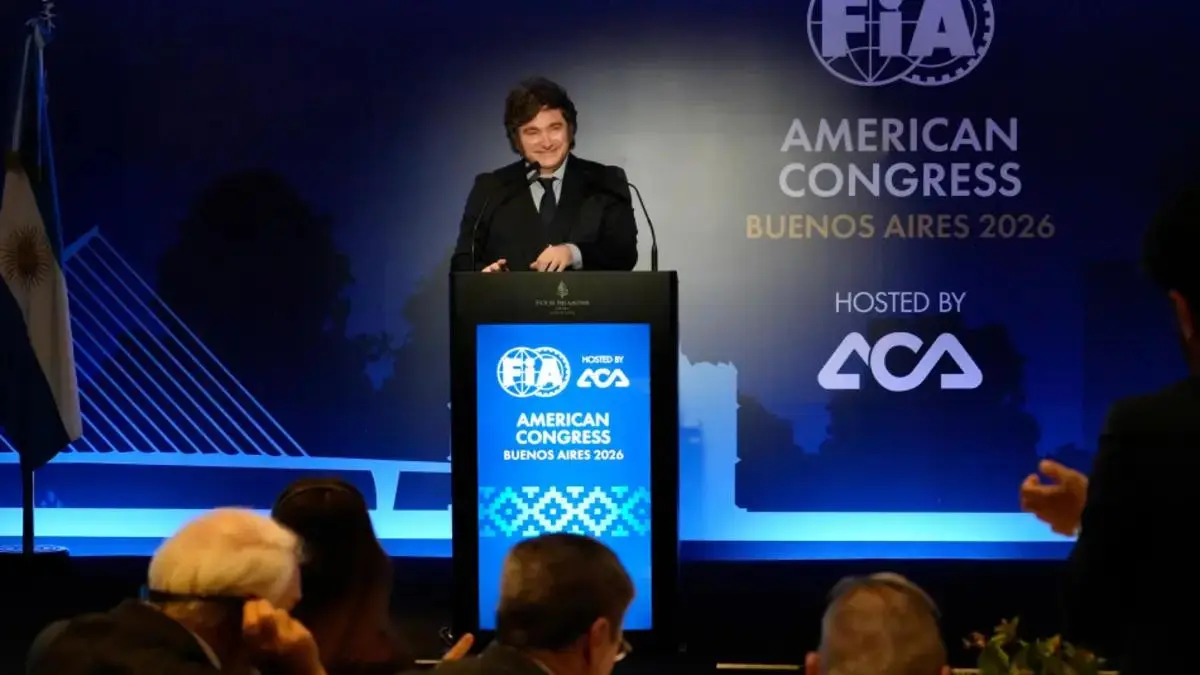
Argentina's campaign to return to Formula 1 has received its strongest public encouragement yet, with FIA president Mohammed Ben Sulayem backing the country's ambition during the 2026 FIA American Congress in Buenos Aires.
The support is significant, but it is not confirmation of a race. Argentina still needs a circuit capable of meeting Formula 1 standards, a sustainable financial plan, government and commercial backing, and an available place on a calendar currently capped at 24 rounds.
Those hurdles make the comeback a serious project rather than a completed deal. The renovated Oscar and Juan Gálvez Autodrome in Buenos Aires sits at the center of the proposal, while President Javier Milei has promised political support and the popularity of Argentine driver Franco Colapinto has intensified local demand.
Here is what has actually happened, what must happen next and how soon an Argentine Grand Prix could realistically return.
What the FIA president said in Buenos Aires
Ben Sulayem met Milei as the pair opened the FIA American Congress, a three-day meeting involving 32 automobile clubs from North, Central and South America and the Caribbean.
The FIA said their discussion covered Argentina's ambitions across international motorsport, including Formula 1 and the governing body's other world championships. Ben Sulayem praised the country's racing heritage and passionate fan base, and later told Argentine broadcaster A24 that he would support efforts to bring both F1 and the World Rally Championship back.
His message came with conditions. A host needs a suitable venue, investment, government commitment, supporters and a business plan that can survive beyond a single event. Motorsport's governing body can help with standards and safety, but Formula 1's commercial rights holder ultimately negotiates the calendar and race agreements.
That means FIA endorsement improves Argentina's credibility without guaranteeing a slot.
Is the Argentina Grand Prix confirmed?
No. There is no announced contract, confirmed date or official place for Argentina on a future Formula 1 calendar.
The current development should be understood as high-level political and sporting support for a bid. A Grand Prix becomes real only when Formula 1 and the promoter announce an agreement, the circuit receives the required licence, and the event appears on an approved calendar.
This distinction is important because F1 interest often produces optimistic statements years before a race can happen. Track construction or renovation, financing and commercial negotiations can all change the timeline.
Argentina's bid nevertheless has more substance than a purely speculative proposal. The national government has publicly stated its ambition, the FIA leadership has engaged directly, and work is underway at the likely venue.
The Buenos Aires circuit at the center of the plan
The Oscar and Juan Gálvez Autodrome hosted all 20 editions of the Argentine Grand Prix held between 1953 and 1998. Located in Buenos Aires, it carries historic value and avoids the need to create an entirely new destination from scratch.
The circuit is undergoing renovation with the goal of achieving FIA Grade One certification, the level required to host Formula 1. Upgrades can involve far more than resurfacing. Modern F1 standards examine barriers, run-off areas, medical facilities, race control, pit buildings, access routes, spectator areas and the ability to operate safely with faster and heavier contemporary cars.
The venue is expected to host MotoGP in 2027, providing a major test of its redevelopment and event operations. A successful MotoGP return would not automatically qualify the circuit for Formula 1, but it could demonstrate that Buenos Aires can manage a global championship after a long absence.
The final F1 layout would also matter. The Autodrome has used multiple configurations over its history, and designers must balance safety with the overtaking opportunities and identity that make a race attractive to fans and broadcasters.
Why Franco Colapinto changes the commercial equation
Argentina already has a deep motorsport culture, but an active national driver can turn heritage into immediate demand. Franco Colapinto has built a large following at home and across Latin America, giving promoters a modern figure around whom to market a race.
His presence can help ticket sales, sponsorship and television interest. It can also inspire young drivers and make corporate partners more willing to invest in a local Grand Prix.
However, race contracts usually run for several years, while driver seats can change quickly. A sustainable bid cannot depend entirely on Colapinto remaining on the grid. Organizers need to show that fans will attend regardless of a single driver's team or career trajectory.
Argentina has a compelling answer in its history. Juan Manuel Fangio won five world championships in the 1950s, a record that stood for decades. Carlos Reutemann became a multiple Grand Prix winner and championship contender. Combining those names with Colapinto gives the bid a story spanning the origins of F1 to the present day.
Why the 24-race calendar is a major obstacle
Formula 1 already operates a 24-round schedule, placing heavy demands on teams, drivers, freight and staff. Ben Sulayem noted that available places are limited, and Argentina is not the only country seeking entry.
Several governments and promoters see F1 as a tool for tourism, international branding and investment. Africa remains a strategic gap for the championship, while established races want contract renewals and newer hosts have long-term agreements.
Adding Argentina may therefore require one of three outcomes: an existing race leaves, events rotate between seasons, or Formula 1 reconsiders the calendar limit. Each option involves commercial and political trade-offs.
A South American race also needs sensible logistics. Brazil's São Paulo Grand Prix is the region's established event. Placing Buenos Aires near São Paulo on the schedule could reduce freight distance, but promoters would need to consider weather, ticket markets and whether the races complement or compete with one another.
Funding and the business plan
Modern Formula 1 races are expensive. Host fees, circuit upgrades, temporary infrastructure, security, transport and event staff can create a large annual bill. Ticket sales and sponsorship may not cover every cost, which is why many races rely on government support justified by tourism and global exposure.
Milei's backing gives the project political momentum, but Argentina's economic history makes financial durability especially important. Formula 1 will want confidence that payments and upgrades can continue throughout a multi-year contract.
A convincing plan would likely combine private investment, corporate sponsorship, ticketing, hospitality and clearly defined public support. Organizers must also show benefits beyond the race weekend, such as jobs, tourism spending, international media coverage and year-round use of the circuit.
Currency risk is another practical consideration. Formula 1 contracts are typically negotiated in major international currencies, while much local revenue is earned in pesos. A promoter must protect the event against exchange-rate volatility.
Could the World Rally Championship return first?
Argentina's ambition extends beyond F1. The country last hosted the World Rally Championship in 2019, and its gravel stages have a strong reputation among drivers and fans.
A WRC return has different infrastructure requirements from a Grand Prix and could follow a separate timetable. Argentina already has rally expertise and recognizable stages, potentially making that comeback easier to deliver before Formula 1.
Success in WRC or MotoGP could strengthen the F1 case by proving organizational capability, government coordination and sustained spectator demand. It would also prevent the national motorsport strategy from becoming dependent on a single, difficult calendar negotiation.
What would need to happen next
Five milestones would show that the bid is advancing from ambition to reality:
- Completion of major renovation work at the Buenos Aires circuit.
- FIA inspection and progress toward Grade One certification.
- Formation of a promoter with transparent, multi-year financing.
- Formal commercial negotiations with Formula 1.
- A contract announcement followed by calendar approval.
Until those steps occur, claims about an exact race date should be treated cautiously. The 2027 MotoGP event offers a visible near-term milestone, but Formula 1 may require additional work and a later opening on the calendar.
The realistic outlook
Argentina has several ingredients that other aspiring hosts cannot manufacture quickly: historic champions, an established circuit, a large fan base and a current driver with international appeal. It now also has public support from both the country's president and the FIA president.
What it does not yet have is the most important item—a confirmed Formula 1 agreement.
The next phase will be measured in engineering plans, finance and negotiations rather than speeches. If the Autodrome renovation succeeds and organizers can present a credible long-term business case, Buenos Aires could become a genuine contender when a calendar slot opens.
For F1 fans in Argentina, the latest development is a reason for optimism, not a date to book flights. The road back after 28 years has become clearer, but the final laps of the bid are still ahead.
Thumbnail uses an official FIA photograph from the 2026 FIA American Congress in Buenos Aires.