The inaugural Esports Nations Cup will not take place in November 2026 as planned. Organizers have postponed the national-team competition by one year, moving it to November 2027 after what they described as an assessment of the wider regional situation and consultation with stakeholders.
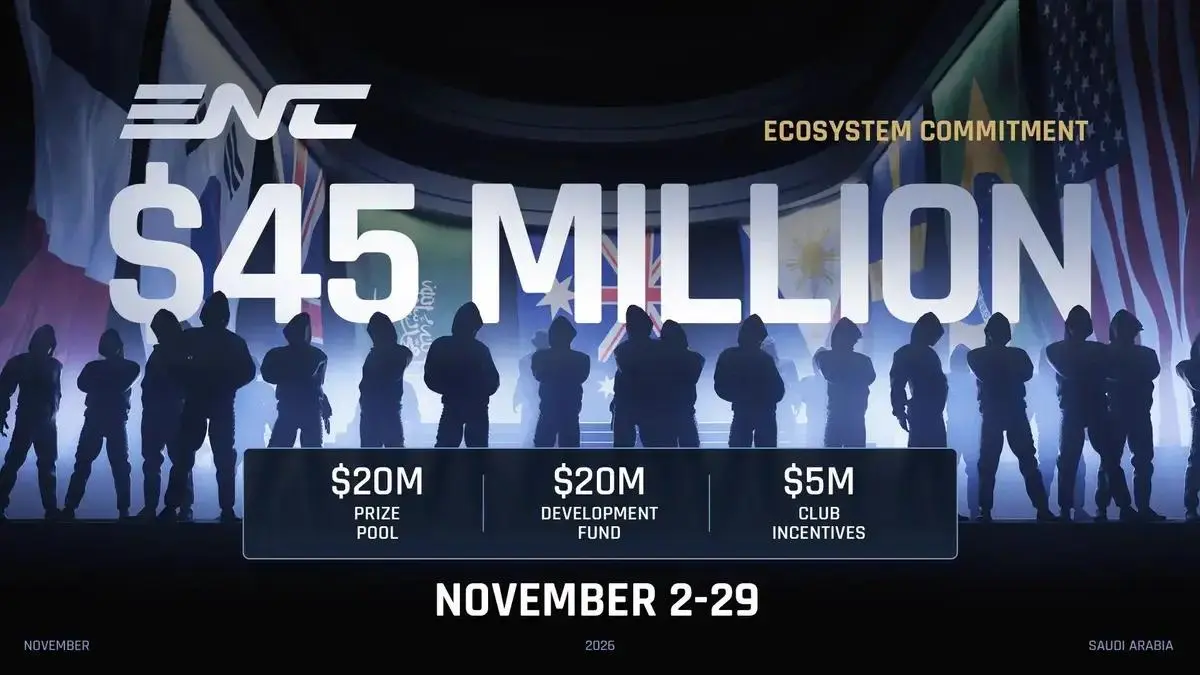
The decision is a significant change for an event designed to bring elite players together under national flags across multiple game titles. Organizers had promoted a four-week competition and a $45 million ecosystem commitment covering prize money, development funding and club incentives.
What has changed?
The first edition was scheduled for November 2–29, 2026. It will now be staged in November 2027, with exact dates and updated qualification information expected later.
The Esports World Cup Foundation said the delay would help deliver the tournament at the intended scale and standard. The announcement did not frame the move as cancellation, and the official site continues to present the Nations Cup as an active project.
Players and national programs should nevertheless treat every previous deadline as provisional until a revised rulebook is published.
Why a one-year delay matters
Esports calendars are crowded and negotiated far in advance. Professional players compete primarily for clubs, while publishers control the competitive ecosystems of individual games. A multi-title national competition must fit around leagues, majors, world championships and contractual obligations.
Moving the event by a year means qualification systems may need to be redesigned. Rankings change quickly, teams rebuild and some games release major competitive updates within a single season.
National federations that selected coaches or began player programs also face additional costs. They must decide whether to keep current structures active or restart closer to 2027.
The proposed $45 million commitment
Earlier plans outlined a $20 million prize pool, a $20 million development fund and $5 million in incentives connected to clubs. That structure attempted to address a central esports problem: players represent professional organizations for most of the year, so clubs need reasons to release them for a national event.
Organizers will need to confirm whether the financial commitment remains unchanged. A delay does not automatically cancel funding, but budgets, sponsors and game participation can change over 12 months.
The development fund may be particularly important for countries without mature esports infrastructure. National competition can attract new audiences only if smaller programs receive enough support to prepare professionally.
What happens to qualified teams and ambassadors?
Any status announced for the 2026 edition requires clarification. Ambassadors and preliminary national representatives may remain involved, but automatic carryover could create fairness issues if player form changes dramatically before November 2027.
The cleanest approach would be a revised qualification period closer to the new event. That would allow teams to select players based on current performance and give newly emerging competitors a path into the tournament.
Game publishers must also reconfirm participation. A title suitable for a 2026 schedule may have a different circuit, player base or competitive priority by late 2027.
Impact on players and clubs
For players, the immediate disappointment is losing a rare chance to represent a country rather than a commercial organization. National-team formats can create rivalries and audiences that differ from club competition.
For clubs, the postponement removes a demanding month from the end of the 2026 calendar. It also delays potential incentive payments and creates uncertainty about player-release rules in 2027.
Clear communication will matter. If organizers provide new dates early, leagues and clubs can avoid schedule conflicts instead of treating the Nations Cup as an additional event forced into an already full season.
Can the event retain momentum?
A one-year delay can weaken attention, but it can also solve structural problems before they become public failures. Multi-game events require broadcast production, competitive integrity, travel logistics and coordination with many publishers.
The success of the Esports World Cup demonstrated the audience for large festival-style competitions. A Nations Cup offers a different emotional hook: supporters who do not follow a specific club may still watch a national team.
The challenge is maintaining trust. Organizers should publish a clear 2027 roadmap, confirm financial commitments and explain how previous qualification work will be treated.
The inaugural event now has more preparation time, but also a higher burden of proof. November 2027 must deliver the scale promised for 2026—and give players, clubs and fans confidence that the new date is firm.
