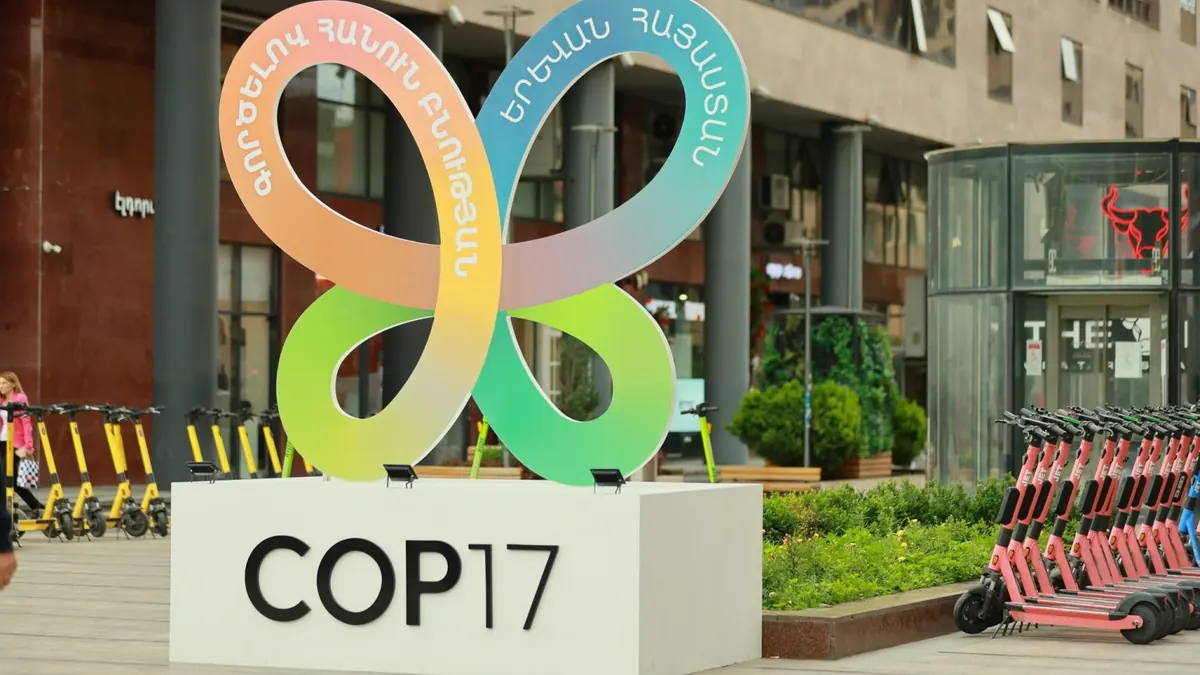
The UN biodiversity conference known as COP17 begins in Yerevan, Armenia, on October 19 and runs through October 30. Its delegates will assess progress toward the global nature agreement made in Montreal in 2022. A central tension is money: annual biodiversity financing is estimated well below the $200 billion a year by 2030 goal.
Associated Press reports current annual finance of roughly $75 billion to $92 billion. That is an estimate with a range, not a final audited total for 2026. The conference dates and location have been announced ahead of the meeting; outcomes cannot be assumed before negotiations begin.
What is COP17 trying to measure?
Countries agreed in 2022 to a framework with 23 targets aimed at halting and reversing biodiversity loss. One of the best-known is often called 30x30: protecting 30% of land and water important for biodiversity by 2030. The agreement also seeks more funding and reform of subsidies that harm nature.
The first global review is a chance to compare national promises with implementation. AP says protection projections currently amount to about 26% of land and 12% of seas by 2030 under the plans assessed. Those figures describe a projected path, not the share already effectively protected today; legal designations and management quality also matter.
Why the money gap matters
Conservation targets can require staff, local partnerships, monitoring and long-term management. Some countries have made substantial commitments, but the funding gap makes it harder to turn a map designation into durable protection. Reuters' pre-summit assessment also points to the distance between the 2030 ambition and current trajectories.
The $200 billion figure is a target for 2030, so today's lower estimate does not itself prove that the target has already been missed. It does show the scale of increase countries would need to reach it in the remaining years. Delegates will debate how public and private money should be mobilised and how progress can be tracked.
What to watch during the Yerevan talks
Look for specific finance commitments, plans for harmful subsidies, and a credible account of protected areas and restoration. A declaration alone is less informative than a funded plan with a timetable and measurable outcomes. The European Commission's COP17 priorities give one negotiating position; the conference's final decisions will emerge only after the parties meet.
Our World coverage will follow the outcome. The accompanying photograph shows a COP17 sculpture in Yerevan, not a negotiation session at the October summit.


