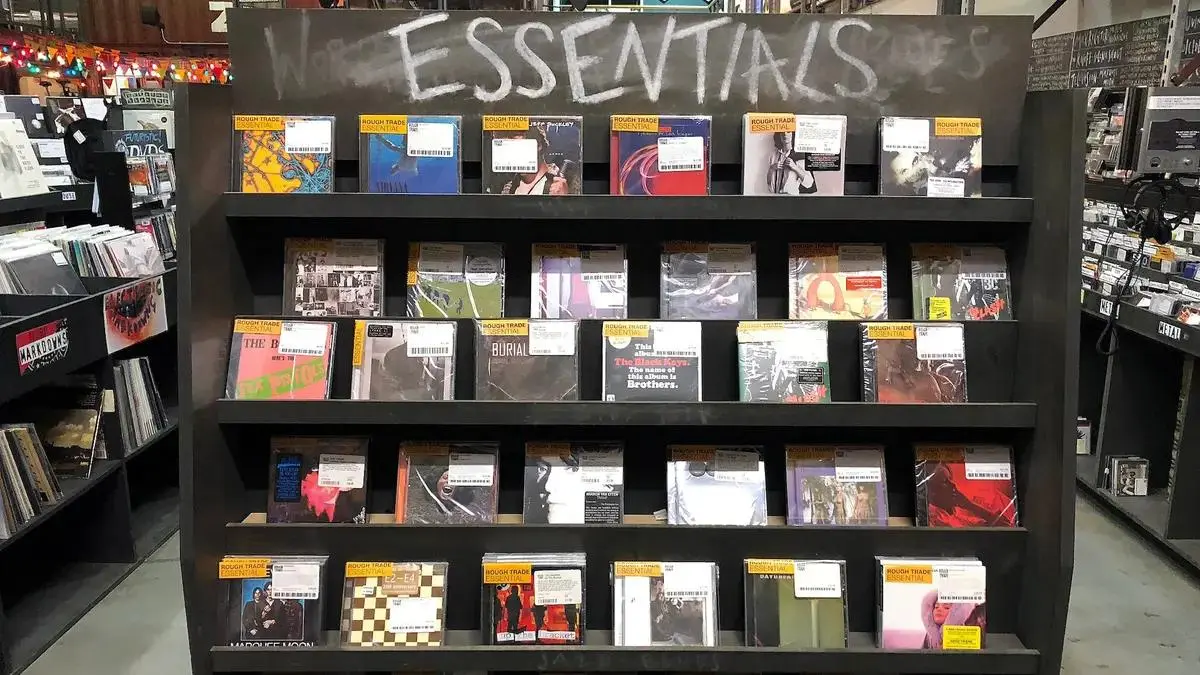
Compact discs are delivering one of the music industry's most unexpected comeback stories. US recorded-music revenue climbed 6.9% year over year to $6 billion in the first half of 2026, and a sharp rise in CD sales helped physical formats grow far faster than the wider market.
Data released by the Recording Industry Association of America showed physical-music revenue jumping 25.9% to $731.5 million. CD revenue rose 58.6%, comfortably outpacing the 17.7% increase for vinyl. Streaming was still the industry's economic engine, but the numbers show that listeners are not choosing between digital convenience and ownership as neatly as many once assumed.
The result is a market in which subscriptions, advertising and tangible products can grow at the same time. For labels and artists, that means the humble CD is no longer only a legacy format. It has become a useful product for superfans, collectors and younger buyers discovering physical music for the first time.
The headline numbers from the first half of 2026
The RIAA data paints a diversified picture of the US recorded-music business:
- Total recorded-music revenue rose 6.9% to $6 billion.
- Physical-format revenue increased 25.9% to $731.5 million.
- CD revenue surged 58.6% from the same period a year earlier.
- Vinyl revenue grew 17.7%.
- Streaming revenue increased 4.7% to $4.9 billion.
- Paid-subscription revenue rose 6.4% to $3.4 billion.
Streaming therefore remained responsible for more than four-fifths of total revenue. The CD revival does not mean Americans are abandoning Spotify, Apple Music or other services. Instead, physical products are adding a second layer of spending on top of everyday listening.
That distinction matters. A person can stream an album for convenience and still buy a CD as a collectible, a gift or a way to support an artist. The same customer can generate subscription revenue and physical-product revenue, making fandom more valuable across multiple channels.
Why CDs are growing again
Several trends are converging at once. Vinyl helped normalize the idea that music can be both an on-demand service and a physical object. Record-store culture, limited editions and elaborate packaging made ownership feel special again. CDs can offer a similar experience at a lower price and with fewer practical barriers.
They are smaller, easier to ship and generally cheaper to manufacture than vinyl. They also offer consistent sound quality without the maintenance associated with records. Many laptops no longer include disc drives, but dedicated players, game consoles, car systems and inexpensive external drives keep the format accessible.
For younger fans, the CD can feel less like outdated technology and more like a piece of retro design. The transparent jewel case, booklet, artwork and printed credits make an album tangible in a way that a thumbnail on a phone cannot.
Social media has accelerated that rediscovery. Fans share collection displays, unboxing videos and visits to independent stores. Artists and labels respond with signed editions, alternate covers, bonus tracks and country-specific versions. A format once sold as a standardized plastic disc is increasingly marketed as limited merchandise.
The superfan economy behind physical music
The strongest commercial logic may be the rise of the superfan. Streaming platforms are excellent at reaching large audiences, but the revenue generated by an individual listener is spread across an enormous catalogue. Physical products allow the most committed listeners to spend directly around a particular release.
A standard album can now appear in several versions: a regular CD, a deluxe package, a signed edition and variants tied to a tour or retailer. Fans may buy more than one, particularly when the packaging or track list changes.
This strategy can lift revenue and strengthen chart performance, but it also carries a risk. If too many near-identical variants are produced, customers may feel pressured rather than rewarded. The most durable revival will depend on products that offer genuine value instead of treating scarcity as the only attraction.
For independent artists, CDs can be particularly practical. They are relatively affordable to produce in small runs and easy to sell at concerts. A direct sale at a merchandise table can be worth more to an artist than many streams, while also giving the buyer a souvenir connected to a live experience.
CDs versus vinyl: why the comparison is misleading
The 58.6% rise in CD revenue is eye-catching, especially compared with vinyl's 17.7% growth. But a higher growth rate does not automatically mean CDs have overtaken records in total value. Percentage changes depend heavily on the starting base, and vinyl remains a premium format with higher prices.
The more useful conclusion is that the physical revival is broadening. Vinyl led the return of album ownership, and CDs are now participating at scale. The two formats serve overlapping but not identical audiences.
Vinyl emphasizes large artwork, ritual and analogue playback. CDs emphasize portability, affordability and digital clarity. Some collectors want both. Others may be attracted to CDs precisely because vinyl prices and storage demands have risen.
Retailers also benefit from the mix. A store that sells new and used records can add lower-priced CDs, giving casual visitors an easier entry point. That can expand the customer base without weakening the premium appeal of vinyl.
Streaming is still the center of the business
The comeback should not be mistaken for a reversal of music's digital transformation. Streaming generated $4.9 billion in the first half, compared with $731.5 million for all physical formats combined. Paid subscriptions alone produced $3.4 billion.
Streaming's 4.7% growth was slower than physical music's rise, but it came from a much larger base. Even modest percentage growth in streaming can add substantial dollars to the industry.
The challenge for services is maintaining growth as mature markets approach saturation. Price increases can lift revenue, but they can also encourage cancellations. Platforms are therefore adding higher-quality audio, video, social features, audiobooks and premium tiers to persuade users to stay or spend more.
Physical music gives the industry another route. It does not need to replace streaming to be important; it only needs to convert emotional attachment into incremental sales.
What the comeback means for artists and labels
The new data is likely to encourage more releases on CD, including catalogue reissues that were previously considered too niche. Labels can revisit classic albums, anniversary editions and box sets while using demand signals from streaming to identify likely buyers.
New artists may also treat the CD as part of a release plan rather than an afterthought. Pre-orders can help measure demand, while limited production reduces the danger of unsold inventory.
However, physical growth introduces familiar operational problems: manufacturing lead times, shipping costs, damaged orders and environmental concerns. Artists announcing variants close to a release date must ensure products arrive when promised. A disappointing fulfilment experience can turn enthusiastic fans into vocal critics.
There is also a global opportunity. K-pop and Japanese music have long demonstrated how collectible packaging, photo cards and exclusive inserts can make physical albums compelling even when fans listen digitally. Western labels are increasingly borrowing those ideas, making the album package part of the entertainment itself.
Could the CD revival last?
The first-half surge is too significant to dismiss, but one reporting period does not guarantee a permanent return. Growth could be influenced by a strong release calendar, comparisons with a weak prior year or a handful of blockbuster artists.
The next test is whether sales remain healthy when major releases slow. A lasting comeback would require repeat buyers, more retail availability and continued investment from artists across genres—not just occasional spikes from a few global stars.
Price will be important. CDs have an advantage if they remain the accessible physical format. If aggressive collector pricing erodes that advantage, the audience could narrow.
The larger cultural shift nevertheless looks real: many listeners want music to exist somewhere beyond an app. They value permanence, artwork and the feeling of owning an album. As streaming catalogues become nearly unlimited, a curated shelf can express identity more clearly than a saved playlist.
What happens next
The full-year 2026 results will reveal whether the first-half increase was the start of a sustained cycle. Watch for the number of high-profile fourth-quarter releases, holiday demand, retail expansion and the balance between standard and deluxe editions.
For now, the music business has found growth in both its newest distribution model and one of its most familiar. Streaming continues to dominate, vinyl continues to expand, and the CD—long written off as a casualty of the internet—has re-entered the conversation.
The real story is not that an old format defeated a new one. It is that fans are willing to pay for convenience and ownership at the same time. That is why the CD comeback matters far beyond nostalgia.
Thumbnail uses a Reuters file photo by Shannon Stapleton showing CDs at Rough Trade NYC.